
A Walk through the Royal Alcázar of Seville | Essential Guide to Plan Your Visit to the Real Alcázar de Sevilla, Spain
Prologue
During a memorable Easter, we set out on an epic adventure Where Europe Meets Africa | 7000 km Road Trip from the Netherlands to Morocco through Wine Roads, Holy Sites, and Clifftop Towns of France, Spain, and Gibraltar | Itinerary, Tips, and Tricks. What started as a casual idea soon unfolded into one of the most memorable experiences of our lifetime. Along the way, we wandered through medieval villages, sipped wine in quiet French vineyards, stood in awe at ancient cathedrals and abbeys, drove along coastal cliffs, and watched the cultures of Europe slowly melt into the soulful rhythms of Morocco.
One of the most unforgettable chapters of this epic adventure unfolded in the heart of Seville, where we stepped into the breathtaking world of the Royal Alcázar. Hidden behind fortified walls in the old quarter of the city lies a palace unlike any other in Europe. Islamic geometry, Christian royal ambition, tranquil gardens, and intricate Mudéjar artistry come together in astonishing harmony here. Today, I invite you to walk beside me through this timeless masterpiece and discover everything you need to know before visiting the legendary Real Alcázar de Sevilla.
Welcome to Seville
Seville (pronounced as ‘Seh-vayl’ in English) or Sevilla (pronounced as ‘Seh-bee-yah’ in Spanish) is one of those rare cities that captures your imagination long before you arrive. The streets glow beneath the Andalusian sun, orange trees perfume the air, and every corner seems to whisper stories from another era. As the capital of Andalusia, Seville carries the legacies of Romans, Moors, Christians, explorers, artists, and kings. Grand churches rise beside ancient Islamic walls, while narrow alleys suddenly open into lively plazas filled with music, tapas, and flamenco rhythms. The city moves at its own pace, neither hurried nor sleepy, but wonderfully alive.
Walking through Seville feels like wandering through layers of history. The mighty Seville Cathedral dominates the skyline beside the elegant Giralda Tower, while the old Jewish quarter of Santa Cruz charms visitors with whitewashed houses and flower-covered courtyards. Yet among all these remarkable landmarks, nothing quite prepares you for the Royal Alcázar. Unlike many palaces frozen in the past, the Alcázar still functions as an official royal residence whenever the Spanish royal family visits Seville. That continuity gives the complex a living character. It is not merely a monument preserved behind glass, but a palace that continues to breathe with history.
The atmosphere surrounding the Alcázar is equally unforgettable. Street musicians perform outside its ancient walls, horse carriages roll across nearby plazas, and travelers from around the world gather beneath the imposing entrance gate. The excitement builds with every step toward the palace because you instinctively sense that something extraordinary awaits inside. Once you finally cross the threshold, the noise of the city fades away, replaced by fountains, gardens, intricate arches, and rooms that seem crafted from imagination itself.
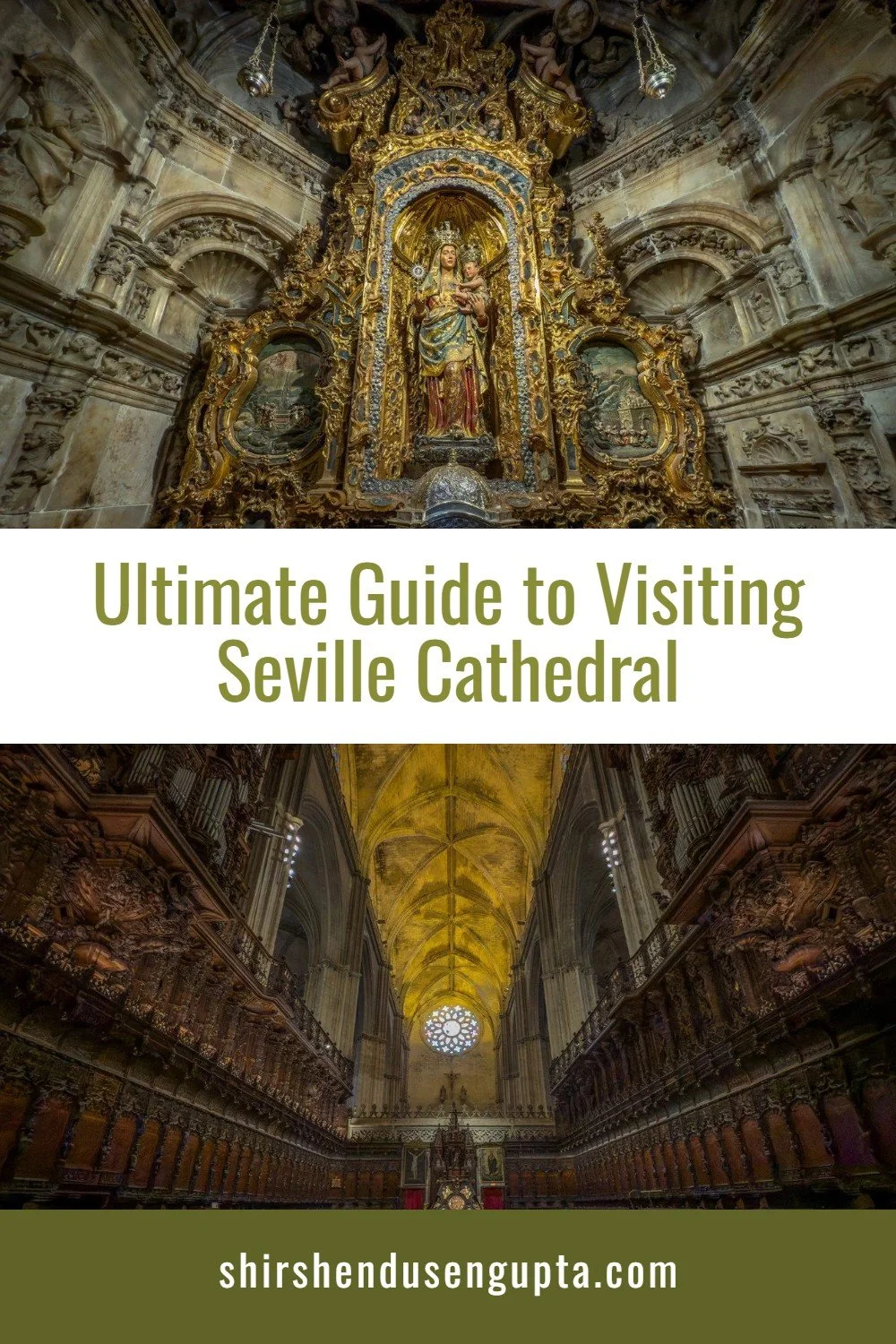
If you want to know about the Seville Cathedral, please read our article Ultimate Guide to Visiting Seville Cathedral | A Virtual Tour of Seville Cathedral | 12 Interesting Things to See and Know about Catedral de Sevilla, Spain.
About the Royal Alcázar of Seville
The Royal Alcázar of Seville is among the oldest continuously used royal palaces in Europe, and its story stretches across more than a thousand years of political and cultural transformation. Originally established as a fortified complex during the Islamic period, the site evolved through successive dynasties that shaped Seville into one of the most important cities in medieval Iberia. Following the Christian reconquest of the city in 1248, Christian monarchs preserved much of the earlier Islamic artistry while adding Gothic, Renaissance, and Baroque elements over the centuries. The result is an architectural masterpiece where diverse civilizations coexist beautifully within the same walls.
The palace is particularly celebrated for its Mudéjar style, an artistic tradition that emerged when Muslim craftsmen continued working under Christian rule. Delicate stucco carvings, geometric tiles, Arabic inscriptions, wooden ceilings, peaceful courtyards, and reflective pools create a dreamlike atmosphere throughout the complex. Visitors may recognize several areas from the television series Game of Thrones, where the Alcázar served as the Water Gardens of Dorne. Yet the palace feels far more magical in reality than on screen.
Beyond its extraordinary beauty, the Alcázar represents centuries of coexistence, adaptation, and artistic exchange between Islamic and Christian cultures. Every courtyard, chamber, and garden tells a story of rulers who transformed the palace while respecting what came before. Exploring the Alcázar is therefore not simply sightseeing, but a journey through the intertwined soul of Spain itself.
A Guided Walk through the Royal Alcázar of Seville
The Puerta del León (The Lion Gate) - Entry
Your journey into the Royal Alcázar begins at the famous Lion Gate, a striking entrance crowned by a ceramic panel depicting a lion holding a cross. The reddish defensive walls immediately create the impression of entering a medieval fortress rather than a royal palace. As you pass beneath the arched gateway, the atmosphere changes instantly. The sounds of modern Seville begin fading behind you while anticipation grows with every step forward. Visitors slowly stream through the passageway beneath ancient stone walls that once guarded rulers and noble courts. This entrance serves as a symbolic transition from the bustling city into a timeless world of dynasties, artistry, fountains, gardens, and royal intrigue.
Patio de la Montería (Hunting Courtyard)
Emerging from the entrance passage, you arrive at the expansive Hunting Courtyard, one of the main gathering spaces inside the Alcázar complex. Historically, royal hunting parties assembled here before departing for excursions outside the city. Today, the courtyard functions as a central junction connecting the following 3 different architectural sections of the palace -
Palacio Mudéjar (Mudéjar Palace)
Palacio Gótico (Gothic Palace)
Casa de la Contratación (House of Contracting)
Standing in this open courtyard offers visitors their first complete glimpse of the palace’s extraordinary fusion of Islamic elegance and Christian royal grandeur.
Palacio Mudéjar (Mudéjar Palace)
The Mudéjar Palace is undoubtedly the heart of the Royal Alcázar and one of the finest surviving examples of Mudéjar architecture anywhere in Spain. Commissioned by King Pedro I during the fourteenth century, the palace combines Islamic artistic traditions with Christian royal ambition in breathtaking harmony. Every surface appears decorated with astonishing detail: carved stucco walls, colorful ceramic tiles, Arabic inscriptions, cedar wood ceilings, and horseshoe arches glowing beneath soft natural light. Walking through these halls feels almost surreal because every room reveals another masterpiece waiting around the corner. Despite the immense decorative richness, the palace never feels overwhelming. Instead, it radiates balance, tranquility, refinement, and timeless sophistication.
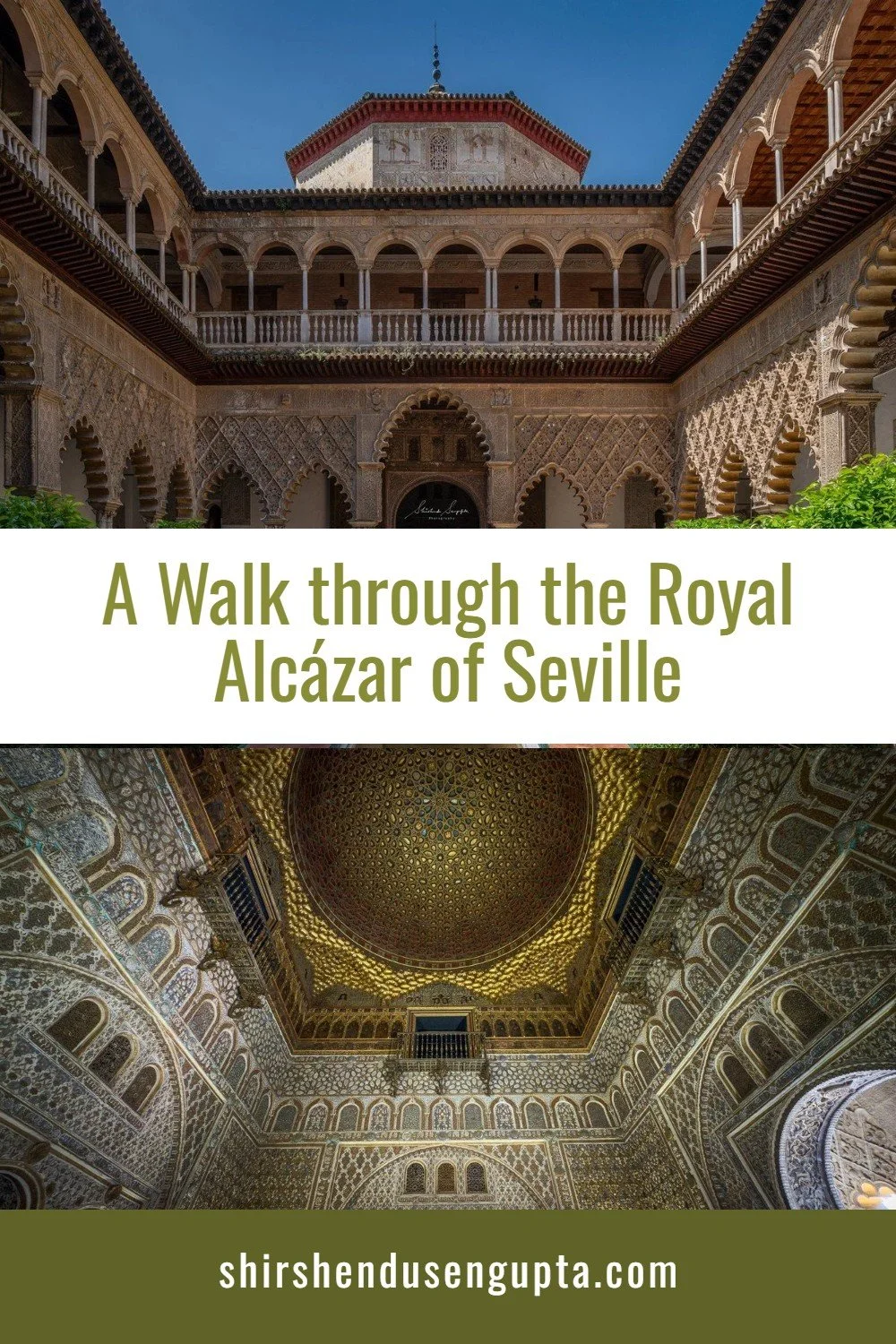
Patio de las Doncellas (Maiden’s Courtyard)
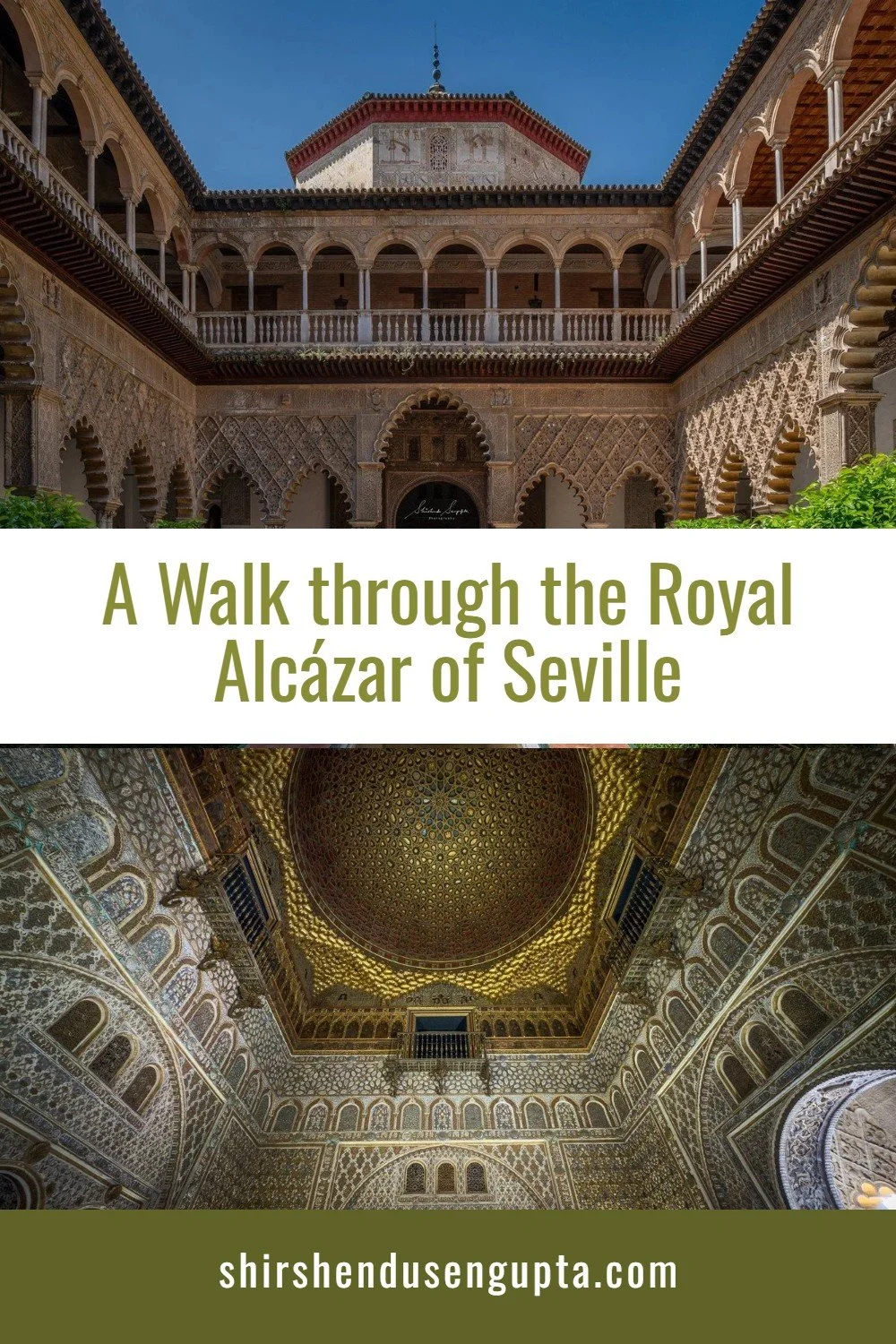
As you enter the Mudéjar Palace, your route naturally opens into the enchanting Maiden’s Courtyard, one of the most photographed spaces within the Alcázar. A long reflective pool runs through the center, flanked by sunken gardens and elegant arcaded galleries that frame the courtyard on all sides. The entire space once formed the public heart of King Peter I’s palace, a setting designed to project both refinement and royal authority.
The courtyard is surrounded by graceful polylobed arches, one of the signature decorative forms of the Almohad tradition, alongside the distinctive sebka patterning. Its visual language is enriched with symbolic and ornamental motifs such as the shell, representing fertility and life, the Hand of Fatima as a symbol of protection, intricate geometric compositions, stylised plant forms, and Kufic Arabic epigraphy. This dense decorative system transforms the courtyard into a layered visual narrative of Islamic artistic heritage.
Delicate plasterwork covers the surrounding galleries, where epigraphic decoration is used in contrast to the heraldic motifs typical of later Christian additions. At the base of the walls, colourful ceramic panels created using the “alicatado” technique add further depth and vibrancy to the composition. For nearly 500 years, the central space was paved with marble slabs and featured a Renaissance fountain, reflecting later adaptations of the courtyard’s use and aesthetics.
Light plays a central role in the experience of the space. Sunlight filters through the arches, shimmering across the water’s surface and reflecting onto marble columns, creating a calm, almost hypnotic rhythm of movement and light. Although modern visitors often experience it as a place of serenity and beauty, historians note that the courtyard originally symbolised royal power and ceremonial order.
Following archaeological excavations in 2005, the courtyard was restored to reflect its 14th-century appearance. Today, standing beside the water feels like stepping into a carefully preserved medieval dream, where layers of Islamic artistry, royal ambition, and historical transformation coexist in perfect balance.
Sala de los Pasos Perdidos (Hall of the Lost Steps)
Leaving the central courtyard, you enter the Hall of the Lost Steps, a transitional chamber connecting several important palace sections and serving as a graceful bridge between the public ceremonial spaces and the more intimate private royal quarters. The room possesses a quieter and more contemplative atmosphere compared to the richly decorative halls nearby. Soft light filters through arched openings while cool stone floors echo gently beneath visitors’ footsteps. The hall gained its poetic name because ambassadors, courtiers, and visitors often waited here before official audiences, pacing slowly in anticipation. Though less ornate than the surrounding chambers, the architectural balance and subdued elegance of the space create a welcome moment of calm during the palace walk.
One of the most significant features of the hall is its beautiful coffered ceiling, installed during the reign of the Catholic Monarchs. Historically, many of the original Mudéjar ceilings on the ground floor were replaced when the upper level of the palace was constructed. Rather than being destroyed, these earlier ceilings were carefully relocated to the upper floor, where many can still be admired today. This layered architectural evolution reflects how successive generations of rulers continued adapting the Alcázar while preserving elements of its earlier artistic heritage. The Hall of the Lost Steps therefore embodies not only physical transition within the palace, but also the historical transition between different periods, styles, and royal ambitions.
Patio de las Muñecas (Dolls’ Courtyard)
The Dolls’ Courtyard feels intimate, delicate, and wonderfully personal compared to the larger ceremonial spaces of the Alcázar. Historians believe this charming courtyard once formed part of the private royal apartments reserved for queens and children. The arches here appear lower and more intimate, while the intricate stucco decorations contain tiny carved faces that supposedly resemble dolls, giving the courtyard its unusual name. Soft natural light illuminates the richly patterned walls and colorful ceramic details, creating a warm domestic atmosphere rarely associated with medieval palaces. As visitors move quietly through this elegant space, it becomes easy to imagine royal family life unfolding here centuries ago behind the palace’s imposing exterior walls.
Cuarto del Príncipe (Prince’s Chamber)
The Prince’s Chamber introduces visitors to a more personal side of royal life inside the Alcázar. This elegant room once formed part of the private apartments used by members of the royal family and carries a calmer atmosphere than the ceremonial halls nearby. Decorative tilework lines the lower walls while intricately carved plasterwork rises toward beautifully crafted wooden ceilings. Windows overlooking the courtyards allow soft Andalusian light to illuminate the chamber throughout the day. Although modest compared to the Hall of Ambassadors, the room possesses a warm intimacy that makes it particularly memorable. Here, visitors can imagine princes growing up within the protected and artistic world of the royal palace.
Salón de los Embajadores (Hall of Ambassadors)
The Hall of Ambassadors stands as the grand jewel of the Alcázar and is often the most unforgettable space for visitors. This vast ceremonial chamber once served as the main throne room of King Don Pedro I, where he received important figures of his time, including foreign emissaries and distinguished guests for royal audiences and diplomatic negotiations. The room is designed as a perfect square, following the symbolic layout of a Muslim “qubba,” where the square represents the earth and the dome above evokes the universe. This cosmological idea is powerfully expressed in the soaring golden dome ceiling, where intricate wooden craftsmanship and geometric design create a striking visual harmony. The transition from the square base to the circular dome is achieved through richly decorated muqarnas, arranged in a star-like formation that visually bridges earth and sky.
Every surface of the hall is richly adorned, with detailed plasterwork, Arabic calligraphy, elegant arches, and vibrant tile decoration covering the walls. A decorative frieze runs along the upper section of the room, featuring portraits of Spanish monarchs painted by Diego de Esquivel in 1599, adding a later historical layer to the space. Large wrought-iron balconies, introduced during the reign of King Philip II in the late 16th century, overlook the chamber and further emphasize its ceremonial grandeur. Sunlight streams through the windows, shifting across the ornate surfaces and creating a constantly changing play of shadow and color. Standing in the center of this extraordinary hall, visitors experience a space where architecture, symbolism, and royal power converge, explaining why the Alcázar is regarded as one of Europe’s most remarkable royal palaces.
Cuarto Real Alto (Upper Palace)
The Upper Royal Apartments occupy the upper level of the Alcázar and continue functioning as the official residence of the Spanish royal family whenever they stay in Seville. Access is limited through guided tours and requires an additional ticket beyond the standard Alcázar entry pass, helping preserve the exclusive atmosphere of these remarkable historic rooms. Compared to the medieval Mudéjar halls below, the Upper Palace reflects later European influences, particularly Renaissance and Baroque decorative styles introduced between the sixteenth and eighteenth centuries as royal tastes evolved over time. Lavish furnishings, portraits, tapestries, chandeliers, richly decorated salons, and elegant chambers reveal how the palace transformed across successive royal generations. These rooms are also deeply connected to important moments in Spanish history and were once inhabited by notable monarchs, including King Pedro I of Castile, the Catholic Monarchs, Emperor Charles V, and Philip II. Walking through these private apartments feels distinctly different from exploring the older palace sections because the spaces appear less museum like and more genuinely inhabited by centuries of aristocratic life, political history, and enduring royal tradition.
Patio de Romero Murube (Romero Murube Courtyard)
The Romero Murube Courtyard offers visitors a tranquil pause from the Alcázar’s richly decorated interiors and grand ceremonial spaces. Surrounded by whitewashed walls, arches, fountains, and flowering plants, it reflects the serene spirit of Andalusian garden design while creating an intimate atmosphere of calm and contemplation. Named after Joaquín Romero Murube, a poet and long-serving curator of the Alcázar between 1934 and 1969, the courtyard is also known as the Courtyard of the Poets. Its design draws inspiration from Sevillian domestic architecture of the 19th century, giving it a more personal and lived-in character compared to the palace’s formal royal courtyards.
Orange trees cast shifting patterns of light and shadow across tiled walkways, while the gentle sound of flowing water enhances the sense of stillness. Unlike the monumental ceremonial spaces elsewhere in the complex, this courtyard invites slow wandering, quiet reflection, and unhurried observation. Many visitors find themselves lingering longer than expected, as the space captures a softer, more intimate side of the Alcázar, one shaped not by royal display but by poetic atmosphere and everyday beauty, echoing the relaxed elegance of Seville itself.
Patio de los Levíes (Levies Courtyard)
This lesser-known courtyard provides another fascinating glimpse into the layered architectural identity of the Alcázar. Though smaller and often quieter than the main courtyards, the Levies Courtyard possesses an understated beauty that rewards attentive visitors. The courtyard takes its name from a gallery transferred here from the House of the Levies, which once stood in Seville’s medieval Jewish quarter. This elegant gallery features four semicircular arches supported by Renaissance-style columns and pilasters, blending harmoniously with the surrounding Mudéjar influences visible throughout the space. Decorative arches frame narrow walkways while subtle plasterwork and ceramic details appear across the surrounding walls and galleries. On one side of the courtyard, visitors can also admire a beautiful Baroque ceramic tile panel depicting the Immaculate Conception, adding another artistic layer to the setting’s historical richness.
At the center, calm water channels and reflective pools enhance the peaceful atmosphere, while ducks occasionally glide gently across the surface, bringing unexpected charm and life to the historic surroundings. Sunlight changes dramatically across the courtyard during the day, revealing shifting textures in stone, plaster, ceramic surfaces, and shimmering reflections dancing across the water. Because fewer tour groups gather here, the space often feels more personal, intimate, and reflective than the grand ceremonial courtyards nearby. Visitors who pause quietly in this tranquil corner quickly realize that even the lesser-known sections of the Alcázar preserve extraordinary artistic harmony, natural serenity, and centuries of layered cultural history.
Palacio Gótico (Gothic Palace)
After leaving the intricate Islamic-inspired halls of the Mudéjar Palace and stepping into the Gothic Palace, the architectural atmosphere shifts dramatically. The delicate ornamentation and geometric elegance of Mudéjar design give way to a more imposing medieval European style, defined by vaulted ceilings, darker stone interiors, and expansive ceremonial chambers that project royal authority. Constructed after the Christian reconquest and attributed to Alfonso X “The Wise” (1252–1284), the Gothic Palace reflects the triumph of Christian rule over the former Muslim city. It was built over the earlier Almohad palace, carefully respecting the existing layout of the Crossing Courtyard. The construction was carried out by stonemasons from Burgos, introducing a distinctly Castilian architectural language into the complex.
The structure is organised around two large rectangular halls arranged in parallel, complemented by two smaller rooms at either end. All four halls were originally covered with vaulted ceilings supported by wall-attached pillars, creating a strong sense of rhythm and structural depth. In the 16th century, significant renovations altered the original design: pillars were replaced by corbels, large windows were opened toward the gardens to increase light and visual connection with the outdoors, and the interiors were updated with rich tile facings that reflected Renaissance tastes. Despite damage from historical earthquakes and later modifications, the Gothic Palace still conveys a powerful sense of royal authority. Tall windows flood the vast halls with natural light, illuminating tapestries, paintings, and historical furnishings. Moving through this space reveals not only a shift in architectural style but also the layered history of the Alcázar itself, where successive rulers reshaped and expanded the palace while preserving its older foundations.
Salón de los Tapices (Tapestries Hall)
The Tapestries Hall is among the most visually impressive chambers within the Gothic Palace, combining royal grandeur with remarkable historical storytelling. Massive woven tapestries cover the walls, depicting military campaigns, royal ceremonies, and important moments associated with the Spanish monarchy. These richly detailed artworks add warmth, color, and texture to the vast stone hall while reflecting the political ambitions and imperial power of earlier rulers. The scale of the chamber feels intentionally theatrical, designed to impress visiting dignitaries and reinforce royal prestige. Sunlight filtering through the windows highlights the intricate patterns and vibrant textures woven into the tapestries, creating an atmosphere that feels both majestic and unexpectedly intimate. Visitors often find themselves lingering here while studying the extraordinary detail captured within every thread.
The hall itself carries a fascinating history. It was completely destroyed during the devastating Lisbon earthquake of 1755 and was later remodeled by the architect Sebastián Van der Borcht. The tapestries displayed today are exact replicas of the original series titled “The Conquest of Tunisia,” commissioned by Emperor Charles V following his victory in 1535. The original masterpieces were woven between 1548 and 1554 in the workshop of Wilhelm Pannemaker, one of the most renowned tapestry makers of the period. The replicas currently decorating the hall were later commissioned by Philip V during the eighteenth century and produced at the Royal Tapestry Factory of Santa Bárbara. Together, the reconstructed hall and magnificent tapestries preserve the ceremonial magnificence, historical memory, and royal symbolism that continue to define this extraordinary chamber within the Alcázar.
Sala de las Bóvedas o de las Fiestas (Vaults Hall)
The Vaults Hall, also known as the Celebration Room, carries a more dramatic atmosphere than many surrounding chambers and commemorates the wedding of Charles V and Isabel of Portugal. Facing the palace gardens, the hall preserves its original vaulted ceilings, whose expansive proportions create remarkable acoustics that once amplified music, ceremonies, banquets, and royal festivities beneath the soaring arches. The room reflects the Gothic influence visible throughout this palace section while still maintaining decorative continuity with the broader Alcázar complex. One of its most striking artistic features is the magnificent polychrome tilework created by Cristóbal de Augusta in 1577 during the Renaissance restoration commissioned under the reign of Felipe II, who wished to honor and preserve the memory of his father, Charles V.
As visitors move through the hall, intricate tiled panels reveal cherubs, chandeliers, animals, baskets overflowing with flowers and fruits, along with portraits believed to depict Charles V and Isabel of Portugal. Mythological figures appear throughout the decorative scenes, while the famous “Plus Ultra” emblem crowns the composition alongside the coats of arms of the Spanish kingdoms that once formed part of the Empire of Charles V. The hall is further enriched by six large canvas paintings decorating the space, four painted by Gustavo Bacarisas and two by Manuel Cañas. These works were commissioned by King Alfonso XIII to adorn the palace during the Ibero-American Exposition held in Seville in 1929. Despite its immense historical grandeur, the natural lighting and elegant architectural rhythm prevent the hall from feeling cold or overwhelming. Instead, it radiates timeless ceremonial dignity, artistic splendor, and royal magnificence.
The Casa de la Contratación (House of Contracting)
The House of Contracting represents one of the most historically significant sections of the Alcázar because it played a crucial role during Spain’s age of exploration. Established in the early sixteenth century, this institution regulated trade and expeditions connected with the Spanish Empire in the Americas. Navigators, merchants, explorers, and officials once gathered here to organize voyages that transformed global history. Walking through these rooms creates a powerful connection with the era of maritime discovery, colonial expansion, and transatlantic commerce. Compared to the decorative palace chambers nearby, the atmosphere here feels more administrative and intellectual. Nevertheless, the architectural beauty remains unmistakable, reminding visitors that even bureaucratic spaces within the Alcázar possessed artistic sophistication.
Cuarto del Almirante (Admiral’s Room)
The Admiral’s Room continues the maritime legacy introduced within the House of Contracting. Historically associated with naval administration and exploration, the chamber evokes the spirit of Spain’s great seafaring age. Maps, historical references, and elegant decorative details connect the room to explorers who sailed toward unknown continents under the authority of the Spanish Crown. The atmosphere feels distinctly historical because decisions made within these walls influenced global trade routes and imperial ambitions for centuries. While the room lacks the overwhelming ornamentation of the Mudéjar Palace, its significance lies in the stories attached to it. Visitors leave with a stronger appreciation of Seville’s central role during the age of exploration.
Sala de Audiencias (Chapterhouse)
The Chapterhouse is among the most spiritually resonant spaces within the Alcázar complex. Originally designed as both a chapel and audience chamber, the room blends religious symbolism with royal authority in remarkably elegant balance. Built on a square plan, the chamber contains a continuous stone bench running along the walls, which once served as seating for the members of the Chapterhouse during official meetings and ceremonies. Historically, the room functioned as an important gathering place for the House of Trade, where political administration, maritime affairs, and spiritual legitimacy became closely intertwined. Soft lighting, sacred imagery, and carefully proportioned architecture create a solemn yet graceful atmosphere that encourages quiet reflection after the visual intensity of the surrounding palace sections.
Dominating the hall is a magnificent altarpiece featuring the celebrated triptych by Alejo Fernández known as the “Virgen de los Mareantes” or Madonna of the Seafarers. In the central scene, the Madonna shelters a group of Native Americans beneath her protective cloak, symbolizing Spain’s expanding connection with the New World. Surrounding her stand four saints: Saint Sebastian and Saint James on the left, alongside Saint Telmo and Saint John on the right. Visitors can also observe detailed depictions of the seven types of ships used during the great age of exploration. Above, a magnificent sixteenth-century coffered ceiling decorated with octagonal and star-shaped caissons adds further grandeur to the chamber. Restored in 1967, the walls were later adorned with the coats of arms of the Admirals of Castile, reinforcing the room’s historical connection with maritime power, faith, governance, and imperial ambition.
Jardines (Gardens)
Leaving the palace interiors behind, visitors emerge into the magnificent gardens of the Alcázar, where architecture gradually dissolves into greenery, fountains, and open sky. The gardens stretch across terraces, pathways, pavilions, pools, hedges, and shaded walkways that evolved across many centuries of royal landscaping. Every section reveals a slightly different atmosphere, ranging from intimate corners hidden beneath palm trees to expansive spaces filled with geometric symmetry. The scent of orange blossoms and jasmine drifts through the warm Andalusian air while fountains provide a constant background melody. After the richly decorated palace interiors, the gardens feel wonderfully liberating. They invite visitors not simply to observe history, but to wander slowly and become immersed within it.
Jardín del Príncipe (The Prince Garden)
The Prince Garden is among the most elegant and peaceful sections of the Alcázar grounds, preserving strong traces of the original Muslim garden design through its layout, divided into four distinct sectors. Devoted to the son of the Catholic Monarchs, who was born in one of the rooms adjoining the Mudéjar Palace, the garden combines royal history with remarkable natural serenity. Neatly arranged hedges, flowering plants, decorative fountains, and shaded pathways create a carefully balanced landscape that feels both regal and deeply calming. Aromatic plants, including rosemary, laurel, and myrtle, fill the air with gentle fragrance, while lemon trees, originally introduced during the Muslim era from Asia, add both beauty and historical significance to the setting.
Tall palm trees rise gracefully above the pathways as birds move quietly between the gardens and surrounding palace walls. The atmosphere encourages slow wandering rather than hurried sightseeing, inviting visitors to pause and fully absorb the tranquil surroundings. Benches placed beside fountains provide perfect resting spots where the soothing sound of flowing water enhances the peaceful mood. During warm Andalusian afternoons, sunlight filtering through the trees creates constantly shifting patterns across the walkways and garden walls. Many visitors discover that the Prince Garden becomes one of their most cherished memories of the Alcázar because of its extraordinary harmony between history, nature, fragrance, and timeless royal elegance.
Jardín de Troya (Troy Garden)
The Troy Garden offers a more secluded and mysterious atmosphere compared to the grander royal gardens of the Alcázar. Narrow pathways weave through dense vegetation, decorative walls, and carefully structured landscaping, creating intimate pockets of shade, silence, and enclosure. Water channels and fountains, rooted in Islamic garden traditions, shape the space with a soothing rhythm that reflects the Alcázar’s deeper design philosophy of harmony between architecture, water, and nature. Although historically layered, the garden feels timeless rather than strictly ancient, allowing visitors to drift through it without a sense of urgency as the sounds of the city fade behind stone and foliage.
At the heart of the Garden of Troy lies a central fountain believed to date back to the 10th century, recognisable by its patterned bowl and distinctive lion-head water spouts. This element reinforces the garden’s Islamic origins and its long continuity within the Alcázar’s evolving landscape. In the early 17th century, Vermondo Resta introduced a rustic gallery, marking the earliest example of the rustic style within the Royal Alcázar gardens. Inspired by contemporary architectural treatises, this addition reflects a Mannerist character that contrasts yet harmonises with the older Islamic elements.
This stylistic blend is also visible in the carved heads adorning the capitals above the gallery pilasters, where ornamental detail bridges natural forms and architectural design. Together, these features highlight how the Troy Garden evolved across centuries, merging Islamic foundations with Renaissance and Mannerist influences. More than a decorative space, it reveals the Alcázar’s broader intention to create environments for ceremony, contemplation, relaxation, and sensory immersion, where history is experienced through atmosphere as much as architecture.
Patio de Banderas (Courtyard of Flags) - Exit
Eventually, the walking route leads toward the Courtyard of Flags, which serves as one of the principal exit areas from the Alcázar complex. After the intimacy of the gardens and palace interiors, this broad open courtyard feels bright and expansive beneath the Andalusian sky. Historic buildings surround the plaza while views toward the nearby cathedral and old city walls reconnect visitors with the wider landscape of Seville. Travelers often pause here before leaving, reluctant to end the experience too quickly. Looking back toward the palace walls, it becomes clear that the Alcázar is far more than a collection of beautiful rooms. It is a living historical tapestry woven from centuries of art, politics, culture, faith, and imagination.
Visiting the Royal Alcázar of Seville
Opening Hours: The Royal Alcázar of Seville generally operates throughout the year with seasonal opening schedules. During the warmer months, from April through September, the palace typically opens from 9:30 in the morning until 7:00 in the evening. During the cooler months, from October through March, closing time is usually earlier at around 5:00 in the evening. Certain holidays, including New Year’s Day, Epiphany, Good Friday, and Christmas Day, remain closed to visitors. Arriving early in the morning is strongly recommended because crowds grow significantly by midday, particularly during spring and Easter celebrations. Booking tickets online in advance can save considerable waiting time at the entrance.
Address: The Royal Alcázar is located in the historic heart of Seville, directly beside the cathedral and within walking distance of many major attractions in the old city. The official address is Patio de Banderas, s/n, 41004 Seville, Spain. Because the surrounding neighborhood consists largely of narrow pedestrian streets and historic lanes, reaching the palace on foot is often the easiest and most enjoyable option. The area around the Alcázar is filled with cafés, tapas bars, souvenir shops, and charming plazas that reward slow exploration. Visitors staying anywhere within the Santa Cruz district can comfortably walk to the palace entrance while enjoying the atmospheric streets and vibrant architectural character of historic Seville.
GPS Coordinates: Using GPS navigation is highly recommended when driving into Seville because the old city contains numerous one-way streets and restricted traffic areas. The approximate GPS coordinates for the Royal Alcázar are 37.3831, -5.9902. Entering the Patio de Banderas location into navigation systems generally provides the most accurate route toward the palace area. Visitors should remember that parking directly beside the Alcázar is extremely limited due to the dense historic urban layout surrounding the monument. Many travelers, therefore, choose to park slightly outside the old quarter and continue on foot. Navigation applications also help identify nearby parking garages and traffic restrictions that frequently affect the city center.
Parking: Parking near the Royal Alcázar can be challenging, especially during weekends, festivals, and peak tourist seasons. Street parking in the historic center is extremely limited and often reserved for residents. Most visitors traveling by car prefer using underground public parking garages located around the edge of the old city. We recommend parking at the underground parking garage Paseo de Colón near Plaza de Toros de la Real Maestranza, and then walking to the Royal Alcázar. Arriving early in the morning significantly improves the chances of finding available spaces while also avoiding heavy traffic entering central Seville. Because the surrounding neighborhoods are wonderfully walkable, many travelers park once for the day and continue exploring Seville entirely on foot afterward.
Public Transport: Public transportation in Seville is efficient, affordable, and highly convenient for reaching the Royal Alcázar. The nearest tram stop is located close to the cathedral area, only a short walk from the Lion Gate entrance. Several city bus routes also stop nearby, connecting the Alcázar with major districts throughout Seville. Travelers arriving by train at Santa Justa Station can easily reach the old town using taxis, buses, or local transportation services. Walking remains one of the best ways to approach the palace because the surrounding Santa Cruz neighborhood is filled with atmospheric alleys, hidden courtyards, and historic architecture. Exploring slowly on foot transforms the journey toward the Alcázar into part of the experience itself.
Best Time in the Year to Visit: Spring is widely considered the best season to visit the Royal Alcázar because the gardens burst into bloom while temperatures remain pleasantly warm rather than overwhelmingly hot. Orange blossoms perfume the air, fountains sparkle beneath clear skies, and the palace gardens appear especially vibrant during March, April, and May. However, spring also brings large tourist crowds, particularly during Semana Santa and the Feria de Abril festivals. Autumn provides another excellent period for visiting because temperatures become milder and visitor numbers slightly decrease. Summer afternoons can be intensely hot in Seville, often exceeding comfortable sightseeing temperatures. Winter offers quieter conditions, softer lighting, and shorter queues while still allowing enjoyable exploration of the palace and gardens.
Dress Code: There is no particularly strict dress code for visiting the Royal Alcázar, but comfortable and respectful clothing is highly advisable. Since visitors spend several hours walking through courtyards, gardens, staircases, and palace halls, lightweight clothing and supportive footwear are especially important during warmer months. Hats, sunglasses, and water bottles can be extremely helpful during hot Andalusian afternoons, particularly while exploring the expansive gardens. Although the Alcázar functions primarily as a historical monument rather than an active religious site, modest attire remains appropriate out of respect for the cultural and historical significance of the palace. Travelers planning extensive photography sessions may also prefer breathable clothing because the visit often involves prolonged walking and outdoor exploration.
Food and Drinks: Food and drink options inside the Alcázar itself are relatively limited, so many visitors choose to eat before or after their palace visit. Fortunately, the surrounding Santa Cruz neighborhood offers countless cafés, tapas bars, bakeries, and restaurants serving traditional Andalusian cuisine. Refreshing cold drinks become particularly valuable during hot summer visits when temperatures rise sharply across Seville. Carrying a bottle of water is highly recommended because exploring the gardens under the Andalusian sun can become physically demanding. Nearby restaurants serve excellent local specialties, including gazpacho, jamón ibérico, croquettes, grilled seafood, and traditional tapas. Enjoying a relaxed meal after leaving the Alcázar becomes a wonderful continuation of the broader Seville cultural experience.
Photography/Videography: The Royal Alcázar is an absolute paradise for photographers and videographers because nearly every corner of the palace offers extraordinary compositions, colors, reflections, textures, and architectural details. Early morning light is especially beautiful in the courtyards and gardens because shadows remain soft while crowds are smaller. Reflective pools, intricate arches, tiled walls, fountains, and palm-lined pathways create endless opportunities for stunning travel photography. Tripods may face restrictions in certain areas, particularly during busy visiting periods, so checking current regulations beforehand is advisable. Visitors should also remain respectful while photographing crowded sections of the palace. Spending extra time in the gardens often rewards photographers with calmer scenes and softer natural lighting during the late afternoon.
Accessibility: Accessibility within the Royal Alcázar varies depending on the section being visited because the palace complex developed across many centuries of historical construction. Certain courtyards and gardens are relatively accessible, while some older palace areas contain uneven flooring, narrow passageways, and staircases that may present challenges for visitors with mobility limitations. Staff members generally provide assistance and information regarding accessible routes whenever possible. Wheelchair users can access several important areas of the complex, although complete accessibility remains difficult due to the monument’s medieval architectural structure. Visitors requiring special assistance are encouraged to review accessibility information in advance and arrive early, allowing extra time for navigating the palace comfortably and without unnecessary pressure.
Pets: Pets are generally not permitted inside the Royal Alcázar complex, with the exception of certified service animals assisting visitors with disabilities. Because the palace and gardens attract extremely large visitor numbers throughout the year, these restrictions help protect both the monument and the comfort of guests exploring the site. Travelers visiting Seville with pets should therefore make alternative arrangements before entering the Alcázar. Fortunately, many hotels and accommodations in the city can assist with pet sitting recommendations or temporary care services if needed. Since visits often last several hours due to the size and richness of the palace complex, planning ahead becomes especially important for travelers accompanied by animals during their Andalusian journey.
Reservations: Advance reservations are strongly recommended for visiting the Royal Alcázar, particularly during spring, summer, Easter holidays, and major festivals in Seville. Timed entry tickets frequently sell out days or even weeks ahead during peak travel periods. Purchasing tickets online not only guarantees entry but also helps avoid extremely long queues outside the Lion Gate. Visitors interested in touring the Upper Royal Apartments should reserve even earlier because availability for guided access is more limited. Arriving slightly before the reserved time slot is advisable because security checks and entrance procedures may require additional waiting. Travelers who fail to reserve ahead occasionally succeed with same-day tickets, but availability becomes increasingly unpredictable during busy tourist seasons.
Guided Tours: Guided tours can significantly enrich the experience of visiting the Royal Alcázar because the palace contains layers of historical, architectural, and cultural symbolism that many independent visitors might otherwise overlook. Knowledgeable guides explain the transition from Islamic rule to Christian monarchy, the significance of Mudéjar artistry, the political role of the palace, and fascinating stories connected with royal residents throughout history. Specialized tours also provide access to areas such as the Upper Royal Apartments. Audio guides remain an excellent alternative for independent travelers who prefer exploring at their own pace while still receiving historical context. Whether guided or self-directed, allowing at least three to four hours for the visit ensures a far more rewarding experience.
Website: For the latest information regarding opening hours, ticket prices, special events, guided visits, accessibility updates, and reservation details, visitors should consult the official Royal Alcázar website before traveling. Seasonal schedules occasionally change, while temporary closures or restricted access may affect certain palace sections during official functions or restoration work. Booking directly through official channels also reduces the risk of inflated prices from third-party resellers. Since visitor demand remains extremely high throughout much of the year, checking availability well in advance is highly advisable for travelers planning a visit to Seville. Official information can be accessed through the website alcazarsevilla.org
Epilogue
Walking through the Royal Alcázar of Seville feels less like visiting a monument and more like stepping through a living tapestry woven from centuries of art, conquest, faith, and imagination. Long after leaving its courtyards and gardens behind, the palace continues lingering in memory through the sound of fountains, the scent of orange blossoms, and the glow of intricate arches beneath the Andalusian sun. Few places in Europe capture the fusion of civilizations with such elegance and harmony. Whether you arrive as a history lover, photographer, architecture enthusiast, or curious traveler, the Alcázar promises an unforgettable experience that remains with you long after your journey ends. Please let us know in the comments below if you enjoyed reading this article.
And if you want to know about another remarkable gem of Seville i.e., the Seville Cathedral, please read our article Ultimate Guide to Visiting Seville Cathedral | A Virtual Tour of Seville Cathedral | 12 Interesting Things to See and Know about Catedral de Sevilla, Spain, or if you want to know the best places to visit in Seville, please read our article Ultimate Seville Travel Guide | Self-Guided Seville Walking Tour Itinerary | 26 Best Places to Visit, Top Things to See and Do in Seville, Spain, or if you want to read the day-by-day account of our 7000 km road run from the Netherlands to Morocco during Easter, please visit our article Where Europe Meets Africa | 7000 km Road Trip from the Netherlands to Morocco through Wine Roads, Holy Sites, and Clifftop Towns of France, Spain, and Gibraltar | Itinerary, Tips, and Tricks. Until then, merry traveling and happy shooting!
Pin the article
Bookmark the article for reading later!
Want to license/buy photos in the article?
License photos for commercial/editorial use or buy photo prints!
Want us to write an article for you?
Articles for magazines, newspapers, and websites!
Watch our Videos
Check out our videos on our Youtube Channel!
Join the Newsletter
Get updates on our latest articles!
We respect your privacy. Read our policy here.













Rocamadour is one of France’s most extraordinary pilgrimage destinations, suspended between earth and sky in the Dordogne Valley. Its history stretches back to the early Middle Ages, when the hermit Amadour chose this cliff as a place of devotion. By the 12th century, Rocamadour had become a critical stop on the pilgrimage route to Santiago de Compostela, attracting kings, nobles, and ordinary pilgrims alike.