
An Authentic Pilgrimage to Lourdes | 14 Top Places to Visit, Things to Know, See, and Do on a Visit to Lourdes, France
Prologue
During a memorable Easter, we set out on an epic adventure Where Europe Meets Africa | 7000 km Road Trip from the Netherlands to Morocco through Wine Roads, Holy Sites, and Clifftop Towns of France, Spain, and Gibraltar | Itinerary, Tips, and Tricks. What started as a casual idea soon unfolded into one of the most memorable experiences of our lifetime. Along the way, we wandered through medieval villages, sipped wine in quiet French vineyards, stood in awe at ancient cathedrals and abbeys, drove along coastal cliffs, and watched the cultures of Europe slowly melt into the soulful rhythms of Morocco.
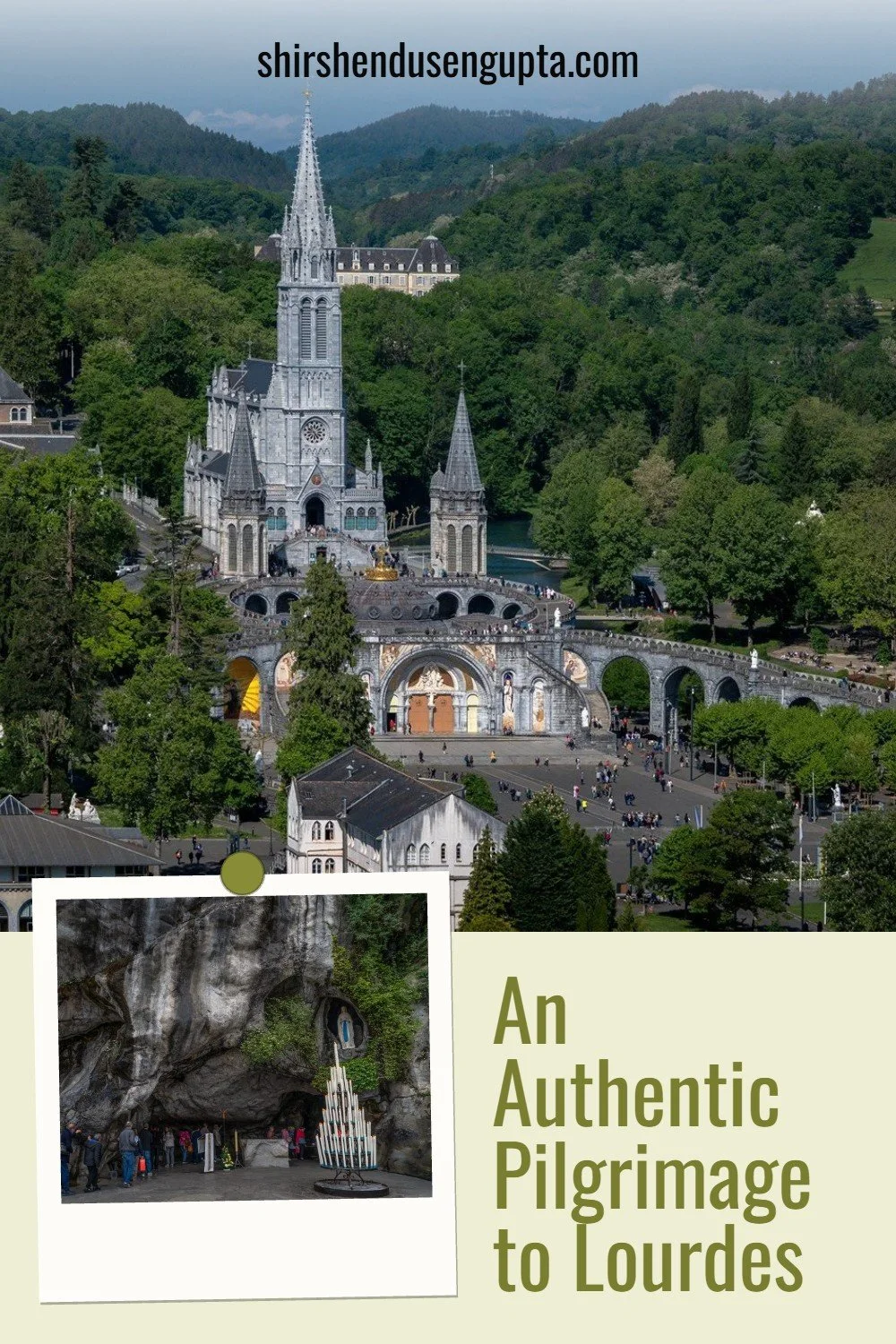
Along the way, nestled in southwestern France, we discovered Lourdes, a town of spiritual significance, historical charm, and quiet beauty. Its cobblestone streets, the gentle flow of the River Gave de Pau, and the majestic backdrop of the Pyrenees created an atmosphere of serenity and reverence. Lourdes was not just a destination but a pilgrimage in itself, inviting travelers to pause, reflect, and witness the unfolding stories of faith that had drawn millions over generations. Based on our experience, today I’m going to guide you through the 14 most essential places to visit, things to see, and experiences to embrace in Lourdes. Let the journey begin, as we step into a town where faith and history intertwine seamlessly, creating a tapestry of devotion, wonder, and unforgettable memories.
Welcome to Lourdes
Lourdes, a small town nestled in the foothills of the Pyrenees in southwestern France, is renowned not for its size or grandeur but for its extraordinary spiritual significance. As one of the most important Catholic pilgrimage sites in the world, it draws nearly six million visitors each year. Pilgrims arrive seeking healing, peace, or simply to follow the path of Bernadette Soubirous, a humble peasant girl whose visions transformed the religious landscape of modern France.
The Story of St. Bernadette and the Apparitions of the Virgin Mary
In 1858, at the age of 14, Bernadette reported seeing a “lady dressed in white” in the grotto of Massabielle. Over a series of 18 apparitions, the message gradually unfolded, shaping what would become one of the most important pilgrimage traditions in the world:
1st Apparition: Bernadette and “The Little Lady” (11 Feb 1858) - While gathering firewood with her sister and a friend, Bernadette strayed inside a grotto in Massabielle, where she saw a “little lady” of 16 or 17 years in age dressed in white, with a blue ribbon around her waist, a yellow rose on each of her feet, and holding a rosary of white beads with a gold chain. The figure joined her during the Rosary, remaining silent except at the “Glory Be.” Bernadette told her sister about the vision and asked her to keep it secret, but her sister eventually shared it with their mother, who initially forbade Bernadette from returning out of fear, but later allowed her another visit.
2nd Apparition: Holy Water (14 Feb 1858) - This time, Bernadette brought holy water to test the vision, and when she sprinkled it on the lady, she smiled and stepped closer, convincing her that she wasn’t an evil spirit but was from heaven.
3rd Apparition: The Promise (18 Feb 1858) - Bernadette visited the grotto again. She heard the lady speak for the first time, gently asking her to come every day for 15 days and promising happiness not in this world, but in the next; words that deeply moved the young servant girl who was unaccustomed to such kindness.
4th Apparition (19 Feb 1858) - Bernadette was accompanied to the grotto by her mother, aunt, and neighbours carrying candles, marking the beginning of public attention and curiosity.
5th Apparition (20 Feb 1858) - News of the apparition began to spread to other towns. Bernadette reported receiving a personal prayer from the lady, but did not reveal its content.
6th Apparition (21 Feb 1858) - Authorities began questioning her; she was tested while praying, including having a burning candle held under her hands, but she showed no reaction.
7th Apparition (23 Feb 1858) - Large crowds gathered; the apparition lasted longer, but Bernadette kept the message private.
8th Apparition (24 Feb 1858) - Bernadette told everyone that the lady called “Penance! Penance! Penance!” Then Bernadette knelt and kissed the ground.
9th Apparition: The Spring of Water (25 Feb 1858) - No one could understand what Bernadette was doing; they only saw her kneeling on the ground, digging into the damp grotto floor with her bare hands, scooping out mud and pushing it aside, then appearing to drink something. When asked, she said she had been told by the lady to drink from the spring and wash in it, leaving everyone puzzled. But the next day, a spring of flowing water appeared.
10th Apparition (27 Feb 1858) - The lady instructed Bernadette to tell the priests to build a chapel and organize processions. When Bernadette told it to her parish priest Father Peyramale, he demanded to know her name, but Bernadette was unable to answer as she herself did not know.
11th Apparition (28 Feb 1858) - The lady appeared to Bernadette but gave no message this time. Crowds continued to increase as curiosity spread.
12th Apparition: The First Healing (1 Mar 1858) - The first recorded healing occurred when a woman washed her paralysed arm in the spring water and regained movement.
13th Apparition (2 Mar 1858) - The lady again asked Bernadette to tell the priests to build a chapel and organize processions. Bernadette went with her two aunts to see Father Peyramale, who again asked her the lady’s name, and when she said she did not know, he forbade her from returning to the grotto.
14th Apparition (3 Mar 1858) - Bernadette asked again for the lady’s name but received only a gentle smile.
15th Apparition (4 Mar 1858) - Earlier, the lady had asked Bernadette to come for fifteen days, and this was the fifteenth day. When the lady appeared to Bernadette, Bernadette asked her name, but the lady remained silent, leaving the crowd disappointed. The days passed, but the lady did not appear to Bernadette anymore, though many believed she would return on the 25th of March, the Feast of the Annunciation.
16th Apparition: The Name (25 Mar 1858) - On the 25th, the lady appeared to Bernadette as expected and, when asked her name again, finally declared, “I am the Immaculate Conception.” After hearing this, Bernadette rushed to share the message with the parish priest, leaving him stunned because the term had been formally defined only four years earlier, in 1854, by Pope Pius IX, when he proclaimed the doctrine of the Immaculate Conception of the Virgin Mary as official Church teaching, which stated that the Virgin Mary was conceived without original sin, meaning she was preserved in a state of purity from the very beginning of her life. The phrase was known primarily within theological and clerical circles, not among ordinary villagers. This led him to believe the apparition was genuine, prompting him to inform the bishop so that a chapel and processions could be arranged.
17th Apparition: Gathering Evidence (7 Apr 1858) - The lady gave no message this time, while Bernadette prayed the Rosary, holding a candle whose flame repeatedly touched her hand for several minutes without reaction, later seen as a sign of spiritual trance. However, she became increasingly exhausted by constant questioning and scrutiny.
18th Apparition: The Declaration (16 Jul 1858) - The apparitions were drawing to a close, with requests for a chapel and processions already set in motion, and Lourdes slowly becoming an emerging shrine, even as the authorities attempted to restrict access to the grotto. For the final time, Bernadette saw the lady from across the river, still not fully understanding her identity, referring to her simply as “the little lady,” and later describing her as more beautiful than ever.
Aftermath of the Apparitions: Soon after, a formal Church inquiry was established by the bishop of the diocese, leading to an official recognition in 1862 that the apparitions were authentic and worthy of belief. In time, a chapel was built, processions began, and a statue was placed at the grotto bearing an inscription in the local dialect reflecting the words originally spoken to Bernadette, emphasizing how the message was given in a language she could understand.
Life of Bernadette after the Apparitions: Following these events, Bernadette was sent to a religious community for education and care, preparing for convent life, and later joined the Sisters of Nevers, where she lived quietly until her death from tuberculosis at the age of 36.
Canonization by the Church in the 20th Century: Bernadette Soubirous was canonized as a saint by Pope Pius XI on December 8, 1933, after the Church formally recognized her life of virtue, humility, and her role in the events at Lourdes.
14 Best Things to See and Do in Lourdes
1. Château Fort Musée Pyrénéen
The Château Fort Musée Pyrénéen, a hilltop fortress overlooking Lourdes, is one of the town’s most striking historical landmarks. Dating back over a thousand years, this medieval castle offers panoramic views of the town, the River Gave de Pau, and the distant peaks of the Pyrenees. Its stone ramparts and fortified towers speak to a time when the region’s strategic location required vigilance and defense. Walking along the ramparts, we felt connected to centuries of history while absorbing the breathtaking landscape below.
Inside, the Pyrénées Museum presents an insightful look at the local culture, traditional mountain life, and regional craftsmanship. Exhibits feature everything from shepherds’ tools to household artifacts, providing a vivid picture of rural life over the centuries. The museum also showcases the history of Lourdes itself, bridging its medieval past with its spiritual present. Combining history, architecture, and stunning views, the Château Fort Musée Pyrénéen offers visitors both education and inspiration, making it an essential stop for anyone seeking to understand the cultural and geographical context of Lourdes beyond its religious significance.
View of the city of Lourdes from the ramparts of Château Fort Musée Pyrénéen
2. Sanctuary of Our Lady of Lourdes (Sanctuaires Notre-Dame de Lourdes)
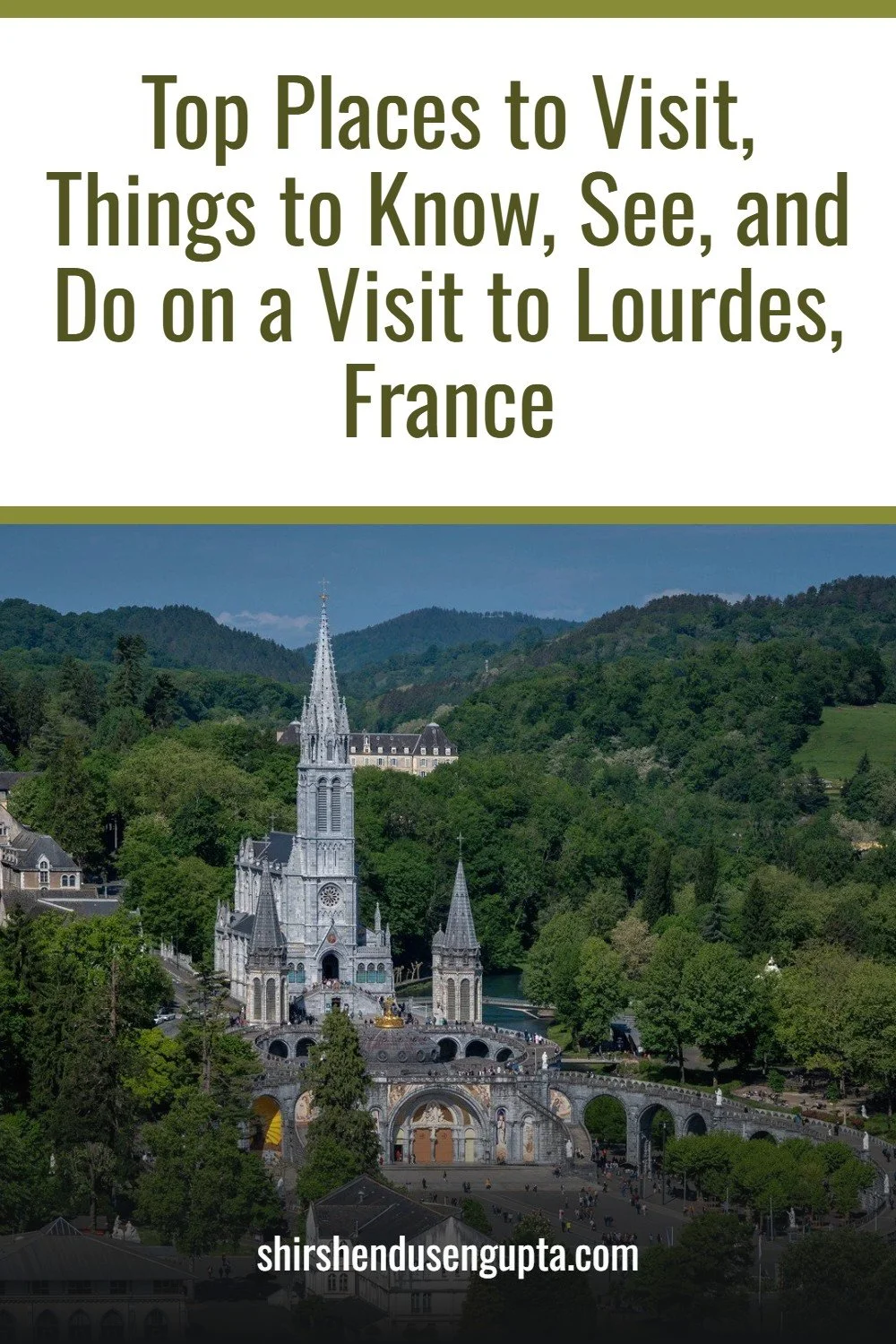
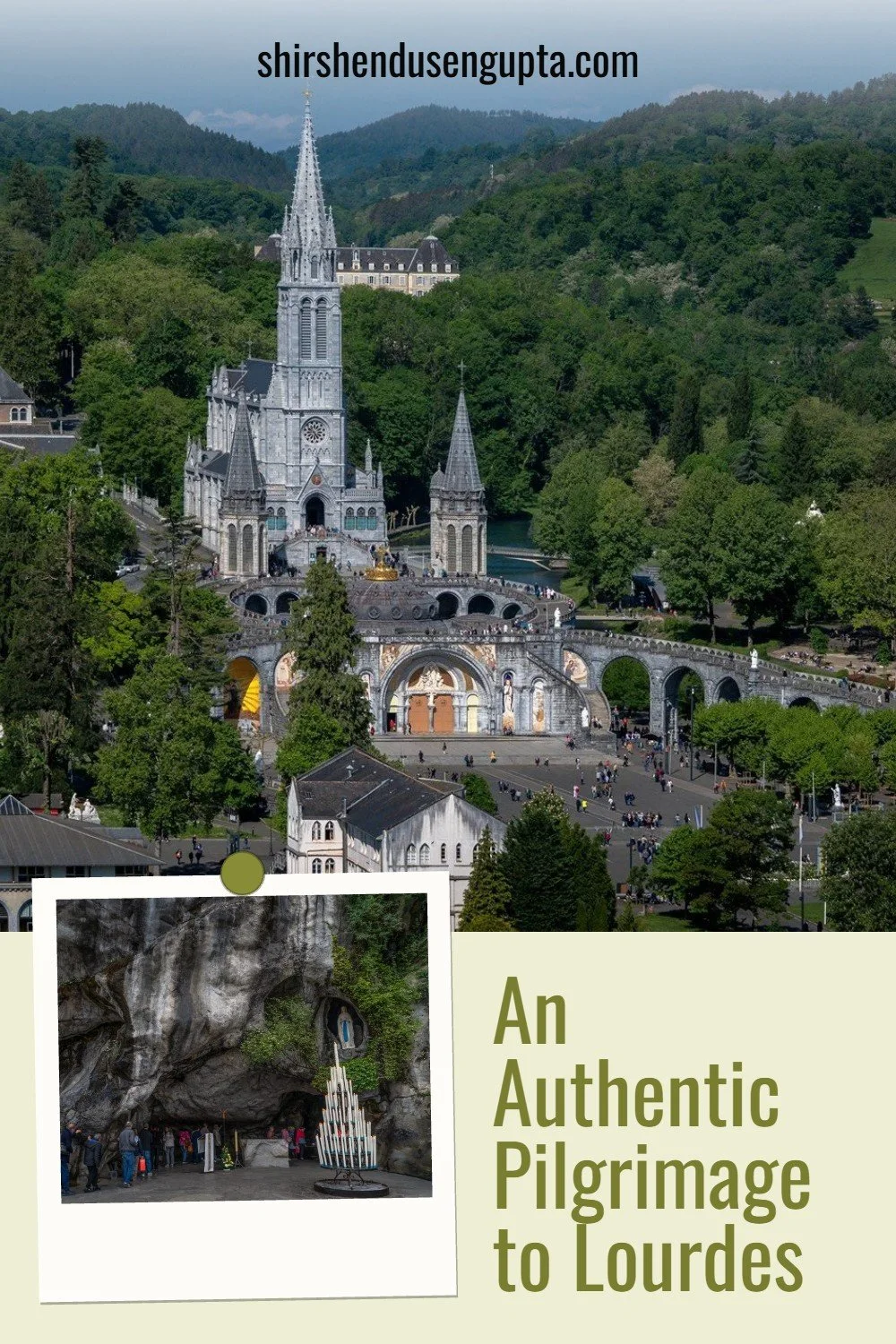
The Sanctuary of Our Lady of Lourdes is the spiritual epicenter of the town. Built around the Grotto of Massabielle, where Bernadette Soubirous witnessed the Virgin Mary’s apparitions in 1858, the Sanctuary encompasses multiple basilicas, chapels, gardens, fountains, and esplanades. This complex is not just a place of worship but a living testament to faith, attracting millions of pilgrims from around the world each year.
Visitors can explore the sprawling Sanctuary at their own pace, witnessing candlelit processions, drinking from the sacred spring, or participating in prayer services. The gardens provide quiet spaces for contemplation, while the chapels and basilicas add historical depth and architectural beauty. The Sanctuary’s design ensures that every visitor experiences both the grandeur of collective devotion and intimate moments of personal reflection. It stands as a place where history, faith, and hope converge, offering an immersive experience that extends far beyond the physical structures. For anyone drawn to spiritual journeys or curious about Lourdes’ religious heritage, the Sanctuary provides both insight and inspiration, leaving a profound impression long after leaving its grounds.
3. Basilica of Our Lady of the Rosary aka Rosary Basilica (Lower Basilica)
The Basilica of Our Lady of the Rosary, is one of the most visually stunning parts of the Sanctuary. Completed in 1899, it features a neo-Byzantine design with domed ceilings, intricate mosaics, and ornate altars. Entry is through a modest doorway beside the main façade, leading into a space rich with symbolism and devotion.
One of the first features that draws attention is the mosaic of Our Lady above the sanctuary. She is portrayed as a young woman, closely reflecting the description given by Bernadette Soubirous, and is often considered more faithful to her vision than the statue placed at the grotto. On either side of the mosaic appear the words, in French, “Through Mary to Jesus,” capturing the spiritual essence of Lourdes. Around the nave, a series of small chapels display mosaics representing the Joyful, Sorrowful, and Glorious Mysteries of the Rosary, each carefully positioned to guide pilgrims through prayer and reflection. The Luminous Mysteries, also known as the Mysteries of Light, were later added to the façade. Looking upward, the dome contains intricate mosaic details that are difficult to fully appreciate without closer study. Together, these elements form a complete visual representation of the Rosary, making the entire basilica a profound celebration of this central Catholic devotion.
4. The Crypt
Between the Lower and the Upper Basilica lies the Crypt, a solemn, candlelit space built as the original chapel soon after the apparitions. Opened on 19 May 1866, this intimate space can accommodate around 120 people. Unlike the grandeur of the basilicas below and above, the Crypt offers a more intimate, contemplative atmosphere. The dim lighting and quiet echo of footsteps create an environment ideal for prayer, meditation, or simple reflection.
Following the apparitions, Dominique Peyramale, together with his bishop, acquired the grotto and surrounding land in 1861, just three years after the visions experienced by Bernadette Soubirous had ended. Work to make the area accessible began soon after, and construction of the chapel started in September 1863. The completed structure was consecrated on Pentecost Sunday in May 1866 by Bertrand-Sévère Laurence, with Bernadette present at the ceremony, adding a deeply personal connection to the moment.
5. Basilica of the Immaculate Conception (Upper Basilica)
No sooner had the original chapel been completed and consecrated than it became clear that it could not accommodate the rapidly growing number of pilgrims arriving in Lourdes. In response, construction began in 1866 on a much larger church, now known as the Upper Basilica. Built directly above the Crypt in Gothic Revival style, with its sanctuary aligned over the Grotto of Massabielle, this new structure was opened in 1871 to welcome up to 2,000 worshippers.
Its soaring spire is visible from across the town, creating a symbolic beacon for pilgrims approaching the Sanctuary. The exterior, with its pointed arches, intricate stone carvings, and soaring buttresses, conveys both elegance and spiritual aspiration, drawing the eye upward toward the heavens. Above the entrance, visitors can see a mosaic of Pope Pius IX, who proclaimed the dogma of the Immaculate Conception. Nearby, a plaque bears the declaration of Bertrand-Sévère Laurence, who officially recognized the apparitions. His statement affirms that the Virgin Mary, under the title of the Immaculate Conception, truly appeared to Bernadette on eighteen occasions in 1858, and that the faithful may accept these events as authentic.
Inside, the Upper Basilica is marked by an ethereal sense of space and light. 18 tall stained-glass windows illustrate the apparitions, bathing the interior in colored sunlight that changes throughout the day. The vaulted ceilings, detailed woodwork, statues, and 21 altars add layers of artistry that complement the religious significance of the site.
Visiting the Upper Basilica allows one to reflect on Lourdes’ historical continuity, connecting the early days of Bernadette’s experiences with the devotion of millions of contemporary pilgrims. This combination of spiritual resonance and architectural grandeur makes the Upper Basilica not only a place of worship but also a monument to faith, artistry, and human dedication that leaves a lasting impression on every visitor.
6. Way of the Cross (Chemin de Croix)
The Way of the Cross, or Chemin de Croix, is one of Lourdes’ most emotionally compelling sites. Set along a peaceful wooded hillside near the Sanctuary, the path features 14 life-sized bronze statues depicting the Stations of the Cross, each capturing a moment from Jesus Christ’s journey to crucifixion. The outdoor setting, framed by ancient trees and panoramic views of the Pyrenees, provides a reflective environment where visitors can engage both physically and spiritually with the story of Christ’s Passion.
Walking the Way of the Cross is an immersive experience that encourages contemplation, prayer, or simply quiet observation. Many pilgrims move slowly from station to station, pausing to meditate on each scene, while others follow the entire route as a devotional exercise. The combination of art, history, and natural surroundings makes this path unique, offering a tangible connection to the suffering, endurance, and hope represented in the Stations. For those visiting Lourdes, the Chemin de Croix provides a moment of personal reflection amidst the broader pilgrimage experience, linking the sacred history of the Sanctuary with individual journeys of faith. Its serene setting, coupled with the powerful storytelling of the bronze statues, ensures that each visitor leaves with a lasting memory of Lourdes’ spiritual depth.
7. Basilica of Saint Pius X (Underground Basilica)
The Basilica of Saint Pius X, often referred to as the Underground Basilica, was completed in 1958 as part of the growing sanctuary at Lourdes. It was consecrated on March 25 of that year by Pope John XXIII, then known as Cardinal Angelo Roncalli, marking the centenary of the apparitions experienced by Bernadette Soubirous. Built beneath the esplanade, this vast structure was designed to accommodate the ever-increasing number of pilgrims visiting Lourdes.
It remains the largest of all the basilicas, capable of holding up to 25,000 people. Along its walls are striking stained glass panels depicting the Stations of the Cross, along with the Joyful, Sorrowful, and Glorious Mysteries of the Rosary. Additional imagery honors saints and martyrs, creating a space that reflects both devotion and global Catholic heritage.
The immense scale of the basilica allows it to host major ceremonies that cannot be held elsewhere within the sanctuary. International Masses and large gatherings take place here, with ample space for pilgrims, choirs, and those in wheelchairs. Among these, the Anointing of the Sick stands out as one of the most moving and meaningful rituals, forming a central part of the Lourdes pilgrimage experience.
8. Grotto of Massabielle (Grotte de Massabielle)
The Grotto of Massabielle is the very heart of Lourdes, where Bernadette Soubirous experienced the Virgin Mary’s apparitions in 1858. This humble rock overhang, nestled beneath the Sanctuary of Our Lady of Lourdes, against the backdrop of the Pyrenees and beside the River Gave de Pau, has become one of the most revered religious sites in the world. Pilgrims line up quietly to approach the grotto, kneel in prayer, or touch the sacred rock, creating a shared moment of devotion and contemplation.
The atmosphere at the grotto is both intimate and powerful. The flickering of candles, the murmur of prayers in multiple languages, and the gentle trickle of the spring water all contribute to a sense of peace and sacredness. Visitors can witness Masses celebrated in front of the grotto or join the nightly Candlelight Marian Procession nearby, enhancing the spiritual resonance of the site. The Grotto of Massabielle is a place where history, faith, and personal devotion converge, allowing every visitor to connect with the story of Bernadette and the messages of the Virgin Mary. It remains a living testament to Lourdes’ spiritual significance, offering a transformative experience that leaves a lasting impression on those who come seeking hope, reflection, or healing.
The sacred spring at the Grotto of Massabielle
9. Miraculous Water of Lourdes (Fountaine de Lourdes)
One of the most iconic aspects of Lourdes is the Miraculous Water associated with the sacred spring dug up with bare hands by Bernadette Soubirous, at the instructions of the Virgin Mary in 1858. While the source lies within the sacred grotto as depicted above, the water, which is believed to have healing properties, is made accessible to pilgrims through a series of taps and fountains nearby, allowing visitors to drink, wash, or collect it with ease. Pilgrims approach with reverence, often waiting patiently in line, silently reflecting or praying while filling small bottles to carry home as a cherished reminder of their visit.
Beyond personal belief, the water represents the enduring impact of Bernadette’s visions and the faith that has surrounded Lourdes for more than a century. Whether or not one experiences a physical miracle, the act of touching, drinking, or simply observing the water fosters connection, reflection, and participation in a centuries-old tradition. For anyone visiting Lourdes, the Miraculous Water is both a spiritual and symbolic highlight, capturing the essence of hope, devotion, and the extraordinary history of this remarkable pilgrimage site.
When we visited Lourdes, we filled a few small bottles to carry with us, a cherished reminder of our time here, choosing three in total, one for ourselves, one for our parents, and one for our in-laws. Nearby shops offered bottles shaped like the Virgin Mary, available in both plastic and glass, with the glass ones especially beautiful and worth considering.
10. Church of St. Bernadette
Across the River Ousse from the Grotto, the Church of St. Bernadette provides a more modern and contemplative space dedicated to the life of the young visionary. Built in the mid-20th century, it stands as a quiet counterpoint to the grandeur of the main basilicas. Its design emphasizes simplicity, reflection, and accessibility, offering visitors a serene environment to honor Bernadette’s devotion and legacy.
Inside, the church houses statues, paintings, and displays that chronicle her life, from her humble beginnings to her experiences in the Grotto of Massabielle. Pilgrims come here to pray, meditate, or learn about Bernadette’s enduring influence on Lourdes and Catholic devotion worldwide. The Church of St. Bernadette allows for an intimate connection with her story, providing a personal and educational complement to the broader Sanctuary experience. Surrounded by the calm flow of the river and the gentle hills of Lourdes, this space fosters reflection and gratitude, emphasizing the human dimension of the town’s spiritual significance. It is a quiet yet powerful destination, ideal for those seeking contemplation and insight into the life of the young girl whose visions transformed Lourdes forever.
11. Maison Paternelle de Bernadette
The Maison Paternelle de Bernadette, the home where Bernadette lived with her family, offers visitors an intimate glimpse into her early life. This modest house, preserved with original furniture and everyday objects, reflects the simplicity and hardship of 19th-century rural life in Lourdes. Walking through the rooms, one can almost sense the daily routines of a family that lived humbly but with resilience, setting the stage for Bernadette’s later spiritual experiences.
Each room tells a story: the sparse kitchen, the small bedrooms, and the living spaces reveal a life shaped by simplicity, devotion, and community. Exhibits often highlight Bernadette’s early education, family hardships, and moments of quiet reflection that influenced her character. Visiting the Maison Paternelle allows a deeper understanding of the environment that nurtured her humility, strength, and faith. It serves not only as a historical site but also as a place to connect with the humanity behind the extraordinary events of 1858. For pilgrims and travelers alike, this house provides context, grounding the miraculous within the realities of everyday life and offering a more personal perspective on Lourdes’ enduring legacy.
12. Boly Mill (Molino de Boly)
Boly Mill, or Molino de Boly, is the birthplace of Bernadette Soubirous, located just a short distance from her family home in Lourdes. This small nineteenth-century house has been carefully restored, offering a vivid glimpse into the humble origins of one of Catholicism’s most revered figures. The reconstruction feels strikingly authentic, with sparse furnishings, wooden beams, and basic household objects that illustrate the poverty in which her family lived.
Within this ordinary setting, the extraordinary events of the apparitions become a gradual unfolding story rather than isolated miracles. Interpretive displays and guided explanations help recreate this narrative through quiet storytelling that links her upbringing to her unwavering faith. The experience does not rely on grandeur; instead, it invites reflection through simplicity. Walking through these rooms, one comes to realize the sincerity and humility that defined Bernadette’s character, making the later events at the grotto feel more real, grounded, and deeply human.
On March 25th - At the 16th apparition, the Lady gave her name, “I am the Immaculate Conception.”
The Last Apparition on July 16th - The grotto was barricaded and declared forbidden. From the other side of the river Gave, Bernadette saw the Virgin Mary, “More beautiful than ever.”
Interrogation of Bernadette - For more than 3 years, doctors and theologians studied all the details of the story and the question of healings. On January 18th, 1862, Mgr. Laurence declared, “The Blessed Virgin Mary truly appeared to Bernadette Soubirous.”
13. Town Center
After visiting the major religious sites and key landmarks in Lourdes, it is highly recommended to spend time in the town center before the evening begins. The heart of Lourdes offers a more relaxed and everyday atmosphere, with pedestrian streets, small shops, cafés, and bakeries that reflect local life beyond the sanctuary. This is the ideal place to slow down, have a simple meal, or browse for souvenirs and devotional items while reflecting on the experiences of the day. The town center also allows pilgrims and visitors to naturally transition from a day of exploration to the spiritual rhythm of Lourdes.
As dusk approaches, the streets begin to quiet, and many visitors gradually make their way back toward the sanctuary area. It is at this point that joining the candlelight Marian procession becomes a meaningful continuation of the day, creating a natural flow from personal reflection in the town center to shared prayer and devotion in the evening.
14. Candlelight Marian Procession
One of the most memorable moments of any visit to Lourdes is the evening candlelight Marian procession, a deeply moving experience that brings together pilgrims from around the world. As dusk approaches, people begin gathering with candles in hand, forming a quiet yet powerful assembly. As the procession begins, participants move slowly across the esplanade, united in prayer. The Rosary is recited in many different languages, creating a unique harmony of voices. The Our Father and the ten Hail Marys are spoken, echoing the prayers once recited by Bernadette Soubirous during the apparitions. The Glory Be is sung in Latin, allowing everyone to join together in a shared expression of faith, recalling the moment when the Virgin Mary was said to have joined in prayer. As darkness falls, the glow of countless candles gradually illuminates the surroundings. By the time the procession gathers before the basilica, the flickering lights create a striking contrast against the night, leaving a lasting impression of unity, devotion, and quiet reverence. Afterwards, the procession moves to the miraculous fountain in the Grotto of Massabielle, where pilgrims pray and seek solace.
Participation in the candlelight procession allows visitors to engage in a centuries-old tradition that embodies the core spiritual essence of Lourdes. The collective rhythm of walking, singing, and praying fosters a sense of unity that transcends language, culture, and nationality. Observing or joining the procession offers a powerful reminder of the strength of shared faith and human connection. The sight of thousands of candles illuminating the sanctuary as night settles is unforgettable, creating a deeply reflective and emotional experience. As the final prayers fade and the lights slowly disperse, the journey in Lourdes comes to a natural close, leaving behind a lasting sense of peace, reflection, and spiritual renewal that stays with visitors long after they depart.
Visiting Lourdes
Best Time to Visit: The best time to visit Lourdes is between May and September, when the weather is mild, days are longer, and outdoor pilgrimage activities are in full swing. Spring offers blooming landscapes and fewer crowds, while summer provides the full vibrancy of processions, ceremonies, and guided tours. Avoiding the winter months reduces the risk of cold, rain, and shorter daylight hours, which can limit outdoor experiences like the Way of the Cross or walking through the Sanctuary gardens. Scheduling visits around religious events or feast days, such as the Feast of the Assumption on August 15, allows pilgrims to witness grand celebrations and large-scale processions. We visited Lourdes during the Easter holidays (April end - May start).
Number of Days to Stay: To fully appreciate Lourdes, a stay of two to three days is ideal. One day allows visitors to see the key sites like the Grotto of Massabielle, the Upper and Lower Basilicas, and the Miraculous Water fountains, while two or three days provide time for deeper exploration, including Bernadette’s family home, Boly Mill, and local museums. Extended stays also offer opportunities to participate in processions, attend Masses, and experience the Sanctuary at different times of day, capturing both the quiet morning reflection and the evening Candlelight Marian Procession. A multi-day visit ensures a rich, immersive pilgrimage experience.
Best Place to Stay: Lourdes offers a range of accommodation options, from budget hotels to mid-range stays and boutique guesthouses. Staying near the Sanctuary or the Grotto of Massabielle is highly convenient, allowing pilgrims to walk easily to key sites. Hotels such as Grand Hotel Moderne and Hotel Roissy are within minutes of the Sanctuary, offering comfortable rooms and basic amenities. For those seeking a more intimate experience, small guesthouses and B&Bs along the River Gave de Pau provide cozy settings with local charm. Booking in advance is recommended, particularly during peak pilgrimage seasons, to secure convenient and comfortable lodging.
Best Way to Arrive: Lourdes is easily accessible by train, car, or plane. The town is served by Lourdes-Tarbes-Pyrénées Airport, which offers domestic flights and connections from major European cities. Travelers arriving by train can reach Lourdes via high-speed TGV services from Paris or regional TER trains from surrounding towns. Driving allows flexibility to explore the Pyrenees and nearby villages at your own pace, with well-marked routes and scenic views along the way. Public transport and taxis in town provide convenient last-mile connectivity. Regardless of mode, arriving in Lourdes is straightforward, allowing visitors to focus on the spiritual and cultural richness of the destination. We drove to Lourdes in our private car from the Netherlands.
Best Local Mode of Conveyance: Within Lourdes, the most practical mode of transportation is walking, as the majority of key pilgrimage sites are within a compact area. The Sanctuary, grotto, basilicas, and surrounding gardens are all accessible on foot, allowing visitors to immerse themselves fully in the spiritual atmosphere. For those wishing to explore sites further afield, such as the Château Fort Musée Pyrénéen or nearby villages, local buses and taxis offer reliable options. Cycling is also popular, with bike rentals available for short trips.
Epilogue
Lourdes is a town that transcends its physical size, offering visitors a rich tapestry of faith, history, and personal reflection. From the sacred Grotto of Massabielle and the Miraculous Water to Bernadette’s homes and the awe-inspiring basilicas, every corner tells a story of devotion and hope. Participating in the Candlelight Marian Procession or walking the Way of the Cross connects travelers with centuries of pilgrimage tradition. Whether visiting for spiritual reasons or cultural curiosity, Lourdes leaves a lasting impression that resonates deeply. Please let us know in the comments below if you enjoyed reading this article.
And if you want to read the day-by-day account of our 7000 km road run from the Netherlands to Morocco during Easter, please visit our article Where Europe Meets Africa | 7000 km Road Trip from the Netherlands to Morocco through Wine Roads, Holy Sites, and Clifftop Towns of France, Spain, and Gibraltar | Itinerary, Tips, and Tricks. Until then, merry traveling and happy shooting!
Pin the article
Bookmark the article for reading later!
Want to license/buy photos in the article?
License photos for commercial/editorial use or buy photo prints!
Want us to write an article for you?
Articles for magazines, newspapers, and websites!
Watch our Videos
Check out our videos on our Youtube Channel!
Join the Newsletter
Get updates on our latest articles!
We respect your privacy. Read our policy here.

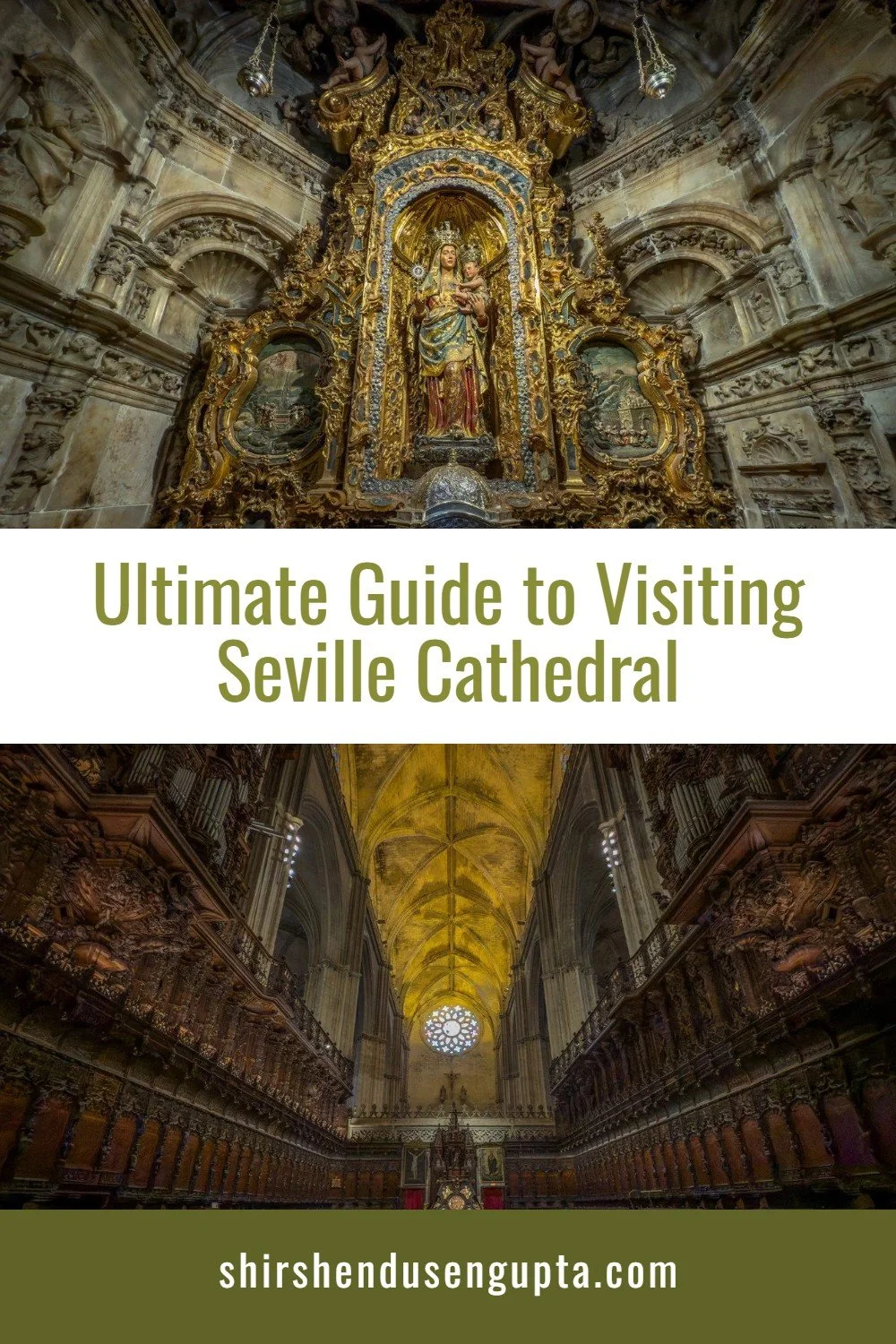






Rocamadour is one of France’s most extraordinary pilgrimage destinations, suspended between earth and sky in the Dordogne Valley. Its history stretches back to the early Middle Ages, when the hermit Amadour chose this cliff as a place of devotion. By the 12th century, Rocamadour had become a critical stop on the pilgrimage route to Santiago de Compostela, attracting kings, nobles, and ordinary pilgrims alike.