
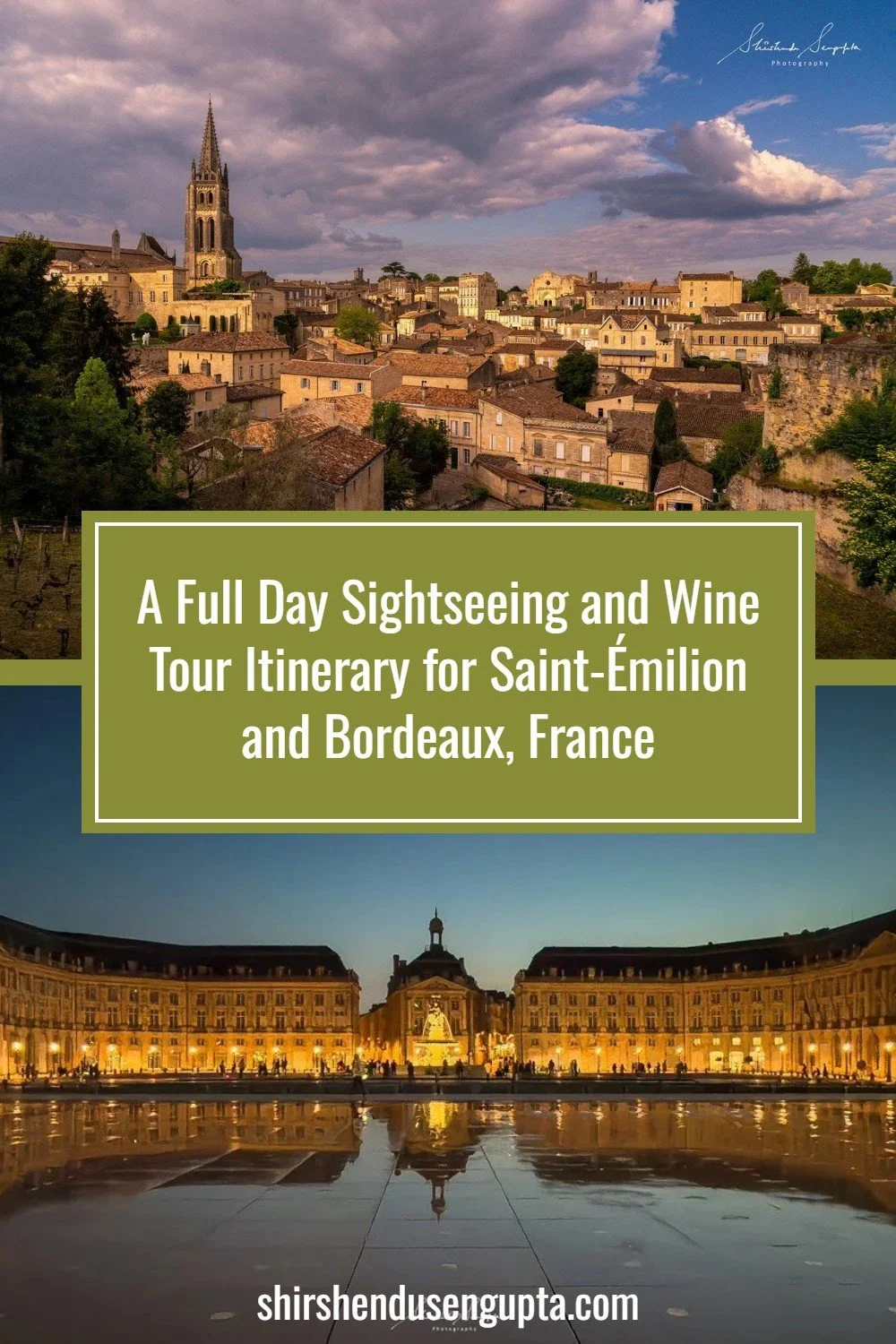
A Full Day Sightseeing and Wine Tour Itinerary for the UNESCO World Heritage Village of Saint-Émilion and Bordeaux, France
Prologue
During a memorable Easter, we set out on an epic adventure Where Europe Meets Africa | 7000 km Road Trip from the Netherlands to Morocco through Wine Roads, Holy Sites, and Clifftop Towns of France, Spain, and Gibraltar | Itinerary, Tips, and Tricks. What started as a casual idea soon unfolded into one of the most memorable experiences of our lifetime. Along the way, we wandered through medieval villages, sipped wine in quiet French vineyards, stood in awe at ancient cathedrals and abbeys, drove along coastal cliffs, and watched the cultures of Europe slowly melt into the soulful rhythms of Morocco.
Our first stop was in the UNESCO World Heritage Village of Saint-Émilion and Bordeaux, a region that blended everything we cherish about travel. The rolling vineyards, limestone architecture, and wine-making traditions created a beautiful beginning to our journey. So today, I invite you to join me as we explore the best experiences in Saint-Émilion and Bordeaux. Let the journey begin!
Welcome to Saint-Émilion and Bordeaux
Saint-Émilion is an enchanting medieval village situated in the heart of the Bordeaux wine region, a place where limestone houses, narrow cobblestone lanes, and terraced vineyards form a picture-perfect landscape. The story of this village begins with Émilion, a monk from Brittany who arrived in the area during the eighth century. Seeking solitude, he lived as a hermit inside a natural cave carved into the limestone cliffs. His piety attracted followers who settled around him, forming a community that eventually evolved into a spiritual center. After his death, pilgrims visited the site to honor his memory, and the settlement eventually became known as Saint-Émilion in tribute to the monk who shaped its early life. The wine-making culture began to flourish here during the Middle Ages, supported by the unique limestone soil that gives Saint-Émilion wines their distinctive character. Over the centuries, the village expanded with cloisters, churches, fortifications, and noble houses. The monolithic church (largest underground church in Europe), carved directly above the saint’s original hermitage, preserves the saint’s relics, making the village an important stop on the route to Santiago de Compostela (the final destination of the Camino de Santiago, or “Way of St. James,” a major Christian pilgrimage route that has been followed since the Middle Ages). Today, Saint-Émilion is recognized as a UNESCO World Heritage Site because of its continuous wine-making history and exceptionally preserved medieval architecture.
A short journey away lies Bordeaux, a vibrant port city known for grand boulevards, elegant squares, and a deep connection to wine, trade, and culture. Bordeaux rose to prominence during the Middle Ages and flourished under the English Plantagenet rule, which helped transform its wines into prized exports across Europe. The eighteenth century brought a wave of neoclassical architecture that shaped the city’s identity, giving Bordeaux its harmonious façades and riverfront charm. Today, it is a dynamic city filled with museums, markets, modern trams, and a thriving culinary scene. Together, Saint-Émilion and Bordeaux offer an unforgettable blend of history, landscapes, and experiences that enrich every traveler’s journey.
Saint-Émilion Morning Itinerary
1. Château Gaudet
We began our morning at Château Gaudet, a historic wine estate situated conveniently close to the main parking area of the village, namely the Gendarmerie (Police Station) car park. The moment we stepped out of the car, we were greeted by neatly aligned rows of grapevines stretching far into the horizon. The early sunlight brushed the leaves with a soft golden sheen, creating a peaceful scene that introduced us to the quiet elegance of Saint-Émilion’s wine traditions. Château Gaudet has roots that trace back centuries, and its land has long been recognized for producing remarkable wines shaped by limestone-rich soil and meticulous cultivation. The estate gained prominence during the eighteenth and nineteenth centuries when Bordeaux wines became an international symbol of luxury and refinement.
Walking around the property, we could sense how deeply intertwined winemaking is with the region’s identity. The vineyard reflects both heritage and craftsmanship, where each vine represents years of cultivation guided by local knowledge. Although we did not join a tasting at this early hour, simply being surrounded by the vines offered a serene beginning to the day. The beauty of Château Gaudet lies in its simplicity, the quiet hum of nature, and the timeless rhythm of a working vineyard. It set the perfect tone for our journey through Saint-Émilion.
2. Clos Fourtet
After visiting Château Gaudet, we continued our journey through the historic vineyards of Saint-Émilion with a stop at Clos Fourtet, one of the most prestigious wine estates in the region. Located just a short walk from the medieval village, this renowned vineyard sits on the limestone plateau that has helped shape Saint Émilion’s reputation as one of Bordeaux’s finest wine-producing areas. The history of Clos Fourtet dates back to the eighteenth century, when vineyards began developing near the old fortified walls of the town. The name “Fourtet” is believed to come from the word “fort,” reflecting the estate’s proximity to former defensive structures that once protected the village. Over time, the estate became known for wines that express the character of the local limestone soils and the traditional craftsmanship of Bordeaux winemaking.
Today, Clos Fourtet holds the highly respected classification of Premier Grand Cru Classé, placing it among the top estates in Saint Émilion. The vineyards are planted mainly with Merlot, complemented by Cabernet Franc and a smaller portion of Cabernet Sauvignon. When you visit, you can explore the fascinating underground limestone cellars before enjoying guided tastings that showcase the elegance and complexity of these celebrated wines.
3. Les Grandes Murailles Wall
A brief walk from Clos Fourtet brought us to Les Grandes Murailles, the striking remains of a medieval Dominican convent that once stood proudly on the northern edge of the village. Today, only a single monumental wall survives, rising directly from the vineyard landscape like a grand fragment of a forgotten fortress. The wall dates back to the thirteenth century when the Dominican order established a presence in Saint-Émilion, contributing to the spiritual life of the village and the religious scholarship of the region. The convent was part of a broader network of monastic communities that shaped medieval Europe, using their knowledge to support agriculture, wine cultivation, education, and faith-based service.
Although the convent was destroyed during the tumultuous French Wars of Religion (a series of eight civil wars in France from 1562 to 1598, primarily between Catholics and French Protestants, also known as the Huguenots)in the sixteenth century, the surviving wall stands as a reminder of its past grandeur. Its imposing height and weathered stones tell a story of resilience, endurance, and the powerful monastic influence that once echoed through these vineyards. Standing before it, we felt a deep sense of history. The contrast between the fragile silence of the village and the strength of the wall created an atmosphere that seemed to pull us back in time. The site offers visitors an unforgettable moment surrounded by beauty and heritage.
4. Couvent des Jacobins
Continuing our walk from the historic ruins of Les Grandes Murailles, we soon arrived at Couvent des Jacobins, a place where centuries of religious history meet the celebrated wine culture of Saint-Émilion. Founded in the late thirteenth century, this monastery was established by Dominican monks who were commonly known as Jacobins in France. The order played an important role in religious teaching and scholarship throughout medieval Europe. The monks built their convent near the heart of the village, creating a peaceful religious center surrounded by vineyards and stone streets. Over time, the monastery became closely connected with local agriculture and winemaking, cultivating vines that thrived in the limestone-rich soils of the region. Although the original monastic community eventually disappeared after the upheavals of the French Revolution, the historic property continued its connection with wine production.
Today, the Couvent des Jacobins is both a historic monument and an active wine estate. Visitors can explore the beautifully preserved cloisters and underground cellars, which reveal fascinating glimpses of monastic life. Guided tastings allow us to discover elegant Saint-Émilion wines produced from vineyards that continue a tradition first established by the monks centuries ago.
5. Collegiate Church and Cloister
Our path continued toward the Collegiate Church of Saint-Émilion, a magnificent structure that dominates the center of the village. Built during the twelfth century, this church is one of the most significant Romanesque monuments in southwestern France. Its size, stone carvings, and architectural harmony reveal the importance of the religious community that once flourished here. The collegiate chapter, composed of canons who dedicated their lives to study and prayer, shaped the spiritual character of the village for many centuries. Their presence elevated Saint-Émilion into an influential religious hub visited by pilgrims traveling across France.
Stepping inside, we were drawn to the serene atmosphere created by high stone vaults, stained glass windows, and intricately carved capitals. The interior combines Romanesque solidity with later Gothic additions, offering a visual journey through different architectural periods. After admiring the church, we entered the adjoining cloister, a peaceful sanctuary framed by slender columns and decorated arches. Historically, cloisters served as quiet spaces for reflection, reading, and meditation. Standing in the courtyard, we could imagine the canons pacing slowly along the corridors, their footsteps echoing softly against the stone. The Collegiate Church and Cloister provide a meaningful connection to medieval spirituality and a glimpse into Saint-Émilion’s enduring cultural legacy.
6. Monolithic Church of Saint-Émilion
The highlight of our morning, and perhaps one of the most extraordinary experiences in southwestern France, was our visit to the Monolithic Church of Saint-Émilion. Unlike traditional buildings constructed stone by stone, this remarkable church was carved entirely into the limestone bedrock during the twelfth century. It is the largest underground church in Europe, an architectural marvel that reveals the incredible determination and skill of medieval craftsmen. From the outside, visitors see only a bell tower and a modest entrance that offer no hint of the immense space hidden below. The interior contains towering pillars, vaulted ceilings, and chapels carved directly from the rock, creating an atmosphere that feels ancient and sacred.
We purchased our tickets at the nearby office because self-guided visits are not allowed, and then joined a guided tour that began near the charming square in front of the Amelia Canta restaurant. The guide helped bring the history of the site to life, describing legends, carvings, and burial chambers that connect the church to the earliest Christian communities of the region. The silence inside the cavernous hall felt almost mystical.
To know more about the Monolithic Church of Saint-Émilion and how to visit it, please read our article Visiting the Largest Underground Church in Europe - Monolithic Church of Saint-Émilion, France.
7. Clock Tower of the Monolithic Church
After completing the tour, we made our way to the Clock Tower, known locally as the Tour du Clocher, which rises directly above the Monolithic Church and forms one of the most iconic silhouettes of Saint-Émilion. The tower dates to the thirteenth century and was constructed as part of the broader complex surrounding the underground church. It served both as a bell tower and as a symbol of civic pride for the medieval community. The climb to the top is steep, with narrow stone steps spiraling upward inside the tower’s core, but the effort is richly rewarded.
From the summit, the panoramic view is nothing short of breathtaking. Terraced vineyards spread out in every direction, forming a patchwork of green and gold across the rolling countryside. The rooftops of the medieval village lie immediately below, clustered around narrow lanes that twist between ancient houses, wine shops, and small squares. This high vantage point allows visitors to appreciate how the village and its vineyards merge seamlessly into one landscape shaped by centuries of human effort. Standing at the top, with the wind gently brushing against our faces, we understood why Saint-Émilion remains such a beloved destination. The tower offers an unforgettable perspective that completes the morning’s historical journey.
View from the clock tower of the Monolithic Church
8. Cloître des Cordeliers
A gentle walk through the village led us to the Cloître des Cordeliers, another historic gem of Saint-Émilion. This site was originally a Franciscan monastery established in the fourteenth century. The Franciscans, known for their simple lifestyle and devotion to community service, built a peaceful complex that included a church, cloister, and gardens. Although the monastery suffered extensive damage during the Wars of Religion, much of the cloister remains intact, providing a beautiful setting filled with greenery and medieval stonework.
Today, the Cloître des Cordeliers is famous for a different yet equally fascinating tradition. Beneath the cloister lies a network of underground tunnels and cellars where sparkling wines have been produced for more than a century. The limestone environment provides ideal conditions for aging, giving the wines their delicate texture. Visitors can stroll through the gardens, admire the cloister’s arches, and then enjoy a glass of sparkling wine in the outdoor seating area that blends history and relaxation. The combination of monastic heritage and modern winemaking creates a unique atmosphere. It is a place where the past and present coexist in perfect balance, making it one of the most charming stops in Saint-Émilion.
9. Porte Brunet
We continued our walk toward Porte Brunet, one of the last surviving medieval gates of Saint-Émilion. Built during the thirteenth century, the gate once formed part of the village’s defensive walls that protected residents from invasions and local conflicts. In the Middle Ages, fortified entrances like Porte Brunet served both military and administrative functions. They controlled the movement of people and goods, collected tolls, and helped enforce local laws. The gate stands on the northeastern side of the village, opening directly onto the vineyards that have shaped Saint-Émilion’s identity for centuries.
Passing through the archway feels like stepping from one world into another. On one side lies the charming medieval village, filled with narrow streets and centuries-old buildings. On the other side, the landscape expands into broad vineyard slopes lined with rows of vines stretching as far as the eye can see. Historically, this gate was a key route for merchants who transported wine from the village cellars to nearby towns. The passage offers stunning photo opportunities, especially during early morning or late afternoon when the light softens over the vines. Porte Brunet stands as a testament to the village’s medieval architecture and its longstanding connection with viticulture.
10. Château La Clotte
Just beyond Porte Brunet lies Château La Clotte, a Grand Cru Classé estate nestled discreetly into the limestone cliffs. The estate dates back to at least the eighteenth century, although its vineyards were cultivated long before formal records were kept. La Clotte is known for its picturesque setting, where the vineyard slopes blend harmoniously with the rocky outcrops that define this part of Saint-Émilion. Over the centuries, the estate has passed through several families, each contributing to its reputation for producing refined and expressive wines that reflect the unique geology of the region.
Visitors who wander up the small paths around La Clotte are greeted with gentle views of terraced vineyards, stone houses, and the ancient walls of the village rising in the background. The estate’s location near the medieval gate also highlights the historical intertwining of agriculture and settlement patterns. Wine production here follows traditional methods that respect the terroir while embracing modern techniques that enhance quality. Although the estate is more reserved compared to some larger vineyards, its charm lies in this quiet authenticity. It captures the intimate spirit of Saint-Émilion, where every slope, cellar, and vine tells a story shaped by centuries of devotion to winemaking.
11. King’s Tower (Tour du Roy)
After visiting Château La Clotte, we continued our exploration of Saint-Émilion with a climb to the top of the King’s Tower, known locally as the Tour du Roy. This imposing stone structure dates back to the thirteenth century and remains one of the few freestanding Romanesque keeps in the region. Historians believe it may have served as the administrative center of the Jurade, the medieval wine brotherhood that governed the village and regulated wine quality. The tower symbolizes the close relationship between civic authority and viticulture, a connection that still defines Saint-Émilion’s identity today.
The climb inside the tower is steep, with narrow stairways winding through thick walls built to withstand conflict. However, reaching the top is a rewarding experience. From the summit, the entire village unfolds below in a panorama that includes church towers, terracotta rooftops, and geometric vineyards stretching toward the horizon. The view offers a deeper appreciation for the landscape shaped by both nature and human craftsmanship. It is easy to imagine medieval officials standing here centuries ago, surveying the land that provided the village with its prosperity. The King’s Tower offers a fitting conclusion to a morning filled with history, architecture, and the timeless beauty of Saint-Émilion.
12. Strolling through the Old Town streets of Saint-Émilion
After descending from Tour du Roy, we embraced our final moments in Saint-Émilion with a slow, unhurried walk through its enchanting old town. Cobbled lanes curved gently between honey colored stone buildings, guiding us past quiet courtyards, small chapels, and centuries-old wine shops. Every corner revealed details that reflected the village’s deep connection to history and viticulture, from carved doorways to vine-covered walls.
As we wandered without a fixed plan, we discovered hidden viewpoints overlooking the surrounding vineyards and charming squares where cafés invited us to pause one last time. The rhythm of life felt timeless, shaped by traditions that had endured for generations. This final stroll became the perfect conclusion to our time in Saint Émilion, allowing us to fully absorb its character before leaving. It was not just a walk, but a quiet farewell to a village where history, wine, and daily life blended seamlessly together.
Bordeaux Evening Itinerary
1. Cathédrale Saint-André de Bordeaux
After exploring Saint-Émilion, we drove to Bordeaux and parked at Parking Indigo Bordeaux Bourse Jean Jaurès on Quai du Maréchal Lyautey. Our first major stop was the magnificent Cathédrale Saint-André, an architectural masterpiece that dates to the eleventh century. The cathedral gained prominence during the twelfth and thirteenth centuries when Bordeaux became an important political center under the rule of the English Plantagenet dynasty (a royal house founded by Geoffrey V, Count of Anjou, France, that ruled England from 1154 to 1485, a period of 331 years). Its soaring Gothic nave, intricately carved portals, and monumental transept reflect the wealth and influence of the medieval city. The cathedral hosted several significant events, including the marriage of Eleanor of Aquitaine to Louis VII, which shaped European political history.
2. Tour Pey Berland
Beside the cathedral stands the Tour Pey Berland, a separate bell tower constructed during the fifteenth century. The tower was built independently to protect the structural integrity of the cathedral, which could not support heavy bells. Today, visitors can climb its steps to reach a viewing platform that offers sweeping views of Bordeaux’s historic center, including elegant squares, classical façades, and the winding Garonne River. The combination of the cathedral and the tower provides a fascinating journey through centuries of religious and architectural development. It was the perfect introduction to the lively and elegant atmosphere of Bordeaux.
3. Statue of Jacques Chaban-Delmas
After visiting the magnificent Cathédrale Saint-André de Bordeaux and the nearby Tour Pey-Berland, we continued our walk through the historic center of Bordeaux toward the riverfront, where we encountered the Statue of Jacques Chaban-Delmas, that pays tribute to one of the most influential political figures in the city’s modern history.
Jacques Chaban Delmas served as the mayor of Bordeaux for nearly five decades, from 1947 to 1995, shaping the city’s development and identity in the postwar era. He also held the position of Prime Minister of France, further cementing his importance on the national stage. The statue captures his dignified presence, standing as a symbol of leadership and civic pride.
Located near the elegant riverfront, the monument offers a quieter moment of reflection compared to the grandeur of the cathedral. As we paused here, we appreciated how Bordeaux seamlessly blends its medieval heritage with modern history. The statue not only honors a prominent leader but also represents the continuity of the city’s evolution, from its historic roots to its contemporary significance.
4. Grosse Cloche
A short and pleasant walk from the statue of Jacques Chaban Delmas brought us to the Grosse Cloche, one of Bordeaux’s most celebrated historical landmarks. The structure served as a former city gate and was part of the medieval defensive walls that protected the town. The gate’s central feature is a grand belfry containing a large bronze bell, cast during the eighteenth century, which historically rang to mark significant events, celebrations, and emergencies. Its name, which translates to “Big Bell,” reflects its importance to the civic life of Bordeaux. The belfry is flanked by two round towers connected by an archway, creating a dramatic and picturesque silhouette.
The Grosse Cloche was once used as a prison for delinquent youths, a detail that adds to its layered history. Above the arch, a beautifully preserved clock displays ornate hands and a golden sun symbol that brightens the façade. The surrounding neighborhood is a charming area with narrow streets, half timbered houses, artisan shops, and cafés that offer a glimpse of old Bordeaux. Standing beneath the arch, we could feel how this monument once served as a gateway between the commercial district and residential quarters. It remains a beloved symbol of the city and a must see stop for any visitor exploring Bordeaux.
5. Place de la Bourse and Miroir d’eau
Our final stop of the evening was the majestic Place de la Bourse, one of the most iconic squares in Europe. Designed during the eighteenth century under the reign of Louis XV, the square represents Bordeaux’s transformation into a model of classical French urban planning. Its harmonious façades, decorated with sculpted pediments and arched windows, create a sweeping curve that opens toward the Garonne River. The square once housed the royal customs offices, symbolizing the city’s thriving maritime trade and economic prosperity during the Enlightenment period.
Directly in front of the square lies the Miroir d’eau, a shallow reflecting pool that has become one of the most photographed attractions in Bordeaux. Installed in 2006, it alternates between still water, light mist, and mirror-like reflections that beautifully capture the elegant architecture surrounding it. As evening descended, the lights of the buildings shimmered across the water’s surface, creating a magical scene perfect for photography and quiet reflection. Locals and visitors gathered barefoot along the edge, enjoying the cool sensation of the water after a day of walking. The combination of history, artistry, and modern design makes Place de la Bourse a remarkable place to end a day of sightseeing in Bordeaux.
Visiting Saint-Émilion and Bordeaux
Best Time to Visit: The best time to visit Saint-Émilion and Bordeaux is between April and October when the vineyards are lush, and the weather is pleasant for sightseeing. Spring brings fresh greenery and fewer crowds, while summer offers lively festivals and long daylight hours. Autumn is especially beautiful because the vineyards turn shades of gold and red, and many wineries begin harvest activities. Winter is quiet yet charming, although some attractions may have limited hours. Overall, late spring and early autumn offer the most balanced experience, combining mild temperatures, vibrant scenery, and relaxed travel conditions. We visited Saint-Émilion and Bordeaux during the Easter holidays (April end - May start).
Number of Days to Stay: I think two days is ideal for visiting Saint-Émilion and Bordeaux, although three or more days will allow you to explore both destinations at a comfortable pace. One full day is enough to enjoy the highlights of Saint-Émilion, including vineyard visits, historical sites, and scenic viewpoints. Another day can be dedicated to Bordeaux’s architectural landmarks, riverfront walks, and cultural attractions. If you have additional time, consider joining a wine tasting tour, exploring the Médoc or Pessac-Léognan regions, or revisiting favorite spots. The region rewards slow travel, offering countless opportunities for photography and culinary experiences.
Best Place to Stay: Travelers who wish to immerse themselves in vineyard life should consider staying in or around Saint-Émilion, where charming boutique hotels and vineyard lodges offer peaceful countryside views. Those who prefer a lively urban atmosphere may choose accommodations in central Bordeaux, especially near the historic district or the Garonne riverfront. Staying in Bordeaux also provides convenient access to restaurants, museums, and public transportation. For visitors with extra time, combining one night in Saint-Émilion with one or two nights in Bordeaux creates the perfect balance between rural tranquility and city sophistication. We stayed in the nearby city of Mérignac, where we found more affordable accommodation than in Bordeaux.
Best Way to Arrive: The easiest way to reach Saint-Émilion and Bordeaux is by flying into Bordeaux Mérignac Airport or arriving by high-speed train from major French cities such as Paris, Lille, or Lyon. From the airport or train station, car rentals are readily available and offer the greatest flexibility for exploring vineyards and countryside roads. Saint-Émilion is located about 50 minutes from Bordeaux by car. Travelers who prefer public transportation can take regional trains from Bordeaux to Saint-Émilion, although the schedule is less frequent. Driving remains the most convenient option for a full-day itinerary. We drove in these places in our car from the Netherlands.
Best Local Mode of Conveyance: Within Saint-Émilion, the best way to explore is on foot because the village is compact and filled with narrow, sloping streets that create a beautiful walking experience. For vineyards located outside the center, driving or joining a guided tour is recommended. In Bordeaux, walking is ideal for the historic district, while trams and buses provide easy connections across the city. Bordeaux’s modern tram network is efficient and affordable, offering direct access to major attractions, markets, and riverfront areas. Cycling is also popular, with dedicated paths throughout the city.
Epilogue
Our day in Saint-Émilion and Bordeaux became one of the most memorable chapters of our long journey from the Netherlands to Morocco. The blend of medieval architecture, vineyard landscapes, and vibrant city life created a beautiful contrast that captured the spirit of southwestern France. From underground churches to sparkling wine cellars and grand riverfront squares, each stop revealed stories shaped by centuries of tradition. I hope this itinerary inspires your own adventure through these remarkable destinations. Please let us know in the comments below if you enjoyed reading this article.
And if you want to read the day-by-day account of our 7000 km road run from the Netherlands to Morocco during Easter, please visit our article Where Europe Meets Africa | 7000 km Road Trip from the Netherlands to Morocco through Wine Roads, Holy Sites, and Clifftop Towns of France, Spain, and Gibraltar | Itinerary, Tips, and Tricks. Until then, merry traveling and happy shooting!
Pin the article
Bookmark the article for reading later!

Want to license/buy photos in the article?
License photos for commercial/editorial use or buy photo prints!
Want us to write an article for you?
Articles for magazines, newspapers, and websites!
Watch our Videos
Check out our videos on our Youtube Channel!
Join the Newsletter
Get updates on our latest articles!
We respect your privacy. Read our policy here.





Prague, the enchanting capital of Czechia, is a city where medieval streets, Gothic cathedrals, Baroque palaces, and riverside panoramas come together in a single unforgettable travel experience. Set along the banks of the Vltava River, it has captivated travelers for centuries with its fairy tale skyline and rich cultural atmosphere. Known as “The City of a Hundred Spires,” Prague blends history, architecture, music, literature, and everyday local life in a way few European cities can match.