
Where Europe Meets Africa | 7000 km Road Trip from the Netherlands to Morocco through Wine Roads, Holy Sites, and Clifftop Towns of France, Spain, and Gibraltar | Itinerary, Tips, and Tricks
Prologue
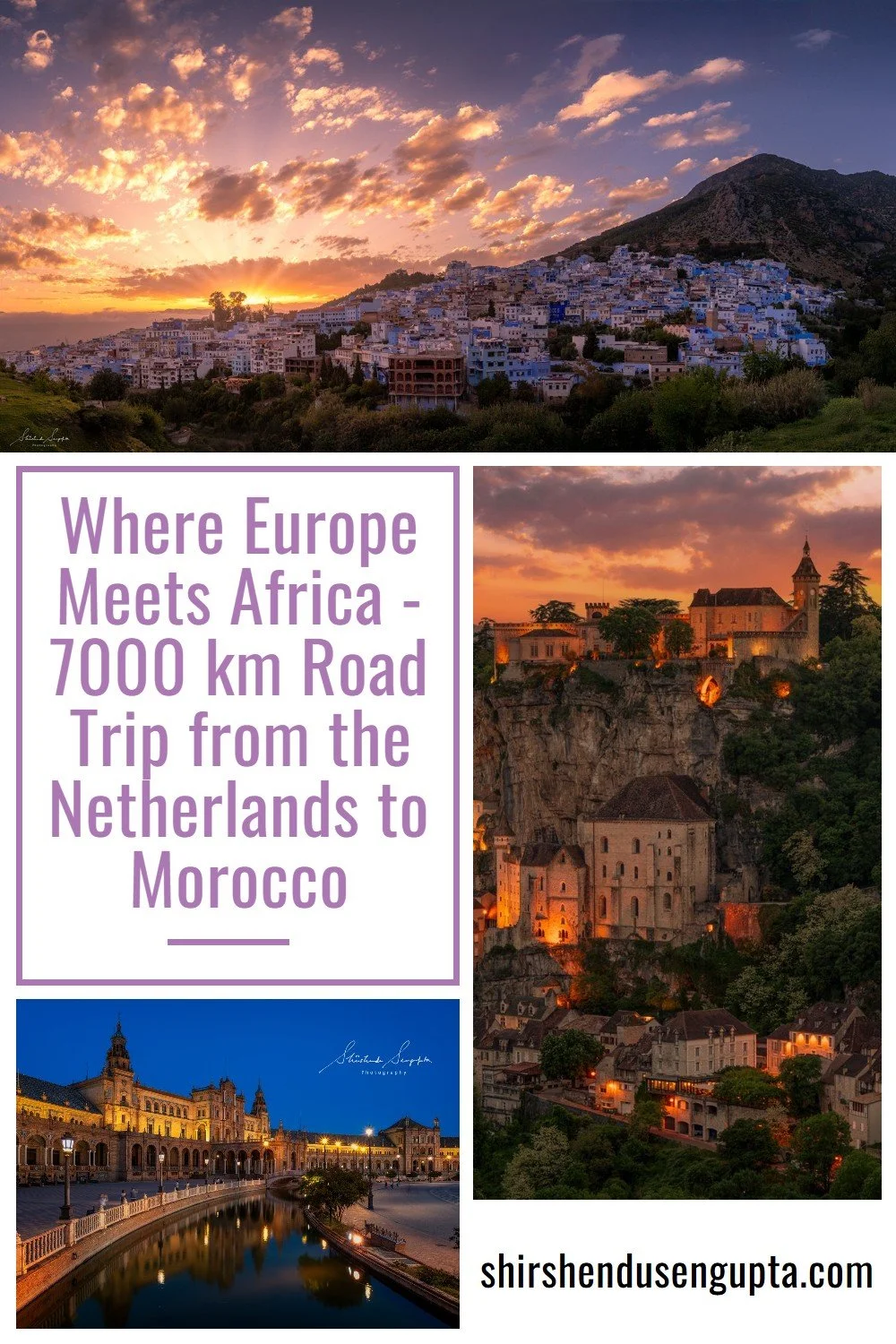
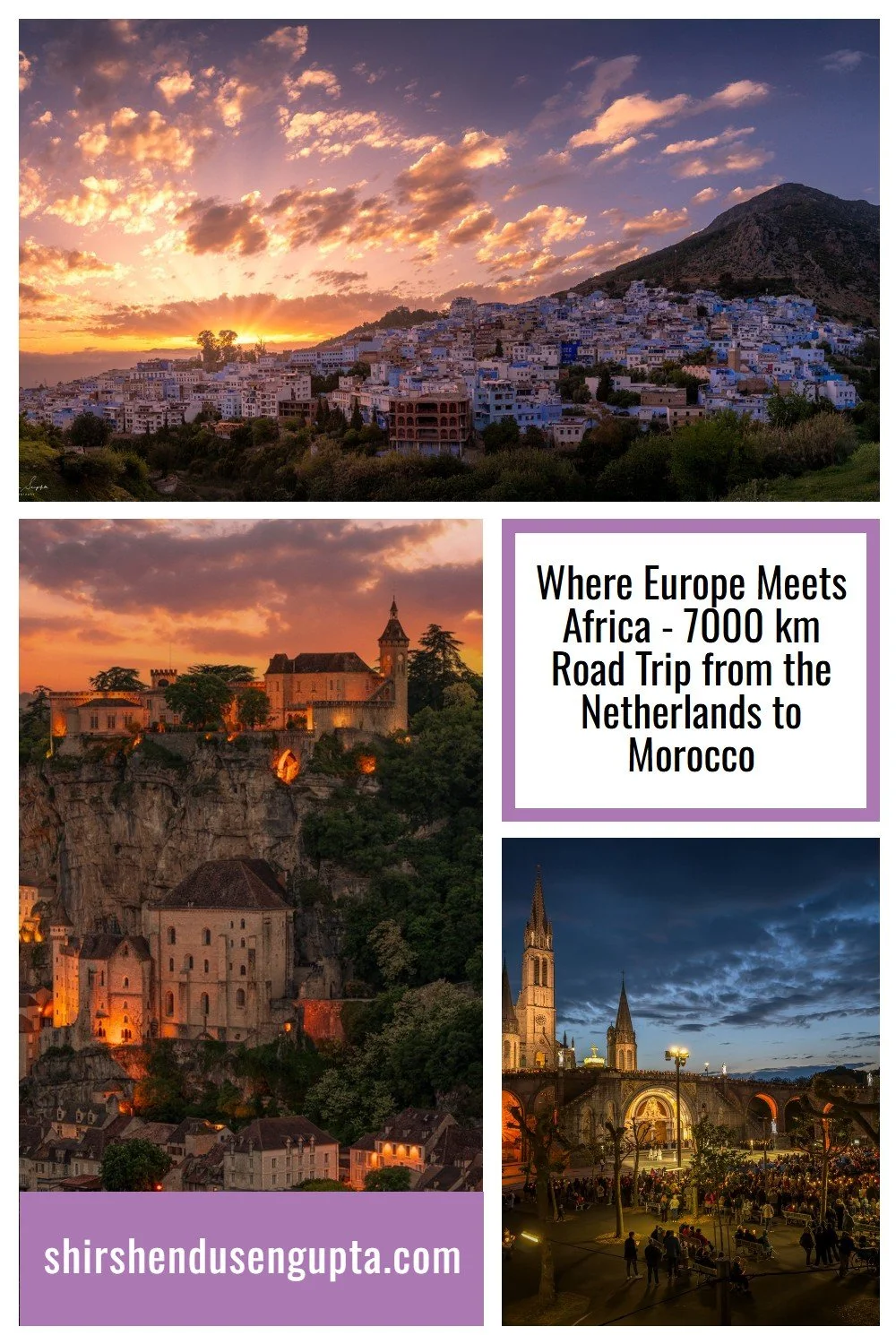
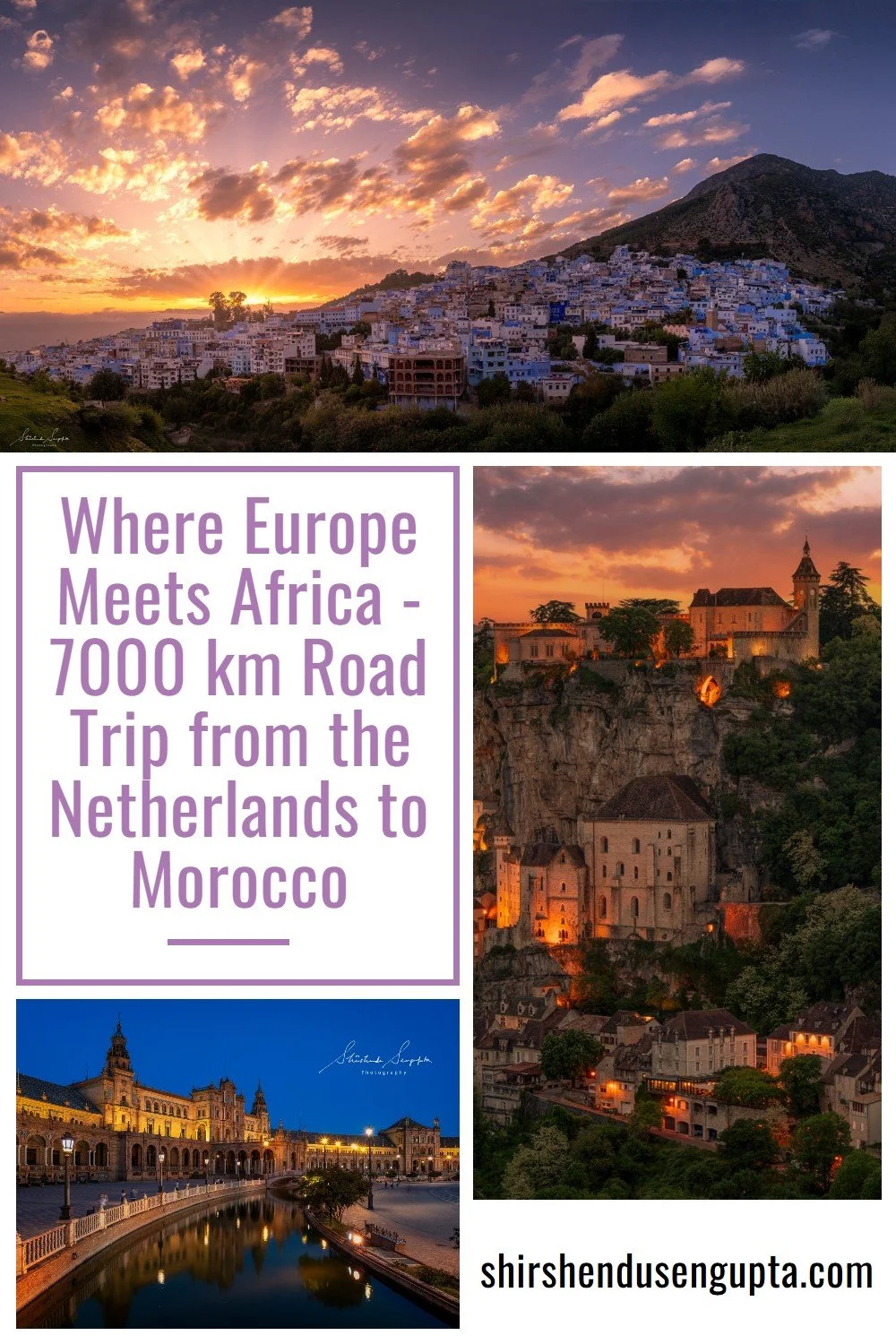
There’s something magical about crossing continents by car, witnessing Europe gradually give way to Africa, with every turn of the wheel revealing a new landscape, language, culture, or cuisine. Our epic 7000 km adventure began from the Netherlands and first took us south to the rolling vineyards of Saint-Émilion and Bordeaux in France. From there, we drove deep into Spain, soaking in the sun-kissed charm of Seville before crossing into Morocco to explore the blue alleys of Chefchaouen, the artistic vibes of Asilah, the coastal cityscapes of Tangier and Tétouan, and the tranquil seaside towns of M’diq and Martil. On our journey back, we passed through Gibraltar, where Europe and Africa almost touch, then re-entered France for a spiritual pause in Lourdes and Rocamadour before heading back home to the Netherlands.
But this wasn’t just any road trip; it was a journey full of unexpected twists and real travel drama. A massive blackout hit southern Spain, knocking out power while we were on the way to Seville. Upon reaching Seville at midnight, we found ourselves locked out of our accommodation due to a mismatched key. At the port of Algeciras in Spain, we got lost in a maze of terminals, with a 6-hour delay for the ferry to Morocco only adding to the chaos. And just when we thought we’d made it into Morocco, our apartment was canceled last minute after a building-wide electrical fuse blew out. Then there was Gibraltar, where we reluctantly paid €237 for a two-hour Rock Tour taxi ride, discovering that the monkeys weren't the only ones climbing steep prices!
However, amidst all this uncertainty, the road itself never stopped surprising us with moments of absolute wonder, like climbing the medieval towers in Saint-Émilion, watching golden rays pour over Seville’s Plaza de España, wandering the dazzling blue alleys of Chefchaouen, beholding Atlantic crash into the Mediterranean in Gibraltar, joining the midnight candlelight procession in Lourdes, and tracing the cliffside sanctuary paths of Rocamadour!
This article documents that incredible journey - a day-by-day account filled with real travel moments, detailed itineraries, tips, and lessons learned along one of the most unforgettable road trips we've ever taken. Let the journey begin!
The Itinerary
Day 1: Driving from Hoofddorp (the Netherlands) to Mérignac (France)
On a beautiful morning during the Easter holidays, we set off from our home in Hoofddorp, Netherlands, embarking on a long 1,100 km drive to Mérignac, a charming suburban town in the Bordeaux wine region of France known for its affordable accommodation options. The journey took us roughly 14 hours, including lunch and snack breaks along the way. Once we arrived, we checked into our lodging and rested up for the adventures ahead.
Day 2: Exploring Saint-Émilion and Bordeaux (France)
Saint-Émilion
On the early morning of Day 2, we drove about 60 km (roughly 1 hour) from Mérignac to Saint-Émilion and parked at the Gendarmerie car park. Saint-Émilion is an enchanting medieval village nestled in the heart of the Bordeaux wine region, renowned worldwide for its exceptional vineyards and historic charm. The village was named after Émilion, a Breton monk from the northwest region of Brittany, France, who settled here in the 8th century. Seeking solitude, Émilion lived as a hermit in a cave carved into the limestone cliffs. His holiness and way of life soon attracted followers, and a small community grew around his hermitage. After his death, the area became a pilgrimage site, and the village took his name, Saint-Émilion, in his honor. Today, this UNESCO World Heritage Site invites visitors to step back in time, wandering cobbled streets, ancient churches, and centuries-old wine estates.
We took time to wander through the enchanting streets of Saint-Émilion, allowing the atmosphere of the village to unfold at a slower pace. Cobbled lanes curved gently between honey colored stone buildings, leading us past quiet courtyards, small chapels, and centuries-old wine shops. Every corner revealed details that reflected the village’s deep connection to history and viticulture, from carved doorways to vine-covered walls. But the highlight of the day, and perhaps one of the most unforgettable sights in all of southwestern France, was our visit to the Monolithic Church of Saint-Émilion. This extraordinary underground church, carved entirely out of a single block of limestone, dates back to the 12th century and is one of the largest monolithic churches in Europe.
To know more about the Monolithic Church of Saint-Émilion and how to visit it, please read our article Visiting the Largest Underground Church in Europe - Monolithic Church of Saint-Émilion, France.
Bordeaux
After exploring Saint-Émilion, we drove approximately 50 km (around 1 hour) to Bordeaux city and parked at Parking Indigo Bordeaux Bourse Jean-Jaurès on Quai du Maréchal Lyautey. The city of Bordeaux is a stunning blend of classical and modern. Known as the “Wine Capital of the World,” Bordeaux boasts grand 18th-century architecture, lively riverfronts, and a buzzing cultural scene. The city’s historic center is also a UNESCO World Heritage Site. Bordeaux’s dynamic food and wine culture perfectly complements the nearby vineyards, making it a must-visit for anyone exploring southwestern France.
Our walk through the historic lanes of Bordeaux took us past impressive cathedrals, bell towers, and monumental city gates, still standing as reminders of its glorious past. As the afternoon progressed, the atmosphere shifted toward the riverfront, where open squares, elegant symmetry, and reflective water features created a calm and cinematic setting. The blend of classical architecture and modern energy made the experience feel both timeless and alive, offering a perfect balance between exploration and relaxation before ending our day in this remarkable city. After exploring Bordeaux, we had dinner and drove back to our hotel in Mérignac.
To know more about the best places to visit in Saint-Émilion and Bordeaux, please read our article A Full Day Sightseeing and Wine Tour Itinerary for the UNESCO World Heritage Village of Saint-Émilion and Bordeaux, France.
Day 3: Driving from Mérignac (France) to Seville (Spain), amidst Spanish Grid Blackout, Fuel Panic, Midnight March with Luggage, and Key Fiasco
Spanish Blackout and Fuel Panic
On the next morning, we left Mérignac, France, for what was supposed to be a long but straightforward drive to Seville, the vibrant capital of the Andalusian region in Southern Spain, famous for Moorish palaces, flamenco, sun-drenched plazas, and orange tree-lined cobbled alleys. The route spanned over 1250 km, and we were mentally prepared for spending 14-15 hours on the road. What we weren’t prepared for, however, was a historic nationwide power grid failure that would throw much of Spain, and parts of Portugal, into chaos!
As we entered Spain, we began noticing eerie signs - no lights, no fuel, and nothing electronic was working. It quickly became clear that a widespread blackout had hit the Iberian Peninsula. Petrol pumps were shut, card machines were offline, and ATMs were dead. At one station, we saw a long queue of cars and confused drivers being told that the outage might last anywhere from 6 to 24 hours. We had more than half a tank left, which could get us another 7 to 8 hours down the road. I made a decision - we’d keep going. I called our Seville accommodation just to check, and the host confirmed that power was out there too.
But our petrol was running out fast. Just an hour before Seville, we knew we had to stop. We entered a fuel station, expecting to wait indefinitely. But then came a stroke of luck; the power had just come back on. Unfortunately, card machines and ATMs were still down, but thankfully, we had enough cash on hand to fill the tank and grab a quick sandwich. Relieved but exhausted, we finally reached Seville around midnight, only to face another round of chaos.
Seville Midnight March with Luggage and Key Fiasco
Our apartment was located in the heart of Seville’s old town, a beautiful but completely pedestrianized area. There was no parking anywhere nearby. So, we had to park our car 2 km away and walk through narrow streets and quiet alleys for 20 minutes, pulling three massive trolley bags and carrying a camera backpack and a laptop case. Navigating the cobbled streets of a sleeping city with that load was no easy feat, especially after a 14-hour drive.
And then came the final blow. The staff had left the wrong keys for us in the secure lockbox. The inside apartment key was fine, but the outside main door key to the building itself didn’t work. I called the host, who didn’t speak English, and she asked me to WhatsApp her. Through messages, I explained that we were locked out. But she kept insisting the keys were correct and that we weren’t using them properly. I requested her to send someone to help. But she said she didn’t live in Seville and refused to offer any assistance. Stranded outside in the dead of night, with a tired child and all our luggage, we were at a loss. Then, out of nowhere, a kind Spanish couple appeared like guardian angels. They tried the keys themselves, confirmed the problem, called the host, and stayed on the phone with her for an hour, from midnight to 1:30 AM, trying to convince her this was unacceptable. Still, the host refused to act. Desperate, the couple started ringing the doorbells of residents inside the building. Eventually, one kind soul opened the gate for us and let us in.
This day was one of the most emotionally and physically exhausting parts of our entire journey. Between the blackout, fuel uncertainty, the midnight baggage march, and the key fiasco, it felt like a real endurance test. But it all ended well, and we hit the bed hard, dog tired!
Day 4: Getting the Right Key and Exploring Seville (Spain)
After the chaos of the previous night, we woke up hoping for a calmer day. I texted the host again, asking her to send someone by 10:00 to provide the correct outer door key as we had tickets to the Royal Alcázar Palace for 10:30. She replied coldly, saying she couldn’t guarantee anything. Not wanting to repeat the nightmare, I approached the building’s janitor when he arrived and explained everything. Thankfully, he gave me a spare key from his closet. That tiny piece of metal felt like a golden ticket after the stress of being locked out at midnight! So, after a quick breakfast, we set off on foot to explore Seville’s old town.
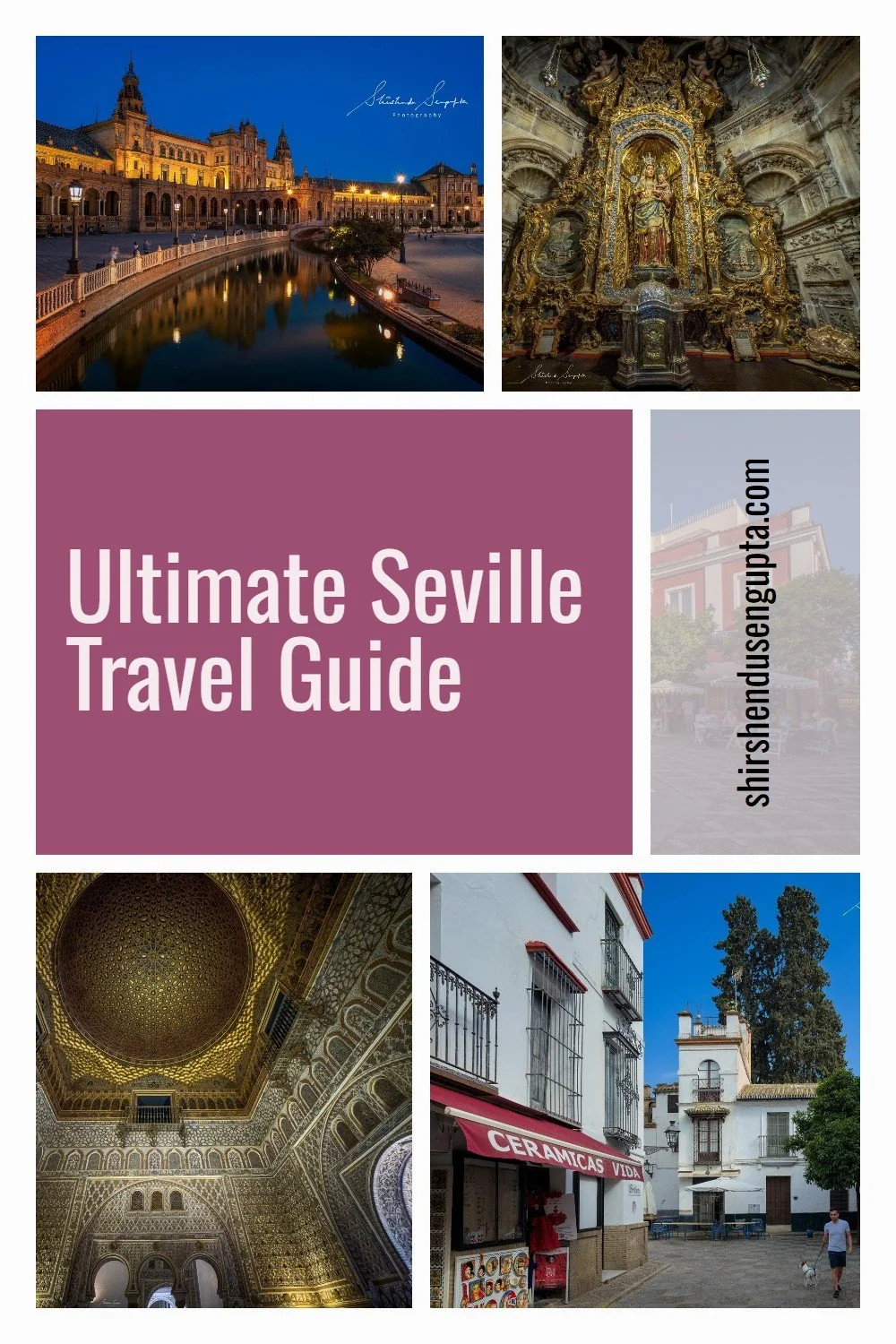
Seville (pronounced as ‘Seh-vayl’ in English) or Sevilla (pronounced as ‘Seh-bee-yah’ in Spanish) is the radiant capital of the region of Andalusia, Spain, where centuries of history unfold beneath the golden Spanish sun. Founded as the Roman city of Hispalis, Seville later flourished under Moorish rule, leaving behind an enduring legacy of stunning Islamic architecture, intricate tilework, and serene courtyards. After the Christian reconquest in 1248, the city transformed into a powerful cultural and economic hub, eventually becoming the gateway to the New World during Spain’s Age of Exploration. Seville has a unique way of revealing itself slowly, through its architecture, its music, and the easy warmth of its streets, where centuries of influence from different civilizations still shape the atmosphere.
The clear highlights of the day were the magnificent Royal Alcázar of Seville and the awe-inspiring Catedral de Sevilla. The palace felt like stepping into a dream, with its intricate details and serene spaces, while the cathedral impressed with its sheer scale and spiritual presence. Inside, the tomb of Christopher Columbus added a powerful historical dimension, connecting the city to the age of exploration. Beyond these landmarks, the old town offered a captivating blend of narrow lanes, sunlit plazas, and hidden courtyards. Orange trees lined the squares, and every turn revealed a new story. As evening fell, we soaked in the enchantment of Plaza de España until it got dark, before heading back to the center for dinner and a quiet walk to our apartment, ending the day on a relaxed note.
To follow our Seville exploration route, please read our article Ultimate Seville Travel Guide | Self-Guided Seville Walking Tour Itinerary | 26 Best Places to Visit, Top Things to See and Do in Seville, Spain.
The tomb of Christopher Columbus supported by four figures, each representing one of the historic Spanish kingdoms of his era: Castile, Aragon, Navarre, and León.
Day 5: Driving from Seville (Spain) to Algeciras (Spain) and Sailing to Tangier (Morocco) amidst Hotel Cancellation and Ferry Delay
The next morning, we checked out of our apartment in Seville with relief and left a well-deserved bad review on Booking.com. We drove 200 km in about two hours to reach Algeciras, the Spanish port city from where ferries cross into Tangier, the port city of Morocco, where we were planning to stay. Fate, however, wasn’t done testing our patience just yet.
Just as we were mentally shifting into Moroccan mode, a message popped up on my phone’s Booking.com app from our Moroccan apartment host that our original apartment booking had been canceled due to a building-wide fuse outage. Suddenly, we had no place to stay in Tangier. I messaged them requesting an alternate apartment, especially since we were traveling as a family and needed something urgently. Thankfully, they arranged a backup near Tangier Marina, but gave us no proper address, just a map pin on WhatsApp and the contact of a man who only spoke Arabic. I messaged him, informing him that we would arrive by 19:30 as per plan.
Meanwhile, we drove to Algeciras in Spain only to enter a labyrinth of ferry terminals. Algeciras is one of the largest cargo ports in Europe, especially for goods carriage and container shipping. The port is known for its massive terminals for commercial shipping, oil tankers, and container carriers, making it a predominantly industrial and goods-focused port. It also has passenger ferry terminals, especially for connections with Tangier Med (Morocco) and Ceuta, but the layout is complex and not very tourist-friendly. So there we were, getting looped over and over by GPS and street signs in circles, and passing the same checkpoints repeatedly. Even the police told us to follow signs that led nowhere. It was only thanks to a kind local who physically showed us the right lane that we finally got to the boarding line.
In the car queue for boarding, a group of unofficial-looking men approached, handed us “police entry forms,” and insisted we needed to fill and submit them onboard. Later, they demanded money for the forms. Scam alert! Don't fall for it—the forms are free and available inside the ship. Once on board, another surprise - the Moroccan police post for immigration stamping was shut. For four hours, we waited with the entire ship, passports in hand, not moving an inch. Only after the officers arrived and started stamping did the ship finally set sail for Tangier, six hours behind schedule. Locals shrugged and said, “It’s Africa.”
Finally, we reached Tangier Port at 1:30 AM, where our journey continued through border formalities. Our car had to go through an X-ray scanner, and we were asked to step out. Then came a full luggage check, opening each and every bag, right there on the ground, under dim floodlights. By the time we finally made it to the hotel at 2:30 AM, the contact person was fast asleep. We waited outside, hoping not to wake the neighborhood. Eventually, he arrived groggy-eyed with the key. But the surprise? The location was fantastic, right by the vibrant Tangier Marina, surrounded by cafes and restaurants still buzzing at 3 AM! We walked into a Syrian restaurant, had a piping hot dinner while the city sparkled around us, and then finally, fell asleep, deep into the Moroccan night.
Car X-ray scanner at Morocco Tangier port border checkpoint
Day 6: Exploring Chefchaouen (Morocco)
The next morning, we drove 115 km from Tangier to Chefchaouen, Morocco’s famed “Blue City,” in around 2.5 hours. Nestled in the Rif Mountains of northern Morocco, Chefchaouen is one of the country’s most enchanting towns, known worldwide for its dazzling blue-washed buildings. Founded in 1471 by Moulay Ali Ben Moussa Ben Rached El Alami to resist Portuguese invasions, Chefchaouen initially served as a fortress for Muslim and Jewish refugees fleeing Spain during the Reconquista (Spanish term for “reconquest” referring to a long series of wars in the Iberian Peninsula waged by Christian kingdoms in northern Spain to reclaim land from Muslim Moors who had conquered most of the peninsula in the early 8th century, lasting roughly from 711 to 1492). The reason behind the blue paint varies; some say it symbolizes the sky and heaven, others claim it keeps mosquitoes away, or simply helps cool down the buildings in summer. Whatever the origin, the effect is mesmerizing. Every wall, step, and alley seems dipped in serenity, making the medina feel like a living dreamscape.
We parked near the town center and began exploring on foot, wandering through narrow alleys bathed in shades of blue and decorated with flowers and hand-painted tiles. The calm atmosphere and friendly locals gave the town an enchanting feel. We paused for freshly squeezed juice and a delicious Moroccan tagine before continuing our walk through the maze-like medina, filled with small shops selling handmade crafts, rugs, ceramics, and leather goods. Every corner offered another postcard-perfect view, especially as the afternoon sun turned the blue walls to gold. Toward sunset, we hiked up a nearby hill for a panoramic view of the entire town glowing under the fading light, savoring a peaceful and unforgettable moment before enjoying a cozy dinner and driving back 115 km to our apartment in Tangier after dusk.
To know more about the best places to take mesmerizing pictures of Chefchaouen, please read our article, Ultimate Photographer’s Guide to Chefchaouen, the Blue City of Morocco | 29 Most Instagrammable Photo Spots in Chefchaouen (with GPS Coordinates) | 29 Best Things to See and Do in Chefchaouen.
Day 7: Exploring Hercules Caves, Cape Spartel, and Asilah (Morocco)
Hercules Caves
After a good night's rest in Tangier, Day 7 began with a scenic drive along the Atlantic coastline toward some of northern Morocco’s most iconic and dramatic landmarks. Our first stop was the legendary Caves of Hercules. Just a 20 km (30 mins) drive from Tangier, this natural grotto is steeped in Greek mythology.
Hercules, known as Heracles in Greek mythology, is one of the most iconic heroes of the ancient world, celebrated for his superhuman strength, courage, and enduring spirit. He was the son of Zeus, the king of the gods, and Alcmene, a mortal woman. This divine lineage made Hercules a demigod, gifted with immense power but also burdened with intense challenges. From birth, Hercules' life was marked by struggle. Hera, Zeus’s wife, was consumed with jealousy over her husband's infidelity and targeted the child with relentless vengeance. In a fit of divine-induced madness sent by Hera, Hercules tragically killed his wife and children, a deed that shattered him. To atone for this horrific act, the Oracle of Delphi instructed him to serve King Eurystheus, who assigned him 12 labors, a series of dangerous and impossible tasks involving fighting monsters, capturing wild beasts, and accomplishing seemingly impossible feats, as punishment and a way to cleanse himself of his sins. The labors were meant to test Hercules’ strength, courage, and intelligence. Completing them would redeem him and grant him immortality. Through these trials, Hercules became a legendary hero, symbolizing perseverance and redemption.
According to legend, during his tenth labor, which was to retrieve the cattle of Geryon, a fearsome giant, Hercules had to pass through the Atlas Mountains, then thought to be the edge of the known world. Instead of scaling the mighty mountain range, Hercules smashed through it with his superhuman strength, creating the Strait of Gibraltar and separating Europe from Africa. The Caves of Hercules are said to be the place where he rested after this heroic act before moving on to his eleventh labor.
The most striking feature is the cave’s opening to the sea, shaped like the map of Africa, a phenomenon created by centuries of tidal erosion. The views are mesmerizing, especially when waves crash against the opening, framing the blue Atlantic like a living painting. There's a small fee to enter, and the site combines natural beauty with mystical lore, making it both photogenic and memorable.
To know more about the Caves of Hercules and how to visit them, please read our article The Legendary Caves of Hercules | All You Need to Know Before You Embark on a Mythical Day Trip from Tangier, Morocco.
Cape Spartel
Next, we drove 5 km (around 10 minutes) to Cape Spartel, a dramatic headland just west of Tangier where the Mediterranean Sea meets the Atlantic Ocean. Standing near the historic lighthouse, built by Sultan Muhammad IV in 1864, we took in sweeping views of the rugged coastline, the rolling blue waters, and the constant rhythm of waves striking the cliffs. The cool sea breeze carried the scent of salt and wildflowers, creating a calm yet powerful atmosphere that travelers have admired for centuries.
Cape Spartel has long been a significant landmark for sailors and traders. Phoenician and Roman ships once navigated these waters, followed by Islamic merchants whose routes connected continents. Its role remained important through later colonial periods, especially as the nearby Strait of Gibraltar grew into one of the busiest maritime corridors on earth. The cape’s position at the gateway between Europe and Africa gives it both symbolic and geographic weight, which is immediately felt when you stand at the viewpoint.
Today, visitors come for the panoramic vistas and the peaceful walking paths that lead toward cliffside lookouts. On clear days, the Spanish shoreline appears across the sea. A small café near the lighthouse serves mint tea that pairs perfectly with slow moments of reflection beside this remarkable meeting point of oceans.
For a closer look at Cape Spartel, along with several other remarkable destinations in Northern Morocco, make sure to read our dedicated guide 8 Best Places to Visit in Northern Morocco.
Asilah
After soaking in the coastal drama, we drove about 50 km (in 1 hour) south to the whitewashed town of Asilah, a hidden gem on Morocco’s Atlantic coast. Enclosed within 15th-century Portuguese ramparts, Asilah feels like an open-air art gallery with its blue doors, street murals, and calm seaside air. Historic architecture blends Portuguese, Moroccan, and Andalusian influences, giving the town a timeless character, while ancient fortifications and watchtowers hint at its strategic past. The coastal views are breathtaking, with waves crashing against the ramparts and the Atlantic stretching into the horizon.
The medina is a maze of narrow lanes adorned with colorful murals that change each year during the town’s art festival. Wandering through its narrow lanes, we soaked in the serene ambiance, admired colorful doorways, and glimpsed the craftsmanship in palaces, mosques, and old churches that dot the town. The combination of history, art, and the sea created an almost dreamlike experience, where every corner offered a photo-worthy scene or a quiet moment of reflection. By evening, we drove back 60 km to our apartment in Tangier, ending the day with a relaxed dinner and quiet reflection on this blend of cultural heritage, creative expression, and coastal beauty.
To know more about the best things to do in Asilah, please read our article Perfect 1-Day Itinerary for Asilah | 13 Best Things To See and Do in Asilah on a Day Trip from Tangier, Morocco.
Day 8: Exploring Tétouan, M’Diq, and Martil (Morocco)
Tétouan
The next morning, we drove 60 km (about an hour) from Tangier to the heart of Tétouan and parked near one of its historic gates. Arriving in Tétouan felt like stepping into a living time capsule that preserves the artistic soul of northern Morocco. Cradled between the Rif Mountains and the Mediterranean coast, the city is often called “La Blanca” or “The White Dove” (“Hamama” in Arabic), a name inspired by its whitewashed architecture that symbolizes purity and peace. With its blend of Andalusian, Berber, and Spanish influences, Tétouan felt refreshingly authentic and untouched by mass tourism.
We wandered through the old quarter, a UNESCO World Heritage medina known for its intimate atmosphere and remarkably preserved character. Its narrow alleys, traditional workshops, and quiet residential pockets revealed a way of life that continues much as it has for centuries. Instead of feeling staged, the medina functioned as a living community where locals shopped, worked, and socialized.
Beyond the medina, we explored the city center, where grand plazas, elegant façades, and traces of Spanish urban planning added a different rhythm to Tétouan’s identity. The atmosphere shifted from historic to civic, yet the blend of cultures remained unmistakable. We ended our visit at the iconic White Dove monument before driving to scenic viewpoints that offered sweeping panoramas of the city glowing against the Rif Mountains.
To know more about the best things to do in Tétouan, please read our article 1-Day in Tetouan Itinerary | 15 Best Things To See and Do in Tetouan on a Day Trip from Tangier, Morocco.
M’Diq (pronounced as Madiaq in Arabic)
From Tétouan, we drove about 20 km in roughly 30 minutes to the coastal town of M’Diq, a charming Mediterranean getaway that has grown from a quiet fishing village into one of northern Morocco’s favorite seaside retreats. Its name comes from the Arabic “Al Madiq,” meaning “strait,” which reflects its position near the Strait of Gibraltar. Despite its rising popularity, M’Diq still maintains a relaxed and welcoming character, where beach life, seafood, and gentle waves shape the rhythm of the day.
The town’s modern highlight is Marina Smir, a polished waterfront lined with yachts, seafood restaurants, and open-air cafés that overlook the deep blue water. It has become a preferred summer spot for both Moroccans and international visitors. Yet the essence of old M’Diq remains visible in the fishing boats returning to shore and in the narrow lanes where locals sip mint tea in the shade. M’Diq’s beach is wide, clean, and ideal for swimming or water sports, especially during the warm months. It also works well as a base for coastal drives or short excursions into the nearby Rif Mountains.
We rounded off our visit with a fresh seafood feast at the Instagram-famous Lorizon M’Diq Seafood Restaurant, known for its generous platters and lively atmosphere, making the stop in M’Diq both scenic and delicious.
For a closer look at M’diq, along with several other remarkable destinations in Northern Morocco, make sure to read our dedicated guide 8 Best Places to Visit in Northern Morocco.
Martil
Our final stop of the day was Martil, just 15 km (a 20-minute drive) away. Once a modest fishing village, it has grown into a popular coastal retreat known for its calm atmosphere, modern beachfront cafés, and long stretch of sandy shoreline. Its name is believed to come from the Spanish “Río Martín,” hinting at its historical ties to the region. Today, Martil draws both locals and visitors who come for its simple charm rather than grand monuments or busy markets. The town’s highlight is its expansive beach, backed by views of the Rif Mountains and the Mediterranean Sea.
The palm-lined promenade, Avenue Corniche de Martil, is the heart of the town, offering a relaxed setting for evening walks as the light softens over the water. Families gather for picnics, children play by the shore, and vendors sell snacks while music drifts from nearby cafés. We took a stroll by this beautiful walkway, watching the sun go down over the horizon, while enjoying the peaceful atmosphere and soft sea breeze. After that, we drove 75 km back to Tangier, ending the day with dinner and a well-earned rest.
For a closer look at Martil, along with several other remarkable destinations in Northern Morocco, make sure to read our dedicated guide 8 Best Places to Visit in Northern Morocco.
Day 9: Exploring Tangier (Morocco)
After a restful night, the next morning, we decided to leave the car in our apartment parking and take a petit taxi (more about it in the tips and tricks section below) to reach the city center of Tangier. The city of Tangier, which hosts one of the busiest port cities in Africa, is the luminous gateway between Africa and Europe. Perched on the Strait of Gibraltar, this vibrant port town has long seduced travelers, writers, and dreamers with its layered history, sun-drenched medina, and views that stretch across to Spain.
Our day unfolded through a series of winding alleys, cultural landmarks, and viewpoints that revealed the many layers of Tangier’s identity. We wandered through historic quarters shaped by Arab, Berber, European, and Mediterranean influences, discovering artisan workshops, old residential clusters, and quiet courtyards adorned with traditional craftsmanship. Museums introduced us to stories of ancient trade, imperial rule, and legendary travelers, including the city’s most celebrated explorer. Local markets invited us into a world of spices and souvenirs, while elegant architectural relics reflected the city’s international past. As the afternoon softened, we made our way toward the waterfront, where the marina, sandy shoreline, and long seaside promenade offered a peaceful end to a vibrant day in Tangier. After watching the sun go down over the sea, we walked back to our apartment, having dinner in a restaurant on the way.
To know more about the best things to do in Tangier, please read our article Perfect 1-Day in Tangier Itinerary | 18 Best Things To See and Do on a Day Trip to Tangier, Morocco.
Day 10: Sailing back to Algeciras (Spain) amidst Ferry Delay again and Driving to La Alcaidesa (Spain)
We checked out of our Tangier apartment early in the morning and hit the road toward Tangier Med Port, located about 50 km away, a drive that took just under an hour. After a quick lunch at the port, we went through the familiar routine of luggage inspection and car X-ray scanning, which by now felt like a formality of the Moroccan border-crossing experience.
Once cleared, we lined up with the car to board the ferry back to Algeciras, Spain, but true to the rhythm of Morocco, boarding was delayed by 5 long hours again. As we waited in the car, a Moroccan fellow traveler turned to us with a smile and said, “You are in Morocco. Morocco does not have time!”
It was such a simple sentence, but it perfectly summed up our experience - laid back, unpredictable, and somehow charming (read it as annoying) in its own way.
Eventually, the ferry sailed, and we arrived in Algeciras well into the evening. From there, we drove onward to Alcaidesa, a peaceful Spanish town close to Gibraltar, stopping for dinner along the way. We'd hoped to visit Gibraltar, but decided to stay just across the border in Spain, where accommodation was far more affordable. By the time we reached our apartment, we were too tired to do anything but fall into bed.
Day 11: Exploring Gibraltar
On Day 11, we were finally ready to explore the iconic limestone promontory where Europe almost shakes hands with Africa - Gibraltar. Instead of navigating the complexities (and costs) of driving into Gibraltar, we took the smarter and more budget-friendly option; we parked our car on the Spanish side. Not only was it cheaper, but it also had more availability than Gibraltar’s limited parking areas. From there, it was just a 5-minute walk across the international border, where we breezed through passport control; a surreal experience, walking from one country to another like crossing a city street.
A British Overseas Territory on the southern tip of Spain, Gibraltar is a strategic gateway between the Mediterranean Sea and the Atlantic Ocean. Despite being only 6.7 square kilometers in size, it packs in layers of history, nature, and culture. From ancient myths to World War tunnels, Gibraltar is a place where legends and military stories echo through the rocks. Gibraltar is broadly divided into two main areas -
The Upper Rock - a rugged natural reserve known for its dramatic cliffs, views, monkeys, and hidden caves.
The Lower City - the flat, urban area near the sea, full of colonial architecture, lively squares, and bustling streets.
We started our Gibraltar exploration with the Upper Rock. Private cars are not allowed up the Upper Rock, except for residents and taxis with special permits. For tourists, it is accessible only by cable car or guided taxis named Rock Tour Taxis (available as shared or private). We chose a private guided taxi for convenience, which took us along narrow cliffside roads to iconic viewpoints and historic sites. From the southern tip, we admired stunning views of the distant continent, coastal waters, and dramatic cliffs. Along the way, we encountered striking architecture, historic fortifications, and natural wonders, including illuminated caves, a glass skywalk, and playful Barbary macaques famously linked to Churchill’s quip about their importance. Hand-carved tunnels from the Great Siege and World War II revealed the Rock’s military history, and we ended the Upper Rock tour at one of its oldest fortresses, standing as a testament to centuries of conflict.
Descending to the Lower Town, we explored lively squares, historic streets, and colonial architecture. Cafes, museums, and cathedrals showcased the area’s cultural mix, while modern marinas added a Mediterranean touch. After a full day of history, nature, and culture, we walked back across the border into Spain, picked up our car from the parking, drove to a nearby restaurant for dinner, went back to our apartment, and slept off, reflecting on Gibraltar’s unique charm.
To know more about the best things to see and do in Gibraltar, please read our article The Perfect ‘One Day Visit to Gibraltar’ Itinerary | 23 Top Attractions To See and Best Things To Do in Gibraltar on a Day Trip.
Day 12: Driving from La Alcaidesa (Spain) to Lourdes (France)
We set our alarms early and checked out of our apartment in La Alcaidesa around 5:00 AM, just as the first hints of dawn began to lighten the sky above the Spanish coast. The air was crisp and quiet, the roads still sleepy — the perfect time to begin our epic journey northward. Our destination? Lourdes, France — a small town nestled in the Pyrenees, famous for its religious significance and serene mountain setting. The day ahead was ambitious: a 1200 km drive across the heart of Spain into southern France, covering diverse landscapes, regional borders, and multiple language zones. It took us around 14 hours, including fuel stops, food breaks, and occasional leg stretches.
As we cruised up the Spanish motorways, we watched the scenery gradually transform — from the Mediterranean coastlines of Andalusia, through the arid interiors of Castilla-La Mancha, and into the green, hilly Basque Country. Each stretch of the journey offered a different rhythm: stretches of silence with music or podcasts, spontaneous roadside meals at service stations, and the occasional sight of windmills or mountain ranges in the distance. By the time we reached Lourdes, late in the evening, we were physically tired but emotionally fulfilled — there’s something rewarding about watching the map unfold under your wheels and seeing the sun set in an entirely different country from where it rose. We checked into our hotel in Lourdes, grateful for the warm welcome and soft beds. After a quick dinner and a look at the peaceful town lights shimmering on the Gave River, we fell asleep almost instantly, ready to explore the sacred town the following day.
Day 13: Exploring Lourdes (France)
After a long drive the day before, we woke up to a serene morning in Lourdes, a small town nestled in the Pyrenees foothills of southwestern France, known not for its size or grandeur, but for its extraordinary spiritual significance. Lourdes is one of the most important Catholic pilgrimage sites in the world, drawing around six million visitors annually. Pilgrims come seeking healing, peace, or simply to walk in the footsteps of a humble peasant girl whose visions forever changed the religious landscape of modern France.
In 1858, a 14-year-old girl named Bernadette Soubirous reported seeing a "lady dressed in white" in a rocky grotto near the River Gave de Pau. Over the course of 18 apparitions, the lady, eventually identified as the Virgin Mary, delivered messages of prayer, penance, and the need for a chapel to be built at the site. During one of these visions, Mary revealed herself with the words: “I am the Immaculate Conception.” At the time, Bernadette's claims were met with both skepticism and intense scrutiny by local authorities. Yet, her unwavering testimony and the inexplicable events surrounding the grotto eventually led to widespread belief. The spring of water that she was instructed to dig up by the Virgin Mary, once a trickle in the grotto’s dirt, became the source of the now-famous Miraculous Water of Lourdes, said to have healing properties. Today, millions of pilgrims visit the Sanctuary of Our Lady of Lourdes each year seeking healing, spiritual comfort, and prayer.
We visited the Sanctuary of Our Lady of Lourdes, comprising multiple grand basilicas, the birthplace of St. Bernadette, and several other churches. Finally, we joined the pilgrims in the famous candlelit Marian procession, which started at the Sanctuary of Our Lady of Lourdes and ended at the miraculous fountain in the Grotto of Massabielle. Before returning to our hotel, we took a quiet stroll to the water drinking fountains (the sacred water of the grotto made accessible to pilgrims through a series of taps nearby) to fill a few small bottles to carry with us, a cherished souvenir of our time here (more about it in the tips and tricks section below). The soft murmur of water and the scent of burning candles lingered in the air, leaving us with one final memory — a symbol of hope, healing, and shared humanity that Lourdes so powerfully represents.
To know more about Lourdes and how to visit it, please read our article An Authentic Pilgrimage to Lourdes | 14 Top Places to Visit, Things to Know, See, and Do on a Visit to Lourdes, France.
Day 14: Driving from Lourdes (France) to Rocamadour (France) and Exploring the Upper Level of Rocamadour
We left Lourdes early in the morning and drove 350 km in 4 hours (with short breaks) to the medieval clifftop village of Rocamadour, one of France’s most revered pilgrimage sites and a designated UNESCO World Heritage Site under the Routes of Santiago de Compostela. Its fame dates back to the 12th century, when pilgrims from across Europe traveled here to honor the Black Madonna, a revered wooden statue of the Virgin Mary believed to have miraculous powers. The town is also home to the relics of Saint Amadour, a mysterious hermit whose body was discovered miraculously intact. What makes Rocamadour especially captivating, besides its spiritual pull, is its suspended position on the limestone cliff, halfway between earth and sky, and its vertical arrangement in three levels, each symbolizing a stage of the Christian journey -
Lower Level - The Medieval Village (symbolizes the earthly world)
Middle Level – The Sanctuary Complex (symbolizes spiritual contemplation)
Upper Level – The Château (castle) & Panoramic Views (symbolizes heavenly aspiration)
Exploring Upper Level – Panoramic Viewpoint and Château de Rocamadour
Upon reaching Rocamadour, we checked into our hotel, freshened up, and headed straight to the upper level. We began at the panoramic viewpoints, where the entire village revealed itself in a sweeping view, layered across the limestone cliffs with sanctuaries in the middle and medieval streets below. The soft light enhanced every texture, making it perfect for photography and reflection.
Then we drove to the castle and parked at ‘P2 Ascenseurs - Château on Place du Château,’ one of the most convenient lots located at the top of the cliff, right next to the castle and the elevators that take you to the middle and lower levels of Rocamadour. But we only planned for the castle on this day. In the castle, we explored its ramparts, gaining insight into its defensive and symbolic role overlooking the sacred site. The calm, open setting contrasted beautifully with the narrow paths below. Later, we returned to the viewpoint for a classic sunset shot, capturing the full silhouette of Rocamadour rising from the gorge.
While I was shooting, my wife Jayeeta and my son Ricky packed dinner for us, since at Rocamadour, restaurants close after around sunset time (more about it in the tips and tricks section below). Back in our room, we enjoyed a quiet meal, reflecting on the day’s experiences. The stillness of the night and the surreal beauty of the village made it a memorable end to the day.
To know more about Rocamadour and how to visit it, please read our article Pilgrimage to the Sanctuary of Rocamadour | 23 Top Attractions, Places to Visit, Things to See, and Do in Rocamadour, France.
Day 15: Exploring Middle and Lower Levels of Rocamadour (France) and Driving to Hoofddorp (the Netherlands)
On Day 15, we woke up early in Rocamadour, ready to explore the rest of this extraordinary vertical village before setting off on our long drive back home to the Netherlands. We parked again at Parking P2 Ascenseurs – Château. From here, we could go down to the middle and lower levels (and come back up) either on foot or via the funicular-style elevator. We bought one-way tickets for the lift (for coming back up) as our plan was to walk down to the middle level and then to the lower level on foot, via the historic Chemin de Croix, also known as the Way of the Cross, soaking in the atmosphere step by step as we descended.
The middle level of Rocamadour, with its six chapels, a crypt, a basilica, and a tomb, felt deeply sacred as we explored it. As we moved through the quiet courtyards and stone passageways, we could sense centuries of devotion woven into the architecture. Each structure seemed to tell its own story, together shaping the identity of Rocamadour as a major pilgrimage site. The highlight for us (and our main reason for visiting Rocamadour) was the Chapelle Notre-Dame, home of the famous Vierge Noire (Black Virgin), a mysterious wooden statue of the Virgin Mary believed to have been carved by Saint Amadour himself. Perched in her elevated shrine, she seemed to radiate both solemnity and strength. As we stood there, watching pilgrims light candles beneath her, the atmosphere felt hushed and deeply reflective, leaving a lasting impression of calm and reverence.
Descending to the lower level, the character shifted to a more lived-in and vibrant environment. Narrow streets lined with stone houses, small shops, and cafés created a sense of continuity between past and present. Walking through gates and along cobbled paths, we experienced the village as both a historical site and a functioning community. After completing the exploration, we began the journey northward, leaving behind the dramatic cliffs and spiritual calm of Rocamadour. The drive back was long but reflective, offering time to revisit the memories of the past days, as this remarkable stop became one of the most memorable highlights of the entire road trip. After thoroughly exploring the lower level of Rocamadour, we decided it was time to begin our onward journey. We took the elevator, which conveniently ascends through the middle level and leads all the way up to the upper level near the château.
To know more about Rocamadour and how to visit it, please read our article Pilgrimage to the Sanctuary of Rocamadour | 23 Top Attractions, Places to Visit, Things to See, and Do in Rocamadour, France.
Driving back to the Hoofddorp
Once back at the upper level, we made our way to the nearby P2 Château parking lot, where we had left our car. It was around 14:00 CET by the time we packed up, grabbed a quick snack, and hit the road for a long drive back home. The drive from Rocamadour to Hoofddorp spanned nearly 1100 km (around 12 hours with breaks), unfolding a tapestry of changing landscapes. We passed through the sun-drenched hills and stone villages of central France, gradually giving way to the broader fields, quiet forests, and historic towns of the north, before crossing into the peaceful countryside of Belgium and eventually arriving in the familiar lowlands of the Netherlands. Each hour behind the wheel gave us space to reflect on everything we’d experienced — the azure medinas of Morocco, the sunlit hills of Spain, the rock-perched wonders of Gibraltar, the soaring cathedrals of France.
By the time we pulled into Hoofddorp around late evening, there was a bittersweet stillness in the air. Our ‘Where Europe Meets Africa’ road trip had taken us across continents, cultures, and centuries of history - a once-in-a-lifetime journey that felt both epic and deeply personal. Tired but grateful, we unpacked the car for the last time, knowing that while the kilometers had ended, the memories would stay with us forever!
Info, Tips, and Tricks
Saint-Émilion Travel Tips
Monolithic Church (Église Monolithe) - Tickets sell out fast; book online in advance if possible. We were lucky to get the last slot directly from the counter. The guided tour starts near the Amelia Canta restaurant.
King’s Tower - Closes early in the evening; check local times beforehand if you want sunset views.
Seville Travel Tips
City Center Parking - Practically nonexistent. Better to park outside and walk or use public transport.
Prebooking Essential - For both Alcázar and Seville Cathedral, book tickets online well in advance.
Traffic Alert - Car traffic is chaotic and slow. Avoid driving in the city center if possible.
Algeciras-Tangier Ferry Tips
Algeciras Port Confusion - GPS often loops you in circles; follow signs carefully, ask locals if needed, and use common sense.
Scam Alert - At the port, people may try to sell you unnecessary police forms. Don’t fall for it. You’ll get them onboard.
Ferry Delays - Our ferries were delayed by up to 6 hours. Plan buffer time.
Passport Control - Takes place on the ferry. Officers stamp your passport onboard. Without it, you won’t be allowed into Morocco.
Morocco Border Checkpoint Tips
Personal Documents - Documents checked are ferry tickets, passport, visa (if applicable), and driving license (if you are driving)
Car Documents - Documents checked are car registration, insurance, and lease agreement if you are driving a lease car (first time in our innumerable cross-country drives, this was asked). For rental cars, a rental agreement is needed.
X-Ray Scans - Your car goes through a full-body car scanner. You’ll be asked to get out (since passing through X-Ray affects the body). Filming isn’t allowed, but photos are permitted.
Luggage Checks - Full check; they ask to open everything.
Morocco Travel Tips
Stay in Tangier for Exploring Northern Morocco - Tangier is a vibrant port city and a great base for exploring northern Morocco, offering easy access to places like Chefchaouen, Asilah, and Tetouan. As a major urban hub, it has reliable grand and petit taxi services, good roads, and plenty of accommodation options.
Cash is King - In Morocco, while some places accept cards, especially in big cities and tourist spots, many local markets, taxis, small shops, and rural areas operate strictly on cash. It’s wise to carry enough Moroccan dirhams with you to avoid any hassle, especially when visiting medinas or remote regions where card machines are rare or non-existent. Also, ATMs might not always be conveniently available, so plan ahead and withdraw sufficient cash in advance.
Street Scenes at Night - Until 06:00 AM, we saw toddlers wandering, young men out, groups of women standing by the roadside late into the night, expensive-looking cars pulling over briefly, women getting in, and the vehicles driving off, especially in the Tangier Marina area. Stay alert, especially in unfamiliar neighborhoods.
Driving at Night - Avoid if possible. Rural roads lack lights, lane markings, and barriers, especially along curves or roadside drops. Expect potholes and unmarked speed breakers. Locals can suddenly appear by the roadside out of the dark, just beyond your headlight beam, holding flashlights and signaling for a lift. Pedestrians (sometimes wrapped in dark clothing) can suddenly cross the road, not at intersections or zebra crossings, but randomly. On top of this, local drivers treat lanes as suggestions and hardly use indicators while switching lanes. They can overtake dangerously on blind curves or tailgate aggressively before swerving around you. Driving after dark here demands absolute focus and extreme caution. If you are a faint-hearted driver, hire a grand taxi to travel between cities (mentioned below).
Toilets - Many are Eastern/Indian-style (squat toilets), especially at bus stands.
Police Checkpoints - Everywhere, but mostly for formality; slow down, and they wave you through.
Economic Contrast - It’s stark — while full plates of rice, kebabs, skewers, and full roasted chicken were getting thrown away in the restaurant, others were begging for leftovers outside.
Local Dishes to Try: Tagine (our favorite), Bissara, Dchicha, Harira.
Taxi Types -
Grand Taxi - 6-seaters like Citroën Berlingo or Dacia Lodgy, meant for intercity trips. You can pay per person (shared cab) or book the entire taxi.
Petit Taxi - 3-seaters, limited to medina areas, usually no seat belts. Common models include Dacia Sandero, Logan. You can pay per person (shared cab) or book the entire taxi.
Tourist Traps in Chefchaouen - Many photo setups are paid. Locals pose as guides and demand money later; politely decline.
Recommended Route for Extended Morocco Trip - If you want to explore beyond Northern Morocco, try this route -
Fes → Rabat → Casablanca → Marrakesh → Agadir
Gibraltar Travel Tips
Stay in Spain - Accommodations are cheaper compared to those in Gibraltar.
Park in La Línea (Spain) - Large and affordable parking, then walk into Gibraltar.
Rock Tour Tips - Rock Tour taxis can overcharge. They also keep rushing you. If you have time, explore on foot or by cable car.
Rock Tour Taxi Pricing - You can choose either to pay per person (shared taxi) or book the whole car. We opted for the full car.
Rock Tour Taxi Ticket Clarification - Confirm that the Rock Tour taxi includes Upper Rock Nature Reserve tickets.
Rock Tour Taxi Route Clarification - Request the Rock Tour guide to take you to Europa Point specifically. It is normally not included in Rock Tour routes.
Cable Car Closed Temporarily - The cable car is closed for renovation until late 2027.
Lourdes Travel Tips
Candlelight Procession - Don’t miss it! It starts at the Esplanade in the evening around 21:00 CET, and is deeply moving.
Grotto Rituals - Touch the walls, circle the cave, and fill bottles with sacred spring water from taps nearby, where it is made available to the pilgrims. We filled three (for us, parents, and in-laws). Bottles resembling the Virgin Mary are sold nearby (plastic or glass). But the glass ones, they are beautiful!
For Indian Visitors - There are Sri Lankan restaurants offering Tamil food, open until late — a comforting option for familiar cuisine.
Rocamadour Travel Tips
Budget-Friendly Movement - Take the Path of Crosses downhill to reach the middle and lower levels. Then buy a one-way elevator ticket to come back up.
Dining Hours - Restaurants close around sunset. Have dinner sorted by evening.
Generic Travel Tips
Car Insurance Coverage - Before hitting the road, ensure that your car is insured in all the countries you are traveling to, and if not, get it insured in those countries upfront, as driving a vehicle without insurance is illegal in Europe (both in EU and non-EU countries). However, if you already have a green card for your car, then you should be insured for all these countries by default, as they are all members of the European International Green Card System (including Gibraltar and Morocco) for automobile insurance. But please double-check with your insurance provider. It is better to be safe than sorry.
Travel Insurance - Get travel insurance if you are going on a long trip across several countries. Ensure that reimbursements for the following (whatever you need) are included in your travel insurance across all the countries you are traveling to -
Trip cancellation/delay
Emergency healthcare (including ambulance)
Baggage delay/damage/theft
Accident
Unlimited Data eSIM - When traveling to countries outside your usual mobile network, like Morocco, it’s smart to get an eSIM with an unlimited internet plan from specialized providers such as Holafly to stay connected easily for navigation, research, and communication throughout your trip.
Epilogue
So that brings us to the end of our ‘Where Europe Meets Africa’ journey. Please let us know in the comments below if you enjoyed reading this article. And until we meet next time, I wish you merry traveling and happy shooting!
Pin the article
Bookmark the article for reading later!
Want to license/buy photos in the article?
License photos for commercial/editorial use or buy photo prints!
Want us to write an article for you?
Articles for magazines, newspapers, and websites!
Watch our Videos
Check out our videos on our Youtube Channel!
Join the Newsletter
Get updates on our latest articles!
We respect your privacy. Read our policy here.








A British Overseas Territory on the southern tip of Spain, Gibraltar is a strategic gateway between the Mediterranean Sea and the Atlantic Ocean. Despite being only 6.7 square kilometers in size, it holds immense geopolitical and historical significance. For centuries, it has stood as a sentinel guarding the Strait of Gibraltar, a narrow waterway that separates Europe from Africa and connects the Mediterranean Sea to the Atlantic Ocean. The Rock itself rises dramatically from the sea, its limestone cliffs concealing both natural wonders and secret wartime tunnels.