
The Ultimate One Day in Capri Itinerary | Complete Guide to the 20 Best Attractions, Things to See, and Do on a Day Trip in Capri Island, Italy
Welcome to Capri
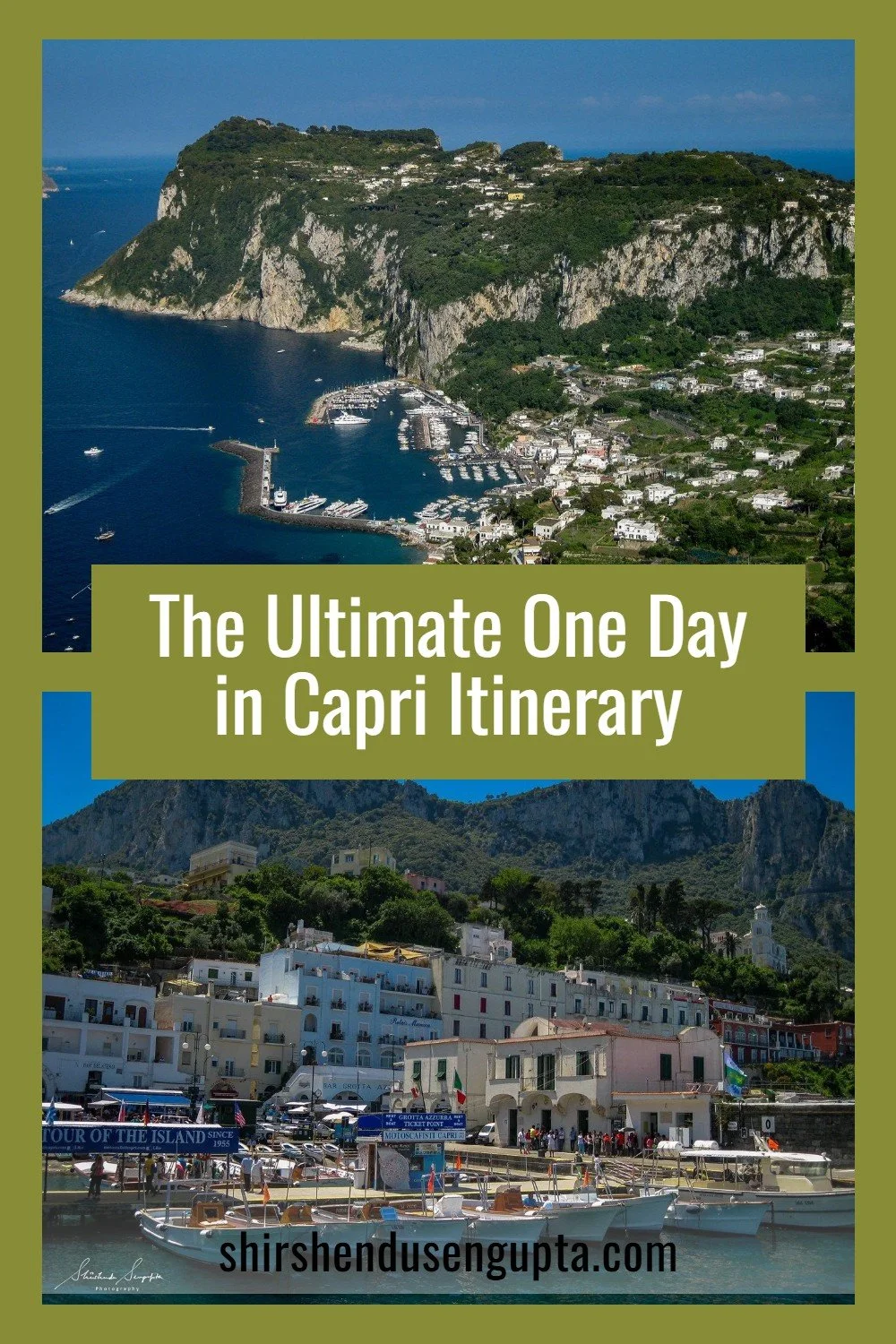
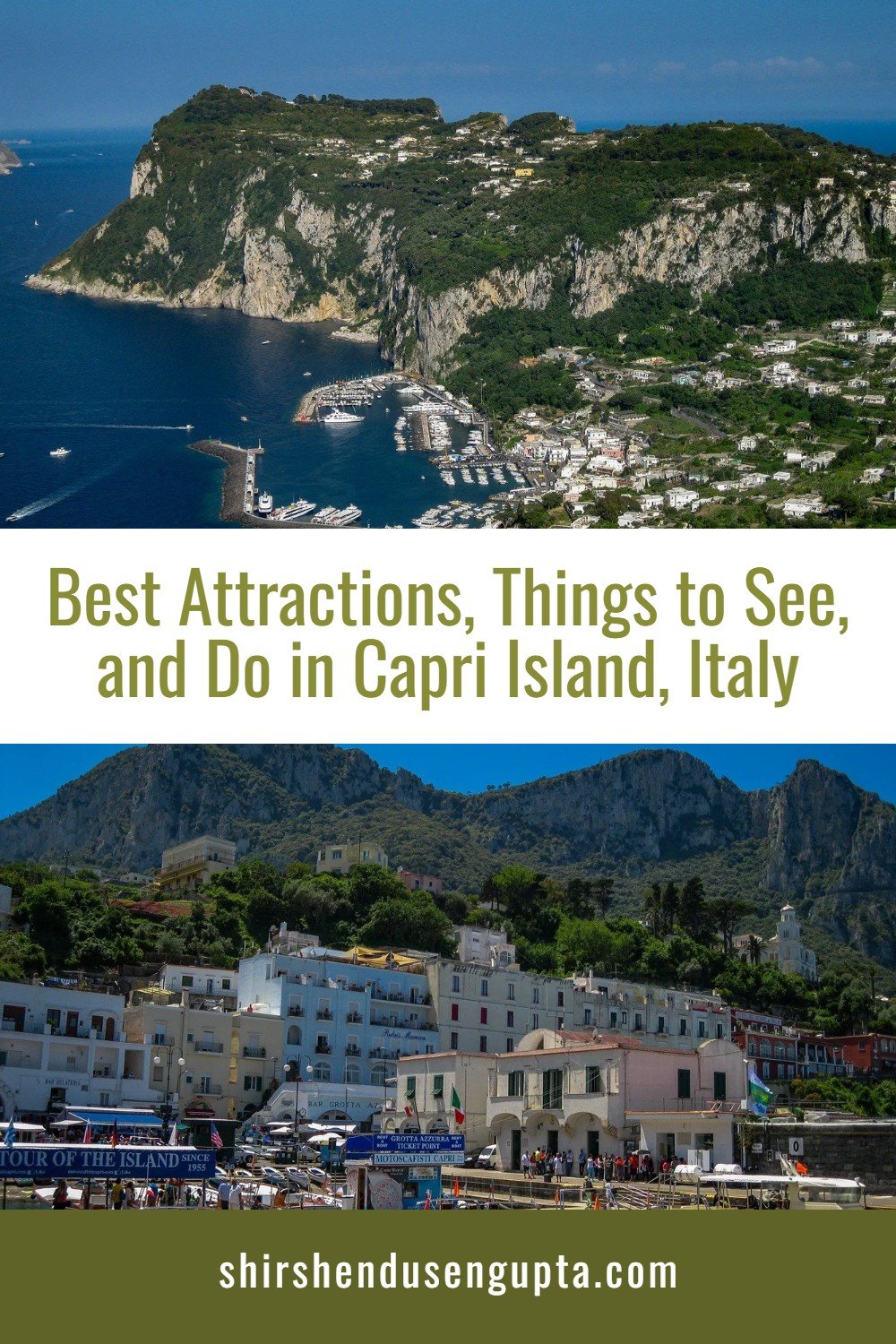
Rising like a mirage from the shimmering blue waters of the Tyrrhenian Sea, Capri is one of the most breathtaking islands in the Mediterranean. Towering limestone cliffs plunge dramatically into glowing turquoise water while colorful fishing boats drift beneath rugged coastal peaks crowned with villas, gardens, and ancient pathways. Located off the coasts of Naples and Amalfi, Capri has enchanted emperors, artists, writers, filmmakers, and dreamers for centuries with its almost unreal beauty.
The island feels like two giant mountains rising dramatically out of the sea, with one side home to the glamorous town of Capri and the other sheltering the older and more traditional Anacapri. Capri town is elegant, lively, and filled with luxury boutiques, stylish cafés, vibrant piazzas, and expensive cliffside accommodations overlooking the glittering Mediterranean. Anacapri, by contrast, feels quieter, stonier, and more authentic, with whitewashed houses, winding lanes, artisan shops, cheaper hotels, and breathtaking panoramic viewpoints stretching toward the Bay of Naples. Between these two worlds lies Marina Grande, the island’s bustling harbor and transportation hub, where ferries, buses, taxis, funicular railways, and boat tours connect every corner of Capri’s spectacular landscape. Cheap public buses constantly travel between Capri and Anacapri along dramatic winding mountain roads beginning near Piazza Umberto I, the lively central square of Capri town, better known across the island as La Piazzetta.
Capri’s extraordinary beauty has inspired countless songs, films, and stories across generations. The romantic classic The Isle of Capri was famously performed by Frank Sinatra, helping immortalize the island as a symbol of love and Mediterranean elegance. Capri also appeared in productions like It Started in Naples starring Sophia Loren and Clark Gable, further cementing its legendary reputation in popular culture.
The History of Capri
The history of Capri stretches back to ancient Greek and Roman times, but the island became truly legendary during the reign of Roman Emperor Tiberius in the first century AD. Although Emperor Augustus first recognized Capri’s beauty and developed it as an imperial retreat, it was Tiberius who transformed the island into his private kingdom after becoming emperor in AD 14. Captivated by Capri’s dramatic cliffs, isolation, and mild Mediterranean climate, Tiberius moved permanently to the island during the later years of his reign and governed much of the Roman Empire from here. Historians believe he built twelve magnificent villas across Capri, the most famous being Villa Jovis, perched high above the sea. Ancient writers described Capri as the emperor’s luxurious summer sanctuary where lavish banquets, political intrigue, and imperial ceremonies took place far from Rome.
According to historical legends and accounts written by Roman historians like Suetonius, Tiberius was feared for his cruelty and paranoia. Some stories claim he ordered prisoners and political enemies to be thrown directly from Capri’s steep cliffs into the sea below. The island’s famous Grotta Azzurra, now known as the Blue Grotto, was reportedly used by Tiberius as a private swimming grotto and marine sanctuary adorned with Roman statues. Even today, Capri’s ancient ruins, dramatic landscapes, and mysterious legends continue to preserve echoes of its extraordinary imperial past.
Today, I’m going to take you along with me on an unforgettable journey across the 20 best attractions, things to see, and experiences to enjoy on a magical day trip through Capri. From dramatic sea cliffs and glowing grottoes to glamorous piazzas, ancient pathways, and breathtaking sunset viewpoints, every corner of this Mediterranean island feels like a scene from a dream. So sit back, breathe in the salty sea air, and let the journey begin!
20 Best Attractions, Things to See, and Do on a Day Trip in Capri Island
1. Start from Marina Grande
Every unforgettable adventure in Capri begins at Marina Grande, the island’s lively harbor and spectacular gateway to paradise. As ferries glide across the shimmering Tyrrhenian Sea from Naples, Sorrento, and the Amalfi Coast, visitors are welcomed by colorful fishing boats bobbing gently in the water, pastel houses stacked dramatically along the cliffsides, and the refreshing scent of salty Mediterranean air. Historically, Marina Grande has served as Capri’s lifeline for centuries. Ancient Roman vessels once anchored here during the reigns of Emperor Augustus and Emperor Tiberius, both of whom transformed Capri into an imperial retreat during the Roman Empire. For generations, fishermen, traders, sailors, and travelers passed through this harbor, helping shape the island’s maritime identity and cultural heritage.
Today, Marina Grande remains Capri’s busiest transportation hub, connecting ferries, taxis, buses, boat tours, and the famous funicular railway leading toward Capri town above. The atmosphere here feels wonderfully energetic from sunrise onward. Beach clubs line parts of the waterfront while cafés and small shops serve espresso, fresh pastries, lemon granita, and local souvenirs to arriving travelers. With sparkling blue water stretching endlessly toward the horizon and dramatic limestone cliffs towering overhead, Marina Grande offers the perfect and unforgettable introduction to Capri’s timeless beauty.
2. Relax at Spiaggia Marina Grande (Marina Grande Beach)
Just a short walk from the harbor lies Spiaggia Marina Grande, the island’s largest public beach and one of the easiest places to enjoy Capri’s sparkling turquoise waters. Unlike the dramatic rocky coves found elsewhere around the island, Marina Grande Beach offers a more relaxed and accessible shoreline with pebbled stretches, shallow water, and magnificent views of ferries crossing the Bay of Naples. Historically, this beach area served local fishermen and harbor workers rather than wealthy travelers. Over time, however, it became a favorite destination for visitors wanting a quick seaside escape without venturing deep into Capri’s cliffs and hidden grottoes.
The beach is especially beautiful in the morning when sunlight reflects across the calm water and colorful boats drift near the shore. Swimming here provides stunning views back toward Capri’s towering limestone cliffs and hillside homes. During summer, locals and tourists alike gather under umbrellas while children leap from rocks into the sea. Small beach clubs rent loungers and offer refreshments, though sections of the beach remain free to access. Marina Grande Beach is also ideal for travelers with limited time because it sits conveniently close to the ferry terminal. One of the most memorable aspects of this beach is its contrast with Capri’s glamorous reputation. Instead of luxury yachts and designer boutiques, visitors encounter authentic island life, fishermen repairing nets, locals chatting in cafés, and families enjoying the sea. Spending a peaceful morning here before exploring the island’s more dramatic attractions creates the perfect beginning to a one-day Capri itinerary.
3. Take an Island Boat Tour
A boat tour around Capri is undoubtedly one of the island’s greatest experiences, revealing dramatic coastal scenery impossible to appreciate fully from land. Historically, Capri’s coastline has fascinated sailors, traders, and travelers since ancient Roman times. Emperor Tiberius reportedly explored many of the island’s caves and cliffs by boat during his reign. Today, local captains continue this maritime tradition, guiding visitors through hidden grottoes, natural arches, towering sea stacks, and crystal clear swimming spots around the island. Most tours depart directly from Marina Grande and circle Capri clockwise. Along the journey, visitors encounter limestone cliffs plunging dramatically into the sea, tiny secluded coves, and villas perched precariously above the water. Many boats stop for swimming opportunities in secluded turquoise bays inaccessible by road. The experience also provides a completely different perspective of the island’s geography. Capri and Anacapri appear like rugged mountain peaks rising sharply from the Mediterranean, emphasizing how isolated and dramatic the island truly is.
Traditional wooden gozzo boats remain especially popular because they preserve the romantic atmosphere associated with southern Italy’s maritime culture. Captains often share local legends and stories during the tour, including myths surrounding pirates, Roman emperors, and hidden caves. Some tours include drinks, snacks, or opportunities to enter famous grottoes, though weather and sea conditions occasionally affect access. For travelers with limited time, the boat tour offers the perfect overview of Capri’s coastal highlights in just a few hours. It combines natural beauty, historical storytelling, and unforgettable Mediterranean scenery into one extraordinary experience that captures the essence of Capri better than almost any other activity on the island.
4. Island Boat Tour Stop 1 - Grotta Rossa (Red Grotto)
The boat tour begins to unfold its magic with the eerie and beautiful Grotta Rossa, or Red Grotto, one of Capri’s lesser-visited but visually striking sea caves. As the boat slows near the entrance, the water shifts in tone and the limestone walls begin to reveal deep rust colored hues created by mineral deposits, coral growth, and centuries of marine erosion. Unlike the famous Blue Grotto, this cave feels quieter, more mysterious, and almost untouched, as if it has been hiding in plain sight for thousands of years.
Historically, Capri’s coastal caves, like the Red Grotto, were known only to fishermen and sailors who used them as temporary shelters during sudden storms. Local legends also suggest that pirates once used hidden caves along this coastline to store supplies or avoid patrols. While there is no grand architectural structure here, the raw natural formation itself tells a geological story shaped over millennia. As sunlight reflects off the uneven rock surfaces, the interior of the cave glows in shifting tones of red, orange, and copper. The contrast with the surrounding turquoise sea is dramatic, making even a short stop feel cinematic. It is a brief but unforgettable introduction to Capri’s dramatic coastal world.
5. Island Boat Tour Stop 2 - Grotta Bianca (White Grotto)
The next highlight along the coastline is the dazzling Grotta Bianca, or White Grotto, a natural limestone cave known for its brilliant pale interior and sculpted rock formations. As the boat approaches, the cliffs appear almost luminous, reflecting sunlight in a way that makes the cave glow with a soft white radiance. This effect is created by the porous limestone walls, shaped over thousands of years by wind, sea spray, and constant wave movement. The White Grotto has been admired since the era of early travelers and explorers who documented Capri during the Grand Tour period. Artists and writers were particularly drawn to its surreal brightness, often describing it as a natural cathedral carved by the sea. Inside the cave, stalactite-like formations hang from the ceiling, while the water below mirrors the pale rock surfaces, amplifying the sense of light and space.
Unlike darker sea caves, this grotto feels open and almost airy despite being enclosed by rock. The silence inside, broken only by gentle waves, adds to its ethereal atmosphere. Boat captains usually pause briefly here, allowing visitors to take in the contrasting tones of white stone and deep blue water. It is a moment of calm beauty before the coastline becomes more dramatic again.
6. Island Boat Tour Stop 3 - Arco Naturale (Natural Arch)
As the boat continues along Capri’s rugged eastern cliffs, the dramatic Arco Naturale rises into view, one of the island’s most impressive geological formations. This massive limestone arch, standing high above the sea, is the remaining fragment of an ancient cave that collapsed thousands of years ago due to natural erosion. What remains today is a perfectly curved stone bridge framing the endless Mediterranean horizon. From the water, the arch appears even more striking, suspended between sky and sea like a gateway carved by time itself. Historically, this area was part of a vast prehistoric cave system that once extended deep into Capri’s cliffs. Over centuries, wind, salt, and waves gradually hollowed the rock until only this elegant arch remained standing.
The surrounding cliffs are equally dramatic, layered with textures that reveal the island’s geological past. Seabirds often circle overhead, nesting in the rocky ledges that are otherwise inaccessible from land. The contrast between the solid limestone structure and the constantly moving sea below creates a powerful visual balance. Boat captains often slow down here, allowing passengers to appreciate the scale of the formation. It is a reminder that Capri’s beauty is not only luxurious and curated, but also raw, ancient, and shaped by unstoppable natural forces.
7. Island Boat Tour Stop 4 - Casa Malaparte (Villa Malaparte)
Further along the coastline, perched dramatically on a remote cliff, stands the iconic Casa Malaparte, one of the most visually striking modern villas in Europe. Painted in deep red and designed with bold geometric lines, the villa appears almost surreal against the rugged limestone cliffs and endless blue sea. It was built in the 1930s for Italian writer Curzio Malaparte, who envisioned a home that would merge architecture with the raw power of nature. From the boat, the villa feels isolated and mysterious, accessible only by foot or sea. Its famous rooftop terrace, shaped like a wide stone staircase, has been featured in several films and photographs, most notably in cinema history. One of its most well-known appearances is in the film Contempt directed by Jean-Luc Godard.
The surrounding cliffs are steep and untamed, reinforcing the villa’s sense of solitude. There are no roads leading directly to it, which adds to its aura of secrecy and exclusivity. As the boat glides past, Casa Malaparte seems less like a building and more like a sculpture placed deliberately within the landscape. It represents Capri’s artistic side, where architecture, cinema, and nature intersect in one unforgettable visual moment.
8. Island Boat Tour Stop 5 - The Faraglioni
No image defines Capri more powerfully than the legendary Faraglioni, three massive limestone sea stacks rising dramatically from the Mediterranean. Known individually as Faraglione Stella, Faraglione di Mezzo, and Faraglione di Fuori, these formations are among the most photographed natural landmarks in Italy. Formed over millions of years through erosion, they stand as towering symbols of Capri’s geological and mythical identity.
As the boat approaches, the scale of the rocks becomes overwhelming. Faraglione di Mezzo features a natural arch carved through its center, and boats carefully pass underneath it, creating one of the most iconic travel moments in the world. Local legend says that couples who kiss while passing through the arch will be blessed with good fortune and eternal love. Faraglione Stella remains closest to the island, while Scopolo, the outermost stack, is home to a rare species of blue lizard found nowhere else on Earth. The water surrounding the rocks shifts in shades of deep blue and emerald green, constantly changing with sunlight and sea movement. This moment often becomes the highlight of the entire boat tour, combining natural grandeur, romance, and timeless Mediterranean beauty.
9. Island Boat Tour Stop 6 - Grotta Verde (Green Grotto)
As the journey continues along the southern coast, the boat enters the glowing waters of Grotta Verde, or Green Grotto, a sea cave famous for its surreal emerald illumination. Unlike darker caves, this grotto is filled with shimmering green light created when sunlight passes through underwater openings and reflects off the limestone seabed. Historically, caves like this were known to local fishermen who used them as temporary shelters, but they were also considered mysterious and slightly mystical due to their unusual lighting effects. As the boat drifts inside, the entire cave seems to glow from within, transforming the water into a luminous green mirror that surrounds the vessel.
The surrounding cliffs are rugged and steep, adding to the sense of isolation and natural wonder. On calm days, the reflections become even more intense, creating a near magical atmosphere where water, light, and rock blend seamlessly together. Boat captains often pause here to allow passengers to take in the colors and sometimes swim nearby when conditions are safe. The experience feels quieter and more intimate compared to Capri’s more famous grottoes. The Green Grotto is a perfect reminder that Capri’s coastline is filled with hidden beauty waiting just beneath the surface.
10. Island Boat Tour Stop 7 - Grotta Azzurra (Blue Grotto)
The final and most famous stop on the boat tour is the legendary Grotta Azzurra, or Blue Grotto, one of the most iconic natural wonders in the world. As the main tour boat arrives offshore, it cannot enter the cave due to the extremely narrow entrance, which sits just above sea level. Instead, visitors must transfer into small wooden rowboats operated by local boatmen who expertly time their entry with the waves.
Historically, this cave was used during Roman times as a private imperial bathing site by Emperor Tiberius, who ruled from Capri and filled the grotto with statues and decorative elements. After the Roman era, the cave was feared by locals who believed it was haunted due to its deep darkness and strange acoustics.
Once inside, the transformation is extraordinary. Sunlight enters through an underwater opening and reflects off the seabed, filling the entire cave with an electric blue glow. The water appears luminous, and objects seem to float in light rather than water. Boatmen often sing traditional songs, their voices echoing dramatically across the stone walls. This is the most magical moment of the entire tour, where nature, history, and myth come together in one unforgettable experience.
11. Walk around Faro di Punta Carena (Anacapri Side)
After the unforgettable boat journey through the Grotta Azzurra, you return to Marina Grande, where the rhythm of the sea slowly gives way to the bustle of island life. At Marina Grande, you take a taxi directly toward Faro di Punta Carena, driving up through winding roads that climb into the heights of Anacapri. The route cuts through rugged limestone slopes, olive groves, and quiet residential lanes, with the sea constantly appearing and disappearing in dramatic glimpses far below. As you ascend, the atmosphere changes completely, becoming calmer, more open, and more rooted in local island life.
Historically, Anacapri developed separately from Capri town due to its elevated position, and it still retains a slower, more traditional rhythm. The taxi ride itself becomes part of the experience, offering sweeping views over cliffs and coastline as you approach the island’s wild western edge. Eventually, the road opens into the dramatic coastline of Punta Carena, where the lighthouse stands above crashing waves and rocky platforms stretching into deep blue water. Built in 1867, it remains one of the strongest maritime beacons in Italy. The area feels raw and elemental, a striking contrast to Capri’s polished elegance, and a perfect moment of natural beauty before continuing your island journey.
12. Marvel at the View of Capri Side from the Panoramica su Capri Viewpoint and/or Villa San Michele (Anacapri Side)
From Faro di Punta Carena, you take a taxi and head back up into the hills of Anacapri, climbing through winding roads where the coastline drops away beneath you and the Mediterranean stretches endlessly to the horizon. The landscape gradually softens from rugged cliffs to quieter residential slopes, with olive trees, stone houses, and scattered viewpoints appearing along the way. You get down at Vista Panoramica su Capri, one of the most breathtaking viewpoints on the island. From here, Capri unfolds like a painted panorama: the deep blue sea surrounds the island, the cliffs of Capri town rise dramatically on one side, and the shimmering coastline of the Bay of Naples fades into the distance. On clear days, you can even spot the outline of Mount Vesuvius standing guard over the mainland. It is a moment where the island’s geography truly reveals itself, two mountains rising from the sea, separated by valleys, roads, and hidden villages.
If you have time, you can continue a short ride or walk up to Villa San Michele, a peaceful villa filled with gardens, statues, and sweeping views that feel almost suspended between sky and sea. However, if your schedule is tight, it is perfectly fine to skip it, as the panoramic viewpoint already delivers one of the most complete and unforgettable perspectives of Capri.
13. Walk from Anacapri to Capri via Scala Fenicia (Phoenician Steps)
From Vista Panoramica su Capri, you continue with a short 5-minute walk to the start of the Scala Fenicia. The path is gentle and scenic, gradually shifting from wide island panoramas into a narrower hillside route that signals the beginning of your descent. As you walk, the sweeping views of Capri slowly fall behind you, replaced by closer details of stone walls, terraced slopes, and winding footpaths carved into the mountain. This brief transition feels like moving between two worlds, from elevated viewpoints into the island’s historic walking network.
Within minutes, the first stone steps of the Scala Fenicia appear, marking the start of the descent. This ancient staircase is carved directly into the steep limestone ridge of Capri and is one of the oldest routes on the island. Importantly, it connects Anacapri and the Capri side entirely on foot, forming a historic pedestrian link between the upper village and the lower town long before roads or vehicles existed. Stretching in a dramatic zigzag with more than nine hundred steps, it was once the primary path used by locals to move between the two settlements. As you descend, the landscape opens dramatically. The Mediterranean expands into deep blue horizons, cliffs plunge steeply on one side, and terraced gardens cling to the rock face on the other. Small stone walls, wild vegetation, and ancient masonry fragments reflect centuries of use by island residents carrying goods and supplies. The walk is physically demanding but deeply rewarding, offering a continuous, evolving view of Capri’s dramatic vertical geography at every turn.
14. Enjoy the View of Anacapri from the Funicolare Telescope Viewpoint (Capri Side)
After a half-hour descent down the Scala Fenicia, you gradually arrive back on the Capri side of the island, where one of the most underrated viewpoints awaits near the upper Funicolare di Capri station. Often overlooked by hurried visitors, the telescope viewpoint here offers one of the clearest visual perspectives back toward Anacapri and the towering limestone slopes you just descended on foot. After the physical effort of the Phoenician Steps, stopping here feels especially rewarding because you can finally appreciate the dramatic vertical scale of Capri’s geography from a distance.
Mounted telescopes line parts of the viewpoint terrace, allowing visitors to zoom into the rugged cliffs, winding roads, scattered villas, and elevated ridges stretching toward Anacapri. Looking back upward, it almost feels unbelievable that the staircase connecting the two sides of the island cuts directly through such steep terrain. The contrast between the higher, quieter mountain atmosphere of Anacapri and the more polished elegance of Capri town becomes visually obvious from here.
15. Visit the Certosa di San Giacomo (Capri Side)
After another 10 minutes of walking from the Funicolare Telescope Viewpoint, the landscape opens into a quieter cultural space where you arrive at Certosa di San Giacomo, the oldest monastery on Capri. Founded in 1371, this Carthusian complex was originally built as a religious retreat dedicated to solitude, prayer, and contemplation. Over centuries, it has witnessed multiple transformations, including periods as a monastery, a military barracks, and even a prison during the Napoleonic era. Despite these changes, its architectural essence remains remarkably intact, with cloisters, arches, stone corridors, and peaceful courtyards preserving its historic identity.
Walking through the monastery feels like stepping into a quieter chapter of Capri’s history. The thick stone walls soften the outside noise, and shaded courtyards open into serene gardens where time seems to slow down. The atmosphere is contemplative, almost meditative, especially after the physical energy of the Phoenician Steps. Occasional art exhibitions and cultural displays are sometimes hosted within the complex, blending contemporary creativity with centuries of history. From certain points within the monastery, glimpses of the sea and surrounding cliffs appear through arches and openings, reminding visitors that Capri’s natural beauty is never far away. Certosa di San Giacomo stands as a peaceful contrast to the island’s more glamorous attractions, offering a moment of quiet reflection in the middle of a fast-moving itinerary.
16. Take a Walk around the Giardini di Augusto (Capri Side)
A short walk from the monastery brings you to one of the most iconic viewpoints on Capri, the beautifully terraced Giardini di Augusto. These gardens are carefully landscaped with vibrant flowers, pine trees, and stone pathways that open into sweeping panoramic terraces overlooking the sea. Originally created by Friedrich Alfred Krupp and later renamed in honor of Emperor Augustus, the gardens reflect Capri’s blend of natural beauty and historical grandeur.
From the viewing platforms, the island’s most famous scenery unfolds in every direction. The Faraglioni sea stacks rise dramatically from the water, while the coastline curves toward Marina Piccola and the shimmering Mediterranean beyond. The gardens are designed to frame these views perfectly, making every angle feel like a postcard. The combination of bright flowers in the foreground and deep blue sea in the background creates one of the most photographed scenes in Italy.
The atmosphere here is peaceful but lively, with visitors pausing at railings, taking photographs, and quietly admiring the landscape. Gentle sea breezes move through the gardens, carrying the scent of Mediterranean vegetation. It is a place where Capri’s elegance and natural drama meet in perfect balance, offering one of the most rewarding visual experiences of the entire island.
17. Enjoy the View of Via Krupp and Optional Descent (Capri Side)
From the upper terraces of Giardini di Augusto, you can clearly see the legendary curves of Via Krupp carved into the cliffs below. This winding switchback road is one of Capri’s most extraordinary engineering feats, designed in the early 1900s for industrialist Friedrich Alfred Krupp to connect the gardens with Marina Piccola (small harbor) and the sea below. Its dramatic hairpin bends appear almost impossible, etched into vertical rock faces that plunge directly into the Mediterranean.
From above, Via Krupp looks like a ribbon carefully draped across the cliffside, each curve revealing a different perspective of the coastline. The road is often closed due to rockfall risks, but when accessible, it offers one of the most exhilarating walks on the island. Descending it means stepping into a cinematic landscape where every turn frames the sea in a new composition, with cliffs rising above and waves crashing far below. Even when walking is not allowed, simply viewing Via Krupp from the gardens is an unforgettable experience. It symbolizes Capri’s unique blend of natural beauty and human ambition, where engineering and landscape merge into one dramatic visual masterpiece that defines the island’s identity.
18. Drink Capri Lemon Juice at Chiosco Tizzano
After admiring the dramatic curves of Via Krupp from the terraces of Giardini di Augusto, it is the perfect time to slow down and enjoy one of Capri’s simplest but most refreshing pleasures, freshly squeezed island lemon juice at Chiosco Tizzano di Natalia e Antonio Tizzano S.N.C, located at Via Matteotti, 2, 80073 Capri, conveniently close to Giardini di Augusto. This small local kiosk has become famous among travelers for serving incredibly fresh lemon drinks made using Capri’s legendary giant lemons, known for their intense aroma and natural sweetness.
Historically, lemons have played a major role in Capri’s agricultural and culinary identity for centuries. Terraced lemon groves spread across the island’s cliffs long before tourism arrived, and local families traditionally used the fruit in desserts, drinks, perfumes, and the island’s famous limoncello. Capri lemons are larger and more fragrant than ordinary lemons, thriving in the island’s volcanic soil and Mediterranean climate. Standing beside the kiosk with a cold glass of freshly squeezed lemon juice feels wonderfully authentic after a long day of walking across cliffs, gardens, and historic pathways. The sharp citrus flavor instantly refreshes you beneath the warm Mediterranean sun while the lively streets of Capri buzz around you. It is a small experience, but one that captures the island’s essence perfectly, simple, vibrant, and deeply connected to local tradition.
19. Walk back to Piazza Umberto I (La Piazzetta) to enjoy the sunset behind Santo Stefano Church
Around sunset, you begin walking back through the elegant lanes of Capri toward Piazza Umberto I, the legendary La Piazzetta, and the social heart of the island. The walk itself feels magical during the golden hour, as warm light spills across stone buildings, flower-covered balconies, luxury boutiques, and narrow alleyways slowly filling with evening life. As you approach the square, the atmosphere becomes increasingly lively, with cafés setting out evening tables and visitors gathering to experience Capri’s famous nightlife culture.
Standing gracefully beside the piazza is Chiesa Madre di Santo Stefano, the island’s historic main church. As the sun begins to set behind its elegant Baroque façade and bell tower, the square takes on a soft golden glow that feels almost cinematic. The church has served as Capri’s spiritual center for centuries, hosting religious celebrations, community gatherings, and important island traditions. Its calm presence contrasts beautifully with the vibrant energy of the piazza surrounding it.
As daylight fades, Piazza Umberto I transforms into a glowing social stage where locals and travelers sit side by side, enjoying espresso, cocktails, desserts, and conversation beneath the evening sky. The cafés buzz with energy while soft golden lights illuminate the surrounding buildings and narrow lanes branching away from the square. The atmosphere feels elegant yet relaxed, blending Capri’s timeless charm with its glamorous nightlife culture as music, laughter, and the scent of fresh Italian cuisine drift gently through the piazza.
20. Walk the streets around Piazza Umberto I (La Piazzetta) post sunset
Once darkness settles over Capri, the experience continues with a relaxed evening walk through the beautiful streets surrounding Piazza Umberto I. Capri after sunset feels completely different from the busy daytime atmosphere. The harsh Mediterranean sunlight disappears, replaced by warm glowing lanterns, softly illuminated shop windows, and the gentle sounds of conversation echoing through narrow stone lanes. The streets surrounding La Piazzetta are filled with elegant boutiques, hidden cafés, artisan stores, luxury hotels, and ivy-covered passageways that seem to reveal something beautiful around every corner. Even without shopping, simply wandering through these lanes becomes an experience in itself. Expensive designer storefronts stand beside traditional family-owned businesses, reflecting Capri’s unique balance between glamour and authenticity. Small staircases lead toward quiet courtyards while occasional openings reveal glimpses of moonlit sea far below the cliffs.
Historically, these streets formed the social and commercial heart of Capri town long before modern tourism transformed the island into an international luxury destination. Even today, evenings here remain deeply connected to the island’s culture of slow conversation, outdoor gathering, and Mediterranean nightlife. Walking through Capri post sunset feels timeless and romantic, offering one final opportunity to absorb the island’s atmosphere before the magical one-day journey finally comes to an end.
Visiting Capri
Best Time to Visit: The best time to visit Capri is between April and June or September and October, when the weather remains warm, sunny, and pleasant without the overwhelming summer crowds. During these months, flowers bloom beautifully across the island, the sea appears brilliantly turquoise, and temperatures remain comfortable for walking and boat tours. July and August are the busiest months, attracting thousands of tourists daily from cruise ships and the Amalfi Coast. Although summer offers ideal swimming conditions, crowded streets and long queues can reduce the experience. Winter is quieter and cheaper, but some hotels, restaurants, and boat services close seasonally. Spring and early autumn provide the perfect balance between pleasant weather, accessibility, and a relaxed island atmosphere.
Number of Days to Stay: A complete day is needed to explore the major highlights mentioned in this article. Which means, you must arrive at Capri a day earlier from Naples or Sorrento, and leave on the day after the day of exploration. If you want, you can also plan a multi-day stay at Capri that will allow you to explore hiking trails, hidden beaches, lesser-known viewpoints, and peaceful restaurants at a slower pace.
Best Place to Stay: Choosing where to stay on Capri depends largely on budget and travel style. Capri town offers the island’s most glamorous experience with luxury hotels, designer boutiques, lively cafés, and spectacular sea views. However, accommodations here are significantly more expensive. Travelers seeking elegance, nightlife, and convenient access to famous attractions often prefer this area. Anacapri, located higher on the island, provides a quieter and more traditional atmosphere with cheaper hotels and guesthouses. The area feels less crowded and more residential, with beautiful viewpoints and artisan shops. Although Anacapri appears stonier and less developed than Capri town, many visitors appreciate its peaceful charm. Budget-conscious travelers usually find better value and more authentic island experiences in Anacapri.
Best Way to Arrive: The best way to reach Capri is by ferry or hydrofoil from Naples, Sorrento, Positano, or Amalfi. We came from Naples. Most visitors arrive through Marina Grande, the island’s main harbor. Ferries from Naples operate year-round and take approximately fifty to eighty minutes, depending on vessel type and weather conditions. Hydrofoils provide faster journeys but can feel rough during windy seas. Sorrento offers shorter crossings and is especially popular for day trips. Private boat charters are also available for travelers seeking flexibility and luxury. Since cars are heavily restricted on Capri during much of the year, arriving by public ferry remains the most practical and scenic option. Advance booking is recommended during summer because routes sell out quickly.
Best Local Mode of Conveyance: The best local transportation on Capri combines public buses, walking, funicular railways, and occasional boat rides. Small island buses connect Marina Grande, Capri town, and Anacapri regularly throughout the day. Although often crowded during peak tourist season, the buses remain inexpensive and efficient considering Capri’s steep mountainous terrain. The funicular railway linking Marina Grande with Capri town provides a faster and more comfortable alternative. Walking is equally important because many of Capri’s most beautiful viewpoints, gardens, and lanes are accessible only on foot. Taxis exist but are expensive despite their charming open-top convertible style. For coastal attractions and grottoes, boat tours remain essential because many natural sites cannot be reached by road or hiking paths.
Epilogue
A journey through Capri feels like stepping into a timeless Mediterranean dream filled with dramatic cliffs, glowing grottoes, ancient history, elegant piazzas, and unforgettable sea views. Whether sailing past the Faraglioni, wandering through peaceful Anacapri, admiring sunsets from Punta Tragara, or relaxing beside Marina Grande, every corner of the island reveals a different layer of beauty and charm. Capri successfully combines natural wonder, cultural history, artistic inspiration, and Italian glamour into one extraordinary destination. Even a single day here creates memories that linger long after the journey ends.
Please let us know in the comments below if you enjoyed reading this article. And until we meet next time, I wish you merry traveling and happy shooting!
Pin the article
Bookmark the article for reading later!
Want to license/buy photos in the article?
License photos for commercial/editorial use or buy photo prints!
Want us to write an article for you?
Articles for magazines, newspapers, and websites!
Watch our Videos
Check out our videos on our Youtube Channel!
Join the Newsletter
Get updates on our latest articles!
We respect your privacy. Read our policy here.













Prague, the enchanting capital of Czechia, is a city where medieval streets, Gothic cathedrals, Baroque palaces, and riverside panoramas come together in a single unforgettable travel experience. Set along the banks of the Vltava River, it has captivated travelers for centuries with its fairy tale skyline and rich cultural atmosphere. Known as “The City of a Hundred Spires,” Prague blends history, architecture, music, literature, and everyday local life in a way few European cities can match.