
Ultimate Guide to Visiting Pompeii | 14 Best Things You Need to Know, See, and Do at Pompeii, Italy
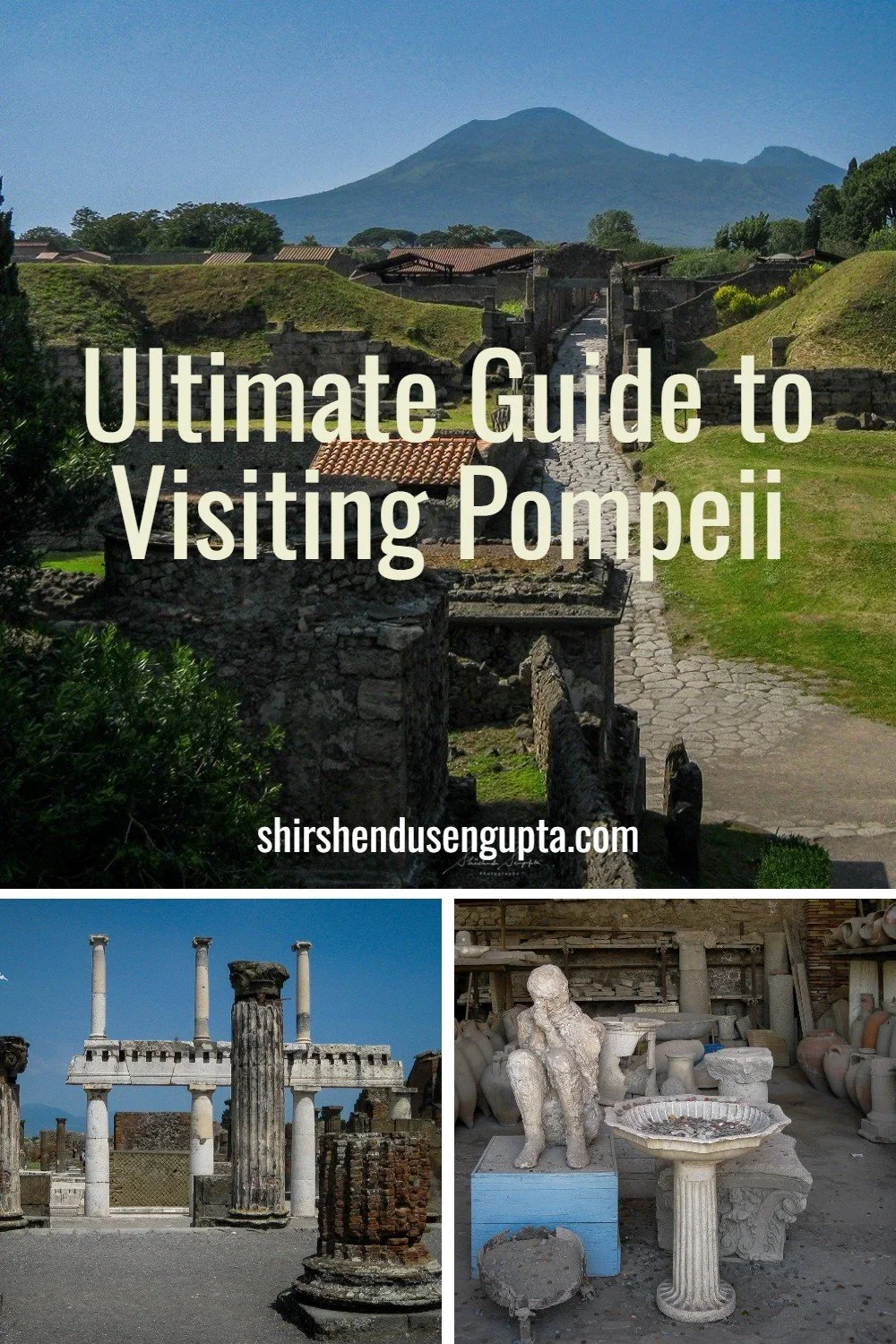
Welcome to Pompeii
At the foot of mighty Mount Vesuvius lies one of the world’s most haunting and fascinating archaeological destinations: Pompeii. Frozen in time by the catastrophic eruption of Vesuvius in 79 AD, this ancient Roman city offers visitors an extraordinary journey into everyday life nearly two thousand years ago. Walking through Pompeii feels less like visiting ruins and more like stepping directly into a forgotten civilization. Streets paved with volcanic stone still bear wheel marks from Roman carts, elegant villas retain traces of colorful frescoes, and bakeries, bathhouses, taverns, and temples continue to tell stories of a once-thriving urban society.
Unlike many archaeological sites around the world, Pompeii is remarkably immersive. The city’s layout remains largely intact, allowing travelers to wander through public squares, residential districts, marketplaces, and sacred sanctuaries with astonishing clarity. Every corner reveals details of Roman engineering, social hierarchy, religion, commerce, and entertainment. The preserved plaster casts of victims remain especially moving reminders of the human tragedy behind the disaster.
Today, Pompeii is one of Italy’s most visited historical treasures and a UNESCO World Heritage Site. Whether you are passionate about archaeology, photography, history, or travel storytelling, Pompeii delivers an unforgettable experience that combines beauty, mystery, and powerful emotion in equal measure.
Ruins of Pompeii with Mount Vesuvius as the backdrop
Rise of an Ancient Roman City
The history of Pompeii stretches back many centuries before the famous eruption that destroyed it. Archaeological evidence suggests the settlement was established by the Oscans around the 7th century BC. Because of its strategic location near the Bay of Naples and fertile volcanic lands, Pompeii soon developed into a prosperous trading center. Over time, the city came under the influence of Greek and Etruscan cultures before eventually becoming part of the expanding Roman world.
During the Samnite period, between the 5th and 4th centuries BC, Pompeii experienced major urban growth. Defensive walls were strengthened, temples were constructed, and the street network became increasingly sophisticated. Following Rome’s victory in the Social War, Pompeii officially became a Roman colony in 80 BC under Lucius Cornelius Sulla. Roman influence transformed the city dramatically. Lavish villas, bathhouses, amphitheaters, forums, and aqueduct systems reflected the wealth and ambitions of its citizens.
Pompeii flourished economically through agriculture, wine production, olive cultivation, and maritime trade. Its population may have reached around 20,000 inhabitants before disaster struck. However, warning signs appeared long before the eruption. A devastating earthquake in 62 AD severely damaged many structures, and reconstruction efforts were still ongoing seventeen years later. In the weeks leading up to the catastrophe, residents reportedly experienced repeated tremors and unusual ground movements. Yet earthquakes were relatively common in the region, and most people paid little attention. The inhabitants of Pompeii did not even fully understand that Mount Vesuvius was a volcano. To them, it appeared simply as a peaceful mountain overlooking the fertile countryside and the sparkling Bay of Naples.
The Night Pompeii Vanished Beneath Vesuvius
Then came the terrifying eruption of August 79 AD. On what had begun as an ordinary day, people were busy with their daily routines. Merchants opened their shops, bakers prepared bread in glowing ovens, laborers worked on buildings still damaged from earlier earthquakes, and wealthy citizens relaxed inside elegant villas decorated with fountains and frescoes. Suddenly, the ground began trembling violently. At first, many likely assumed it was another minor earthquake, something they had already grown accustomed to. But within hours, a gigantic column of ash and smoke exploded from the summit of Vesuvius and rose high into the sky.
Pumice stones and volcanic ash soon started raining down upon the city. Panic spread as darkness slowly swallowed Pompeii. Families desperately gathered possessions and attempted to flee through crowded streets while roofs collapsed beneath the growing weight of debris. Ancient accounts written by Pliny the Younger describe the horrifying scene as the night became darker than any ordinary darkness, interrupted only by flashes of fire erupting from the mountain.
During the early morning hours, deadly pyroclastic surges swept across Pompeii at terrifying speed. These scorching waves of gas, ash, and rock instantly overwhelmed the city. Thousands died within moments, many while hiding inside homes or attempting escape. Pompeii disappeared beneath layers of volcanic material, preserving streets, buildings, objects, and even human forms in astonishing detail.
Rediscovered by chance in the 1690s during work led by Domenico Fontana, Pompeii went on to become one of the most significant archaeological discoveries in history. Excavations uncovered a remarkably well-preserved Roman city, offering an extraordinary glimpse into everyday life in the ancient world. Today, Pompeii remains both a remarkable historical treasure and a powerful reminder of nature’s immense and devastating force.
14 Best Things You Need to Know, See, and Do at Pompeii
1. Porta Marina and the City Walls
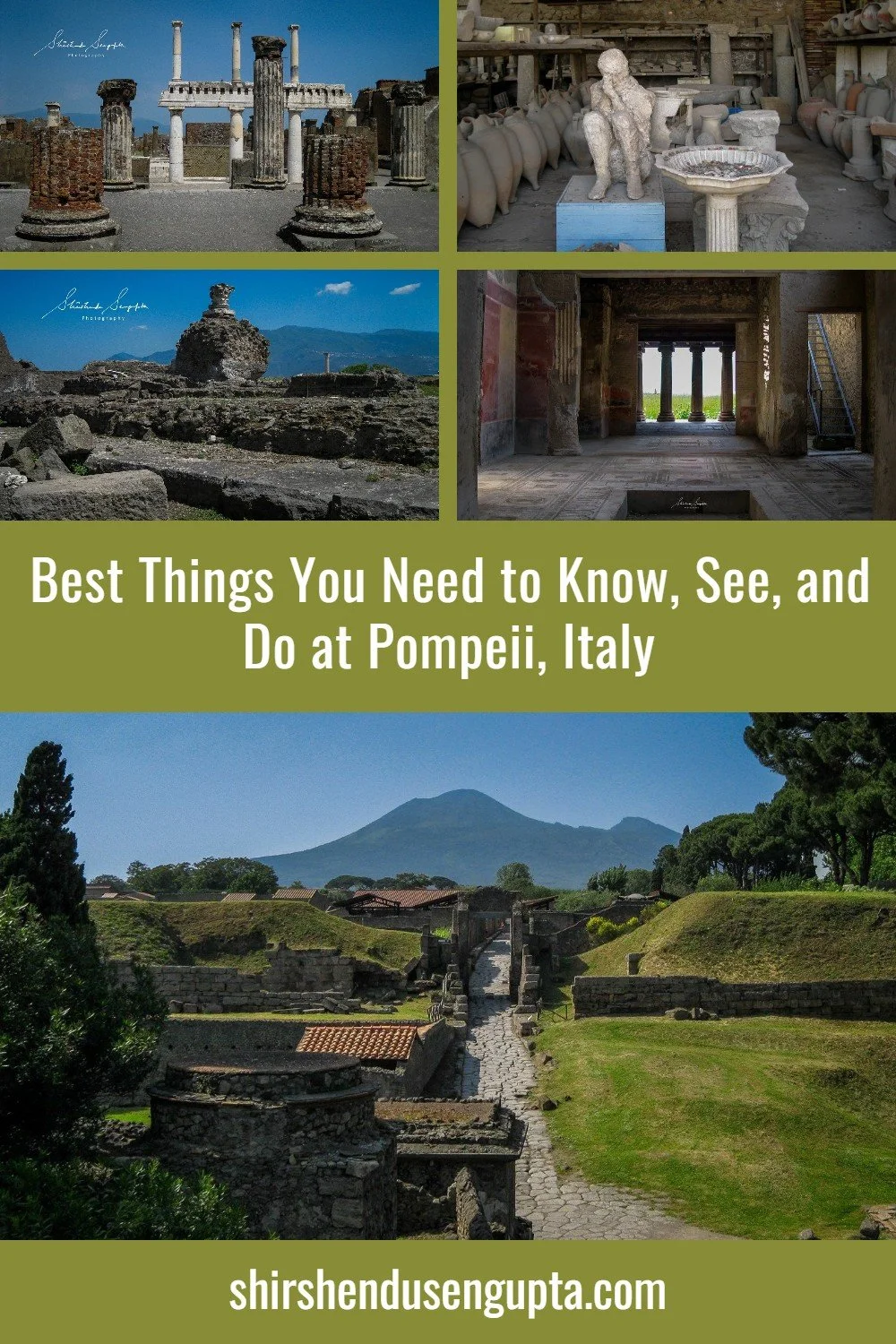
Among the seven gates of ancient Pompeii, Porta Marina remains the most dramatic and visually impressive. Positioned on the western side of the city, the gate once connected Pompeii to the nearby sea, which explains its name. Standing here today, visitors can immediately appreciate the strategic importance of the location. The structure resembles a fortified bastion overlooking the surrounding plain, combining military strength with architectural elegance. Built during the Sullan colonial period around 80 BC, the gate features a massive barrel vault constructed using Roman concrete, a durable mixture of mortar and stone that revolutionized Roman engineering.
Porta Marina contains two separate passageways or fornices. The larger arch was intended for horses, carts, and pack animals, while the smaller side entrance accommodated pedestrians. This thoughtful urban planning highlights the organizational sophistication of Roman cities. Beyond the gate stretch Pompeii’s ancient defensive walls, which originally extended over 3.2 kilometers around the city. Dating back as early as the 6th century BC, these fortifications consisted of double walls with internal walkways and protective embankments.
Twelve defensive towers reinforced the walls, particularly on the northern side where Pompeii was more vulnerable to attack because of flatter terrain. As Roman control stabilized the region, the military significance of the walls gradually declined. Some sections were dismantled or incorporated into houses and public buildings. Excavated between 1862 and 1863, Porta Marina today serves as one of the most atmospheric entrances into Pompeii, where travelers begin their exploration by literally walking through the same gateway used by Roman citizens over two millennia ago.
2. Street Life and Urban Engineering
One of the greatest pleasures of exploring Pompeii is observing how remarkably advanced Roman urban engineering truly was. The city streets reveal a sophisticated understanding of transportation, sanitation, water distribution, and public planning that still impresses modern visitors. Walking through Pompeii feels surprisingly familiar because many aspects of urban life resemble modern cities. The streets were carefully paved with volcanic basalt stones, and deep grooves carved into them still display the marks left by ancient cart wheels over centuries of use.
Raised stepping stones positioned across the roads allowed pedestrians to cross safely during heavy rain or after streets became flooded with wastewater. Ingeniously, the gaps between the stones were wide enough for cart wheels to pass through, demonstrating practical engineering adapted to everyday life. Elevated sidewalks protected citizens from mud and traffic, while public fountains supplied fresh water through a complex aqueduct system connected to nearby reservoirs and towers.
Pompeii’s streets also reveal the social energy of Roman urban life. Taverns, bakeries, workshops, laundries, and shops lined the roads, creating bustling commercial districts filled with merchants, travelers, laborers, and wealthy citizens. Political graffiti and election slogans painted on walls provide fascinating glimpses into public opinion and civic participation. Even today, faded inscriptions remain visible in several neighborhoods.
Another remarkable feature is the organization of traffic itself. Certain streets were designated one-way routes to reduce congestion, particularly near busy markets and the Forum. The careful layout of drainage systems further demonstrates Roman mastery of urban infrastructure. Exploring Pompeii’s streets allows visitors to understand not merely how Romans built cities, but how they lived within them. Every stone, inscription, and crossing point contributes to a vivid portrait of a sophisticated and highly organized ancient society.
3. Arcade of the Three Arches
The Arcade of the Three Arches is one of the lesser-known yet architecturally captivating corners of Pompeii. Positioned near important public areas of the city, this elegant structure once served both decorative and practical purposes within Pompeii’s urban landscape. Although many visitors pass through quickly, the arcade offers valuable insight into Roman architectural aesthetics and the importance of monumental public design in daily civic life.
The structure consists of three adjoining arches that create a visually balanced gateway effect, demonstrating the Roman preference for symmetry and engineered beauty. Built primarily from brick and stone, the arcade reflects construction methods commonly used during the Imperial period. The arches likely functioned as an access point connecting significant administrative or commercial zones while simultaneously enhancing the prestige of the surrounding district. In Roman cities, gateways and arches were not simply utilitarian structures. They symbolized civic pride, imperial influence, and urban sophistication. The arcade may also have incorporated a shrine dedicated to the Compitalia, religious rituals traditionally associated with crossroads and the protection of local communities.
The location of the arcade also reveals how Pompeii integrated movement and aesthetics into public planning. Citizens walking through the city would encounter impressive architectural vistas designed to communicate stability and prosperity. The three arches framed surrounding streets and public spaces, guiding both traffic and visual attention toward important civic areas.
Today, the surviving remains continue to evoke the grandeur of Roman engineering despite centuries of damage from volcanic burial, excavation, and weather exposure. Photographers particularly appreciate the arcade because the arches beautifully frame views of neighboring ruins and distant sections of the city. The structure also highlights how even relatively small architectural elements contributed to the overall harmony of Pompeii’s urban environment. Visiting the Arcade of the Three Arches encourages travelers to slow down and notice the refined details that once shaped the rhythm and beauty of everyday Roman life.
4. Forum
The Forum was the beating heart of Pompeii, serving as the center of political authority, commerce, religion, and public life. Every major activity in the city converged within this grand open square. Citizens gathered here to trade goods, attend religious ceremonies, conduct legal affairs, discuss politics, and socialize. Surrounded by monumental buildings and framed dramatically by Mount Vesuvius in the distance, the Forum remains one of Pompeii’s most awe-inspiring spaces.
Originally, the Forum was a relatively simple clay-covered open area bordered by shops and connected closely with the Sanctuary of Apollo. Between the 3rd and 2nd centuries BC, major renovations transformed the square into a more formal civic center. Porticoes lined the perimeter, creating sheltered walkways for merchants and pedestrians, while the square itself was paved with tuff stone slabs. The alignment of the Forum toward the Temple of Jupiter established a symbolic and visual relationship between civic life, religion, and divine authority.
During the Imperial era, the Forum underwent additional improvements. Travertine paving replaced earlier materials, and monumental inscriptions adorned the public square. Some paving stones still display grooves where bronze letters once formed official messages and dedications. Excavations initiated in 1813 under the patronage of Caroline Maria Annunziata Bonaparte revealed that parts of the Forum had already been looted in antiquity shortly after the eruption.
Walking through the Forum today offers a profound sense of Pompeii’s former vitality. Columns rise against the sky, temple foundations outline sacred spaces, and distant echoes of public speeches, negotiations, and ceremonies seem almost imaginable. The area captures the organizational brilliance of Roman urban planning while preserving the emotional atmosphere of a city abruptly frozen in time. For many visitors, standing in the Forum becomes the defining moment of their entire Pompeii experience.
5. Basilica
The Basilica of Pompeii was among the city’s most magnificent public buildings and played a central role in both commerce and justice. Covering approximately 1,500 square meters, the structure dominated the southwestern corner of the Forum and reflected the growing sophistication of Roman civic architecture during the late Republican period. Constructed between 130 and 120 BC, the Basilica is considered one of the earliest surviving examples of this architectural form in the Roman world.
Visitors entered the building directly from the Forum through five entrances separated by large tuff pillars. Inside, the vast interior was divided into three naves by rows of brick columns topped with Ionic capitals. The scale of the hall conveyed authority and grandeur, reinforcing the importance of the legal and commercial activities conducted within its walls. Merchants negotiated business agreements here, while magistrates and judges oversaw trials and public disputes.
At the western end stood the richly decorated suggestum, an elevated platform where judges presided over judicial proceedings. This prominent space was once adorned with elaborate stucco decorations designed to imitate luxurious marble blocks, demonstrating how Roman architecture often combined practicality with theatrical visual impact. An equestrian statue likely occupied a central position within the Basilica, symbolizing civic pride and elite status.
Excavations conducted across several periods beginning in 1806 gradually revealed the structure’s impressive layout and artistic details. Despite centuries of damage caused by earthquakes, volcanic burial, and weather exposure, the Basilica still communicates a powerful sense of Roman public life. Standing within its vast interior today, visitors can easily imagine the noise of debates, financial negotiations, and legal arguments echoing through the hall.
The Basilica also illustrates how Pompeii balanced commercial ambition with administrative order. More than a ruin, it represents the institutional backbone of the city, where law, economy, and civic identity intersected beneath one monumental roof.
6. Temple of Jupiter
The Temple of Jupiter dominates the northern end of the Forum in Pompeii, creating one of the site’s most iconic visual compositions with Mount Vesuvius rising dramatically behind it. As the principal religious monument of the city, the temple symbolized the connection between Roman state authority, divine protection, and civic identity. Its commanding position ensured that anyone entering the Forum immediately confronted the power and prestige embodied by the structure.
Originally constructed before Roman colonization, the temple underwent major renovations after Pompeii became a Roman colony in 80 BC. It was transformed into a Capitolium dedicated to the Capitoline Triad: Jupiter, Juno, and Minerva, mirroring the religious traditions of Rome itself. The cult statues of these deities stood elevated on a high base inside the temple, making them visible from across the Forum square.
The temple’s cella was enlarged during reconstruction, and a luxurious mosaic floor featuring marble elements enhanced the interior’s grandeur. Beneath the structure lay underground chambers known as favissae, spaces traditionally used to store sacred offerings dedicated to the gods. Some historians believe these vaults may later have protected the city’s treasury, reflecting the temple’s dual religious and civic importance.
Reliefs and archaeological evidence suggest that equestrian statues once flanked the base of the Capitolium, adding further ceremonial magnificence. Despite suffering severe damage from earthquakes before the eruption, the temple retained enormous symbolic significance until Pompeii’s destruction in 79 AD.
Excavated during the early nineteenth century, the Temple of Jupiter remains one of the most photographed areas in Pompeii today. Standing before its towering columns while viewing Vesuvius beyond creates a striking reminder of both Roman ambition and nature’s overwhelming force. The temple encapsulates the spiritual and political heart of ancient Pompeii in a single unforgettable setting.
7. Building of Priestess Eumachia
The Building of Priestess Eumachia stands as one of the most impressive monuments on the eastern side of the Forum in Pompeii. Constructed by Eumachia, a wealthy and influential priestess devoted to Venus, the building reflects both religious devotion and political ambition during the early Imperial period. Eumachia belonged to one of Pompeii’s richest families, and her sponsorship of this monumental complex demonstrated how elite women could wield considerable influence within Roman society.
The grand entrance once featured elaborate marble decoration adorned with acanthus scrolls and animal motifs. Although historians later discovered that this decorative frame originally belonged to the nearby Temple of Genius Augusti, its presence still contributes to the building’s striking appearance today. Statues of Pompeii’s most distinguished citizens lined the entrance portico, emphasizing the structure’s civic and ceremonial importance.
Inside, the building enclosed a spacious porticoed courtyard with three wings. On the eastern side stood three exedras, or recessed ceremonial spaces, with the central chamber housing a statue of Concordia Augusta, symbolizing harmony and imperial loyalty. Behind the main courtyard extended a covered corridor containing a statue of Eumachia herself. Although the original sculpture now resides in the National Archaeological Museum of Naples, a replica remains on-site.
The structure was likely connected to the worship of the imperial family and perhaps also served the powerful guild of cloth merchants. Its architecture projected prosperity, loyalty, and civic prestige. Unfortunately, much of the original multicolored marble decoration disappeared shortly after the eruption, likely stripped away during ancient looting.
Excavated in stages beginning in 1814, the Building of Priestess Eumachia remains a remarkable testament to female patronage, Roman civic identity, and the blending of religion with politics in ancient Pompeii. Its scale and elegance continue to impress visitors exploring the Forum today.
8. Sanctuary of Venus
Perched dramatically on an artificial terrace overlooking the Gulf of Naples, the Sanctuary of Venus occupies one of the most scenic and spiritually significant locations in Pompeii. Dedicated to Venus, the patron goddess of Pompeii, the sanctuary symbolized the city’s religious identity and maritime connections. Long before Roman rule, Venus was already worshipped in the region, but her importance increased greatly after Pompeii became a Roman colony in 80 BC.
The sanctuary originally dates to the 2nd century BC and initially consisted of an open sacred space surrounded by porticoes with a temple positioned at the center. During the early Imperial period, the complex underwent substantial redevelopment, resulting in the monumental structure visitors encounter today. The terrace location provided spectacular views toward the Bay of Naples and the ancient harbor area, reinforcing Venus’s role as protector of sailors and maritime trade.
Unfortunately, the devastating earthquake of 62 AD severely damaged the sanctuary. Reconstruction work continued for years, but the temple was still unfinished when Mount Vesuvius erupted in 79 AD. Evidence of incomplete rebuilding remains visible in various sections of the complex, offering insight into the city’s final years before destruction.
One of the sanctuary’s most extraordinary discoveries occurred during nineteenth-century excavations when archaeologists uncovered a magnificent gold lamp weighing nearly 900 grams. Believed to have been a gift from Emperor Nero, the lamp was found inside a small provisional chapel near the temple’s inner sanctuary. Today, this precious artifact is preserved in the National Archaeological Museum of Naples.
Excavated across multiple campaigns between the nineteenth and twenty-first centuries, the Sanctuary of Venus remains both architecturally beautiful and historically significant. The combination of sweeping coastal views, sacred symbolism, and partially reconstructed ruins creates an atmosphere that is simultaneously serene, majestic, and deeply evocative of Pompeii’s lost world.
9. Forum Granary
The Forum Granary offers one of the most fascinating archaeological collections within Pompeii. Located along the western side of the Forum, this elongated structure originally served as the city’s fruit and vegetable market, known as the Forum Holitorium. Supported by brick pillars that divide the building into multiple open sections, the granary today functions as a remarkable storage and exhibition space containing more than 9,000 artifacts recovered from Pompeii and its surrounding territory since the late nineteenth century.
Unlike polished museum galleries, the Forum Granary provides visitors with a more intimate encounter with archaeology itself. Rows of shelves display everyday objects used by Pompeii’s inhabitants during the city’s final decades. Terracotta pots, cooking vessels, amphorae, jugs, and bottles reveal the practical realities of Roman domestic life and Mediterranean trade networks. Marble tables, decorative fountain elements, and architectural fragments illustrate the wealth and artistic tastes of Pompeii’s elite households.
Among the most emotionally powerful exhibits are the plaster casts of eruption victims. These casts were created by pouring plaster into cavities left in hardened volcanic ash after human remains had decomposed. The famous crouching man and lying man casts are especially haunting. The crouching figure appears frozen in terror and desperation, while the lying man evokes a tragic final moment of exhaustion and helplessness. These casts transform Pompeii from an archaeological site into a deeply human story of sudden catastrophe.
The building dates to the reconstruction period following the earthquake of 62 AD, although it was still undergoing repairs and had not yet been put into use when Vesuvius erupted in 79 AD. Its sacred contents were instead being stored in one of the nearby sanctuaries in the Forum. Excavated between 1816 and 1822, the Forum Granary once provided valuable insight into both the everyday life of Pompeii and the city’s tragic final days. Today, however, the granary has been completely emptied of its archaeological finds, and a new exhibition is being planned for the near future. Once the new display is ready, the building is expected to become openly accessible to the public, offering visitors a renewed opportunity to explore this important part of Pompeii’s history.
10. Great Palaestra
The Great Palaestra was one of the largest recreational and educational complexes in Pompeii. Built during the Augustan era, this enormous open-air gymnasium was designed primarily for the physical training and social development of Pompeii’s youth. Covering a vast rectangular area surrounded by colonnaded porticoes, the complex reflected the Roman belief that athletic training, discipline, and civic education were essential components of responsible citizenship.
At the center of the palaestra lay a large swimming pool where young men practiced athletic exercises and aquatic activities. The surrounding porticoes provided sheltered walkways for exercise, conversation, and instruction during unfavorable weather. Trees and gardens likely enhanced the environment, transforming the area into both a recreational and social gathering space.
The Great Palaestra was more than simply a sports facility. It functioned as a center for community interaction and cultural identity. Roman youth participated in competitions, military preparation, and educational activities here, strengthening social bonds and reinforcing civic values. The complex also illustrates how public architecture in Pompeii balanced practicality with elegance. The orderly geometric design conveyed discipline and harmony while accommodating large numbers of participants and spectators.
Following the devastating earthquake of 62 AD, sections of the palaestra required reconstruction, and repairs were still underway when the eruption buried the city. Excavations later revealed not only the structural remains but also traces of the swimming pool and decorative architectural elements that once enhanced the site.
Today, the spacious ruins of the Great Palaestra provide visitors with a refreshing contrast to Pompeii’s densely built residential streets. Walking through its open courtyards, visitors can imagine the energetic atmosphere that once filled the complex with athletes, teachers, and spectators.
The Great Palaestra also houses important exhibitions related to the eruption of Mount Vesuvius. The south portico features a permanent exhibition exploring the nature of the 79 AD eruption, along with a display of organic remains preserved from Pompeii. The north portico is dedicated to plaster casts, including those of wooden doors and human victims, offering a particularly poignant connection to the final moments of the city’s inhabitants.
Together, the complex and its exhibitions demonstrate that Pompeii was not merely a city of temples and commerce, but a vibrant urban community deeply invested in education, recreation, and public life.
11. House of Paquius Proculus
The House of Paquius Proculus, also known as the House of Cuspius Pansa, ranks among the finest residential properties preserved in Pompeii. Originally constructed during the Samnite period in the 2nd century BC, the residence later evolved into a luxurious Roman home filled with sophisticated decorative art and symbolic imagery. The house is believed to have belonged either to Publius Paquius Proculus or Caius Cuspius Pansa, both known from electoral notices painted on the exterior walls.
One of the home’s most striking features appears immediately at the entrance, where a mosaic depicting a chained dog crouching before an open doorway survives remarkably well. In Roman culture, such imagery symbolized protection and vigilance, warning visitors while also displaying the owner’s wealth and artistic taste. The entrance itself retains elegant Samnite architectural details, including distinctive cubic capitals.
Inside, the atrium showcases extraordinary panel mosaics featuring colorful animals associated with prosperity and abundance. Portraits of a man and woman embedded within the decorative scheme likely represented members of the household. Beyond the atrium lies the peristyle garden area, surrounded by lavish residential rooms adorned with refined mosaic floors and marble inlays.
The triclinium, or dining room, contains one of the property’s most celebrated artworks: a mosaic scene depicting six pygmies fishing in a humorous and theatrical composition. Another famous image discovered here, now preserved in the National Archaeological Museum of Naples, portrays a drunken Silenus collapsing beneath the weight of a donkey.
Excavated primarily during the early twentieth century, the house provides remarkable insight into elite domestic life in Pompeii. Its luxurious decoration reveals not only wealth but also the Roman fascination with mythology, humor, and artistic sophistication. Walking through its rooms today allows visitors to appreciate how beauty, status, and storytelling shaped everyday life within Pompeii’s upper-class households.
12. Caupona/Popina/Thermopolia
The caupona/popina/thermopolia was the ancient Roman equivalent of a modern street food café or takeaway eatery, and several examples discovered in Pompeii reveal how vibrant and social everyday dining culture once was. These establishments were especially popular among ordinary citizens who either lacked kitchens in their homes or preferred purchasing freshly prepared meals while moving through the busy streets of the city. Positioned along major roads and commercial districts, caupona served hot food and drinks to workers, travelers, merchants, and residents throughout the day.
One of the most remarkable features of Pompeii’s caupona is the beautifully preserved marble countertop. These counters were carefully designed with circular openings that held large terracotta storage jars known as dolia. The dolia were embedded directly into the countertop and used to store hot food, wine, soups, grains, legumes, and other ready-to-eat meals. This clever arrangement allowed vendors to serve food efficiently while keeping dishes warm for customers. Many countertops were also decorated with colorful frescoes depicting animals, food items, mythological scenes, or advertisements connected to the meals sold inside the establishment.
Archaeologists discovered traces of food inside some of the dolia, including duck, pork, fish, and snails, offering extraordinary insight into the culinary habits of ancient Romans. Interestingly, the carbonised broad beans discovered in one of the dolia were not intended as food. Found alongside a small decanting cup, they may have been associated with wine stored in the vessel. This interpretation is supported by Pliny the Elder (23/24–79 AD), a Roman naturalist and author of the encyclopedic Natural History, who noted that broad beans could improve the flavour of red wine. The caupona therefore serves not only as a remarkably preserved food and drink establishment, but also as a valuable source of information about Roman diet, wine practices, trade, and social life.
Walking through these compact food establishments today creates a surprisingly intimate connection with everyday life in Pompeii. Visitors can easily imagine tired workers stopping for a quick meal, conversations echoing through the streets, and the aroma of freshly prepared food drifting through the air shortly before the catastrophic eruption of 79 AD forever silenced the city.
13. Amphitheater
The Amphitheater of Pompeii is one of the city’s most extraordinary monuments and holds the distinction of being the oldest surviving Roman amphitheater known in the world. Constructed in 70 BC by magistrates Caius Quinctius Valgus and Marcus Porcius, the arena predates Rome’s famous Colosseum by more than a century. Its remarkable preservation offers visitors a vivid glimpse into the entertainment culture of ancient Roman society.
Designed to accommodate approximately 20,000 spectators, the amphitheater could host not only residents of Pompeii but also visitors from neighboring towns throughout the region. Its peripheral location near the city walls allowed large crowds to enter and exit efficiently without overwhelming the central streets. External staircases provided access to upper seating levels, while lower corridors guided spectators toward the arena floor.
The amphitheater was primarily used for gladiatorial games, athletic contests, and public spectacles that reinforced Roman ideals of courage, strength, and social hierarchy. Frescoes depicting gladiators once decorated parts of the arena, enhancing the dramatic atmosphere experienced by spectators during competitions.
One of the amphitheater’s most famous historical events occurred in 59 AD when violent clashes erupted between supporters from Pompeii and the nearby town of Nocera during a sporting event. The riot became so severe that the Roman Senate temporarily banned games in Pompeii for ten years. However, after the devastating earthquake of 62 AD, authorities lifted the punishment to help restore civic morale.
Excavated initially in 1748 and further explored during the early nineteenth century, the amphitheater remains among Pompeii’s most atmospheric landmarks. Visitors sitting on its ancient stone steps can easily imagine the roar of crowds echoing across the arena nearly two thousand years ago. The structure captures both the grandeur and brutality of Roman public entertainment in unforgettable fashion.
14. Other Interesting Places Within Pompeii
Beyond the famous landmarks, Pompeii contains countless smaller yet equally fascinating locations that reward curious travelers willing to explore deeper into the ancient city. Wandering away from the busiest streets often reveals quieter corners where everyday Roman life feels astonishingly close and personal.
The House of the Faun is one of Pompeii’s grandest residences and is celebrated for its elegant courtyards and the famous Alexander Mosaic, which depicts Alexander the Great battling Darius III of Persia. The Villa of the Mysteries, located slightly outside the main city walls, preserves extraordinary frescoes that may portray secret Dionysian initiation rituals. These vivid wall paintings remain among the finest examples of Roman art ever discovered.
Pompeii’s bathhouses also deserve special attention. The Stabian Baths and Forum Baths reveal how central bathing culture was to Roman social life. Visitors can still identify hot rooms, cold pools, changing areas, and heating systems that demonstrate impressive engineering sophistication. Nearby bakeries preserve ancient ovens and millstones, offering insight into food production within the city.
Smaller shrines, gardens, taverns, and workshops scattered throughout Pompeii help complete the picture of a functioning Roman community. Ancient graffiti scribbled onto walls reveals political opinions, jokes, advertisements, and declarations of love that make Pompeii’s citizens feel surprisingly modern and relatable.
Even the city’s quieter residential streets possess remarkable atmosphere. Faded frescoes, garden courtyards, and shadowed alleyways create endless opportunities for photography and reflection. Pompeii rewards slow exploration because every district reveals another layer of the city’s social, artistic, and architectural complexity. Beyond its famous monuments lies a deeply human world preserved beneath volcanic ash and rediscovered centuries later.
Visiting Pompeii
Best Time to Visit: The best time to visit Pompeii is during spring and autumn, particularly between April and June or September and October. During these months, temperatures remain pleasant and walking through the vast archaeological site becomes far more comfortable than during the intense summer heat. Summer crowds can also become overwhelming, especially in July and August when tour groups fill the narrow streets by midday. Early mornings provide the most peaceful atmosphere and the best lighting conditions for photography. Winter offers quieter experiences as well, although occasional rain may affect sightseeing. Regardless of season, comfortable walking shoes and water are absolutely essential.
Number of Days to Stay: Most travelers dedicate one full day to exploring Pompeii, which is usually sufficient to visit the major highlights. However, history enthusiasts and photographers may benefit greatly from spending two days in the area. Pompeii is enormous, and rushing through the ruins can diminish the emotional and historical impact of the experience. A second day allows visitors to explore quieter residential districts, revisit favorite locations, and enjoy nearby attractions such as Mount Vesuvius or Naples. Travelers staying longer can also combine Pompeii with visits to Herculaneum and the beautiful Amalfi Coast.
Best Place to Stay: Many visitors choose to stay either in modern Pompeii town or nearby Naples. Staying close to the archaeological site allows easy early morning access before crowds arrive, making it ideal for photographers and travelers seeking a quieter experience. Pompeii town offers charming guesthouses, boutique hotels, and family-run accommodations within walking distance of the ruins. Naples, meanwhile, provides a livelier atmosphere with excellent restaurants, museums, nightlife, and transportation connections. Travelers interested in scenic coastal experiences often prefer nearby Sorrento, which combines beautiful sea views with convenient rail access to Pompeii and the surrounding region.
Best Way to Arrive: The easiest and most popular way to reach Pompeii is by train. The Circumvesuviana railway connects Naples and Sorrento directly with Pompeii, making transportation convenient and affordable for travelers. From Naples, the journey usually takes around thirty to forty minutes. Travelers arriving internationally typically fly into Naples International Airport before continuing by train or taxi. Guided tours from Rome are also widely available, although they often feel rushed because of the long travel distance. Renting a car is possible, but parking and traffic around the region can become stressful during peak tourist seasons.
Best Local Mode of Conveyance: Walking is unquestionably the best way to experience Pompeii. The archaeological site covers a massive area, but exploring on foot allows visitors to appreciate the intricate details of streets, homes, frescoes, and public buildings at their own pace. Comfortable footwear is essential because many surfaces are uneven and paved with ancient stones. Audio guides and guided walking tours can significantly enrich the experience by providing historical context and storytelling. Outside the ruins, local trains and taxis offer convenient transportation between Pompeii, Naples, Sorrento, and nearby attractions. Travelers should also carry water, sunscreen, and a hat, especially during warmer months.
Epilogue
A visit to Pompeii is far more than a sightseeing experience, it is an emotional journey into the fragile brilliance of human civilization. Few places in the world preserve the rhythm of ancient daily life with such extraordinary clarity and intimacy. From majestic temples and grand forums to humble bakeries and silent streets, Pompeii allows travelers to connect deeply with people who lived nearly two thousand years ago. The city’s haunting beauty, historical richness, and unforgettable atmosphere continue to captivate every visitor who walks through its gates.
Please let us know in the comments below if you enjoyed reading this article. And until we meet next time, I wish you merry traveling and happy shooting!
Pin the article
Bookmark the article for reading later!
Want to license/buy photos in the article?
License photos for commercial/editorial use or buy photo prints!
Want us to write an article for you?
Articles for magazines, newspapers, and websites!
Watch our Videos
Check out our videos on our Youtube Channel!
Join the Newsletter
Get updates on our latest articles!
We respect your privacy. Read our policy here.




















Rocamadour is one of France’s most extraordinary pilgrimage destinations, suspended between earth and sky in the Dordogne Valley. Its history stretches back to the early Middle Ages, when the hermit Amadour chose this cliff as a place of devotion. By the 12th century, Rocamadour had become a critical stop on the pilgrimage route to Santiago de Compostela, attracting kings, nobles, and ordinary pilgrims alike.